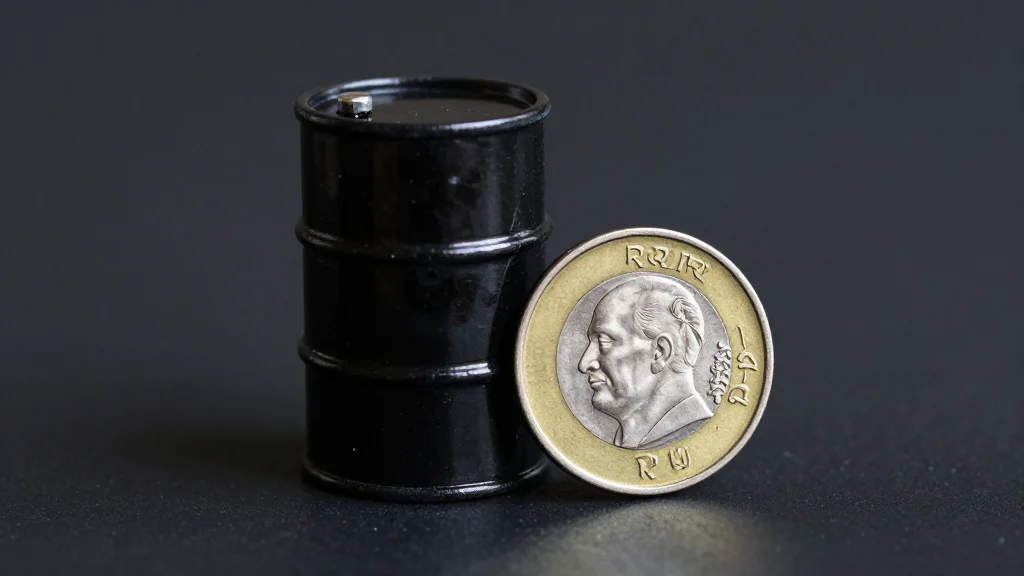
Indian Rupee Slides as Oil Prices Surge, Losing 3.5% Since West Asia Conflict

Companies Mentioned
Why It Matters
The rupee’s depreciation underscores how geopolitical shocks can quickly translate into currency stress for large emerging markets. India’s heavy reliance on imported crude—about 89% of its oil needs—means that any sustained price spike directly erodes the external balance, pressures inflation, and forces policymakers to choose between protecting growth and containing price rises. The episode also highlights the limits of monetary policy in a supply‑driven shock, shifting the onus to fiscal measures and structural reforms. For global investors, the rupee’s slide signals heightened volatility in emerging‑market FX and a potential re‑pricing of India‑linked assets. Companies with large exposure to fuel costs, such as airlines and logistics firms, may see margins compress, while exporters could benefit from a weaker rupee. The broader lesson is that energy‑linked currencies will remain sensitive to geopolitical developments, making real‑time monitoring of oil markets essential for risk management.
Key Takeaways
- •Rupee weakened >3% vs USD as crude oil rose from $63 to $114‑$116 per barrel
- •RBI warned of a major supply shock from the West Asia conflict and noted stable foreign‑exchange reserves covering 11 months of imports
- •Ben Powell (BlackRock) highlighted the double blockade of the Strait of Hormuz as a key risk to energy supplies
- •Ajay Bagga projected India’s annual crude import bill could jump to $200‑$225 billion, adding $50‑$75 billion to fiscal pressures
- •Aviation and logistics sectors face the steepest cost pressures, prompting calls for government support
Pulse Analysis
The rupee’s recent slide is less a symptom of domestic weakness than a direct transmission of a geopolitical supply shock. India’s macro fundamentals—robust growth, a sizable current‑account surplus and ample reserves—have traditionally insulated it from external turbulence. Yet the sheer scale of the oil price jump, driven by the closure of the Strait of Hormuz, has overwhelmed those buffers. In the short term, the RBI’s toolkit is limited; rate cuts would fuel inflation, while hikes could choke growth. Consequently, fiscal policy will likely take center stage, with the government weighing targeted subsidies against broader tax adjustments.
From an investment perspective, the currency move reshapes the risk‑reward calculus for India‑centric portfolios. Export‑oriented firms stand to gain from a cheaper rupee, but the upside may be muted if higher input costs erode profitability across the board. Sectors such as aviation, trucking, and consumer goods—where fuel is a major cost component—are poised for margin compression, raising the specter of earnings downgrades in the upcoming reporting season. Conversely, commodity‑linked assets, including domestic oil refiners, could see improved cash flows if they can pass through higher crude costs.
Looking ahead, the decisive factor will be the duration of the Hormuz blockade. A swift diplomatic de‑escalation could see oil prices retreat, allowing the rupee to stabilize and the RBI to maintain a neutral stance. A protracted closure, however, would likely push the rupee into deeper depreciation, forcing the central bank to intervene more aggressively and prompting the government to allocate a larger share of the fiscal budget to energy subsidies. Investors should therefore monitor not only oil price charts but also diplomatic signals from Tehran, Washington and regional actors, as these will dictate the next inflection point for India’s currency and its broader macro outlook.
Indian rupee slides as oil prices surge, losing 3.5% since West Asia conflict
Comments
Want to join the conversation?
Loading comments...