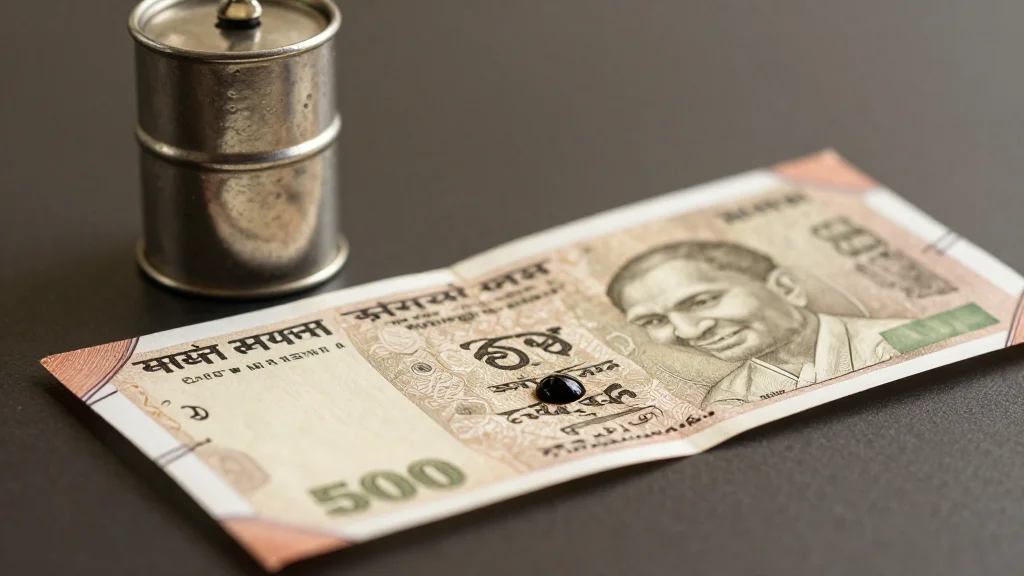
Indian Rupee Slides to 10‑Year Low as Oil Prices Surge and Iran War Fuels Outflows

Companies Mentioned

Reserve Bank of India
Bank of America
Why It Matters
The rupee’s plunge to a decade low reverberates beyond India’s borders, signaling heightened vulnerability of emerging‑market currencies to commodity shocks and geopolitical risk. A weaker rupee raises import costs, stoking inflation that could force the RBI to tighten policy, potentially slowing the country’s growth trajectory. For global investors, the episode underscores the importance of monitoring oil price dynamics and Middle‑East tensions when allocating capital to South Asian assets. Furthermore, the currency’s depreciation reshapes trade balances. While exporters may benefit from a more competitive pricing structure, higher input costs for energy‑intensive industries could erode profit margins. The net effect on India’s current account and fiscal outlook will depend on the duration of the oil price surge and the scale of capital outflows, making the rupee a key barometer for the health of the broader emerging‑market ecosystem.
Key Takeaways
- •Rupee fell to 94.25 per USD, its weakest level since 2015.
- •Brent crude rose above $105 per barrel, fueling dollar demand.
- •REER dropped to 92.72, the lowest in over a decade.
- •Foreign institutional investors sold about 3,254.71 crore rupees ($390 million) of equities.
- •RBI warns a further 5% rupee depreciation could add 40 bps to inflation.
Pulse Analysis
The current rupee slump is a textbook case of how commodity price spikes can amplify currency stress in import‑dependent economies. India’s reliance on crude oil—importing roughly 80% of its consumption—means that each dollar increase in oil prices translates directly into higher current‑account deficits and upward pressure on the exchange rate. The Iran‑U.S. confrontation has acted as a catalyst, turning a price shock into a broader risk‑off sentiment that has drained foreign portfolio inflows.
Historically, the RBI has used a mix of market interventions and policy rate adjustments to temper excessive volatility. However, the depth of the recent outflows—over $390 million in a single day—suggests that market participants are pricing in a prolonged period of uncertainty. If the central bank steps in aggressively, it may stabilize the rupee but at the cost of depleting reserves and potentially tightening liquidity, which could dampen credit growth.
Looking ahead, the rupee’s path will be dictated by three variables: oil price trajectory, the resolution of the Iran conflict, and RBI’s policy response. A swift diplomatic de‑escalation could restore investor confidence, while a sustained oil price rally would keep the rupee under pressure. Investors should therefore monitor OPEC output decisions, U.S. sanctions policy, and RBI’s forward guidance for clues on whether the rupee can find a sustainable floor or will be forced into deeper depreciation.
Indian Rupee Slides to 10‑Year Low as Oil Prices Surge and Iran War Fuels Outflows
Comments
Want to join the conversation?
Loading comments...