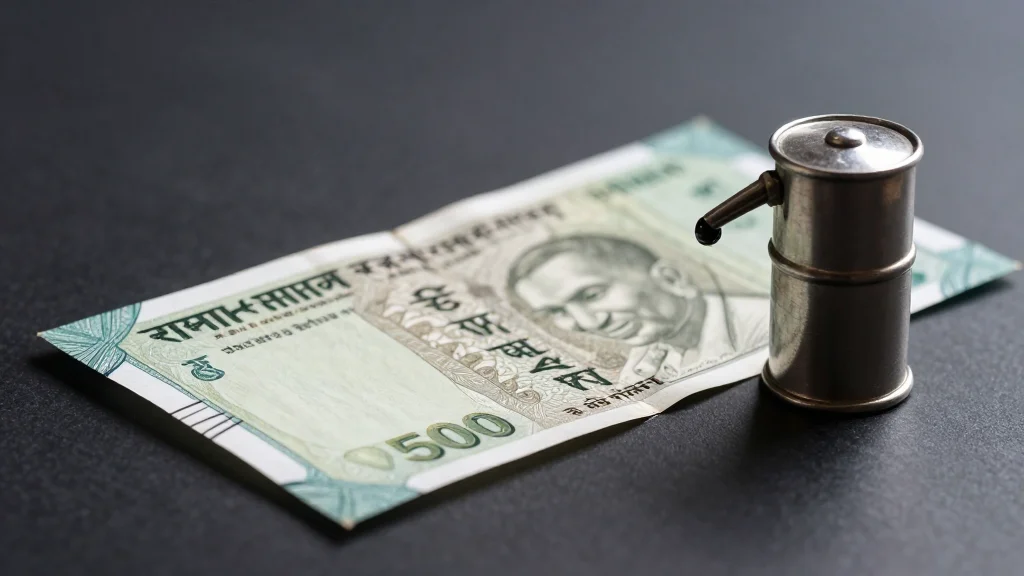
Indian Rupee Slides to 95.43 per Dollar as Oil Prices Surge

Why It Matters
The rupee’s decline highlights how tightly linked emerging‑market currencies are to global oil dynamics and U.S. dollar flows. A weaker rupee raises import costs, fuels inflationary pressures, and can erode investor confidence in Indian assets. For foreign investors, the move signals a need to reassess risk premiums on Indian equities and debt, especially as the RBI balances market support with macro‑stability. If oil prices remain elevated, other commodity‑importing economies in the region may face similar currency stress, potentially prompting coordinated central‑bank actions. Conversely, a swift de‑escalation in Middle‑East tensions could relieve oil price pressure, offering a window for the rupee to stabilize and for capital inflows to resume.
Key Takeaways
- •Rupee opened at 95.43 per USD, down 17 paise from the prior close
- •Brent crude rose 1.84% to $97.91 per barrel amid fresh US strikes on Iranian targets
- •Dollar index slipped 0.19% to 99.04 while RBI sold dollars the previous day
- •Foreign institutional investors bought roughly ₹821.75 crore ($86 million) of Indian equities on Monday
- •Sensex fell 264.82 points to 76,224.14; Nifty dropped 27.6 points to 24,004.10
Pulse Analysis
The rupee’s slide is a textbook case of how external shocks cascade through emerging‑market currencies. Historically, oil price spikes have translated into weaker rupee levels because India imports a large share of its energy needs, and higher oil bills widen the trade deficit. The current episode is compounded by month‑end balance‑sheet pressures that force corporates and banks to acquire dollars for debt servicing and hedging, amplifying the demand shock.
RBI’s recent dollar‑selling operation on Monday provided a temporary cushion, but the central bank’s capacity to sustain such interventions is limited. Persistent geopolitical tension in the Middle East could keep oil prices above $95 a barrel, eroding any short‑term gains from RBI’s liquidity support. Market participants will likely watch the RBI’s upcoming policy statements for signals on swap lines or forward guidance, which could shape the rupee’s trajectory for the rest of the quarter.
For investors, the episode underscores the importance of currency‑risk hedging in portfolios with Indian exposure. While the rupee’s dip may make Indian assets appear cheaper, the underlying inflationary drag and potential capital outflows could offset any valuation upside. A calibrated response from the RBI, combined with a de‑escalation of oil‑price drivers, will be essential to restore confidence and prevent a broader contagion across other emerging‑market currencies.
Indian rupee slides to 95.43 per dollar as oil prices surge
Comments
Want to join the conversation?
Loading comments...