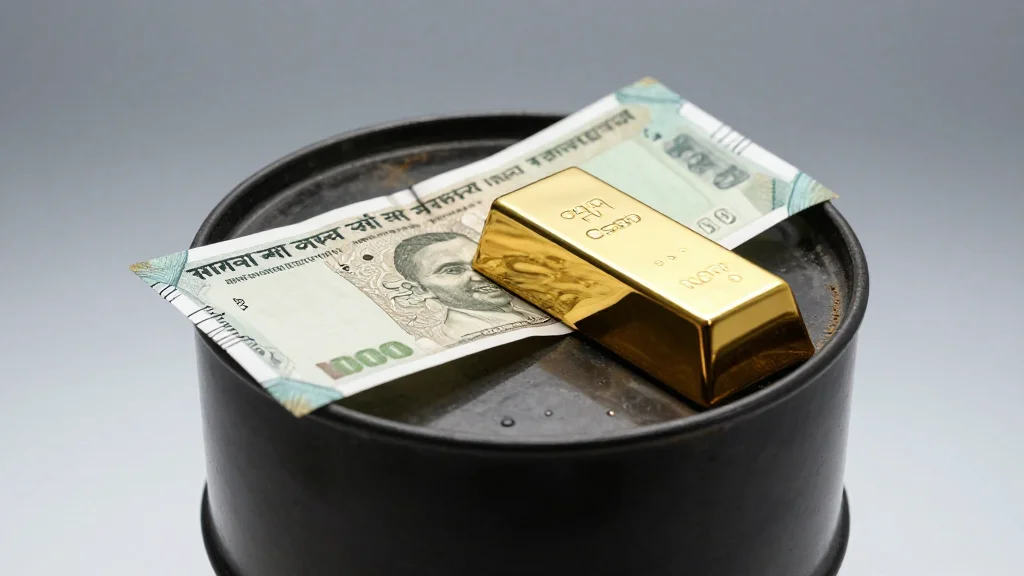
Indian Rupee Slides to Record Low of 95.74 per Dollar as Oil Prices Surge

Companies Mentioned
Why It Matters
The rupee’s record low highlights the vulnerability of emerging‑market currencies to commodity price swings and geopolitical risk. A weaker rupee raises import costs, fuels inflation, and can erode real incomes, pressuring the Reserve Bank of India to balance price stability with growth. Moreover, sustained capital outflows signal reduced investor confidence, which could raise borrowing costs for Indian firms and the government. If the RBI resorts to interest‑rate hikes, it could slow economic activity at a time when growth forecasts have already been trimmed. Conversely, prolonged depreciation may force the government to tighten fiscal measures, such as higher import duties, further impacting consumption. The episode therefore serves as a barometer for how India navigates external shocks while maintaining macro‑economic stability.
Key Takeaways
- •Rupee fell to an all‑time low of 95.74 per dollar on Wednesday.
- •Brent crude rose to $107 a barrel, driving up dollar demand.
- •Foreign institutional investors have withdrawn over $21 billion from Indian equities in 2026.
- •India’s foreign‑exchange reserves, once $728 billion, are being eroded by RBI interventions.
- •Gold and silver import duties were raised to 15% to curb dollar demand.
Pulse Analysis
The rupee’s plunge is a textbook case of how external commodity shocks can amplify currency weakness in a heavily import‑dependent economy. India’s reliance on imported oil means that every dollar increase in Brent translates directly into a higher demand for foreign exchange, putting downward pressure on the rupee. The recent surge to $107 per barrel is not an isolated blip; it reflects a broader risk‑off environment triggered by renewed Middle‑East tensions.
Historically, the RBI has managed currency volatility through a mix of market interventions and macro‑prudential tools. However, the scale of current outflows—$21 billion since January—suggests that market participants are seeking safety in the dollar, limiting the effectiveness of conventional interventions. The central bank’s willingness to sell dollars through state‑run banks shows resolve, but the depletion of reserves could constrain future actions.
Policy options are narrowing. Raising interest rates could attract capital but would also increase borrowing costs for a fragile private sector already grappling with higher input prices. The government’s fiscal lever—higher gold‑import duties—offers only a modest, short‑term cushion. In the medium term, the rupee’s path will likely be dictated by the trajectory of global oil markets and the resolution of geopolitical tensions. A sustained decline in Brent prices would provide breathing room, while any escalation in the Middle East could push the rupee toward the 96‑per‑dollar threshold, forcing the RBI to consider a more aggressive stance.
For investors, the rupee’s volatility underscores the importance of hedging strategies and a close watch on policy signals. Companies with large dollar‑denominated liabilities may see cost pressures rise, while exporters could benefit from a weaker currency. The broader lesson is clear: emerging‑market currencies remain highly sensitive to external shocks, and policymakers must balance short‑term defensive measures with longer‑term structural reforms to enhance resilience.
Indian Rupee Slides to Record Low of 95.74 per Dollar as Oil Prices Surge
Comments
Want to join the conversation?
Loading comments...