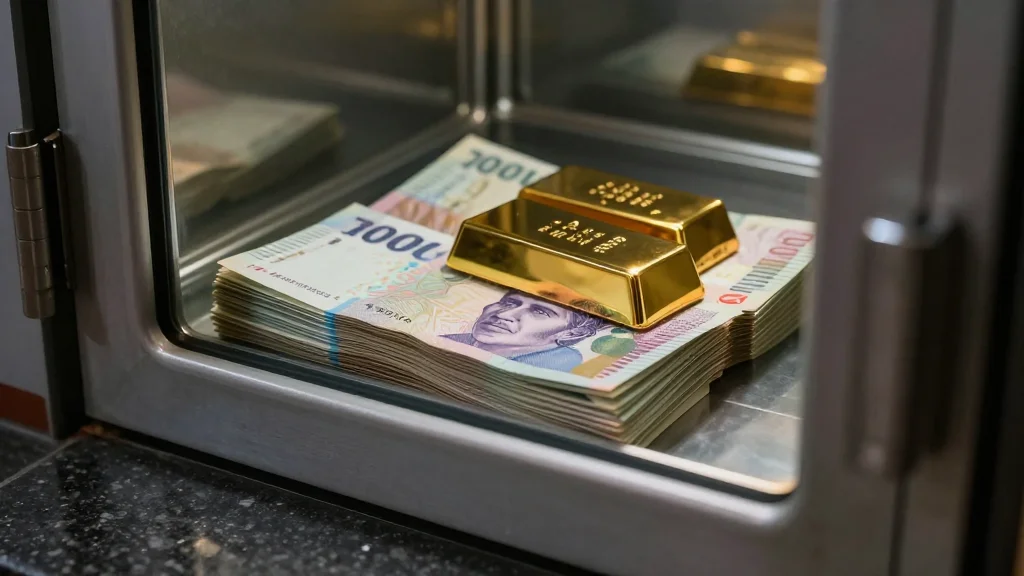
Indonesia's FX Reserves Slip to $144.9 Bn, Two‑Year Low After Currency Interventions

Why It Matters
A sharp fall in Indonesia’s foreign‑exchange reserves narrows the buffer the country has against external shocks, making it more vulnerable to sudden capital outflows or a worsening trade balance. The rupiah’s weakness also raises import‑cost pressures, feeding into inflation and potentially eroding real incomes. For investors, the reserve dip signals heightened sovereign‑risk considerations. A constrained reserve pool may limit the central bank’s ability to intervene in future crises, prompting a re‑pricing of Indonesian assets and influencing regional capital‑flow dynamics.
Key Takeaways
- •Bank Indonesia’s FX reserves fell $1.3 bn in May to $144.9 bn, a two‑year low.
- •The rupiah reached a historic low of 18,170 per dollar amid fiscal and geopolitical pressures.
- •Reserves now cover 5.6 months of imports, above the three‑month international standard.
- •Between $30 bn and $50 bn of the reserves are tied up in commercial‑bank deposits, limiting liquidity.
- •10‑year government bond yield rose to 7.142 % after policy makers pledged higher asset yields.
Pulse Analysis
Indonesia’s reserve trajectory underscores a classic dilemma for emerging‑market central banks: balancing currency stability against reserve depletion. The $11.6 bn year‑to‑date loss mirrors a pattern seen in other commodity‑exporting economies where external shocks and domestic fiscal expansion converge. By raising rates and boosting bond yields, BI is attempting to attract foreign inflows, but higher yields also raise borrowing costs for the government and private sector, potentially dampening growth.
Historically, countries that rely heavily on bank‑deposited foreign currency face a “maturity mismatch” risk. When the central bank’s intervention tools are tied up in time‑bound deposits, any abrupt shift in market sentiment can force a rapid drawdown of reserves. Indonesia’s situation is reminiscent of the 2018 Turkish episode, where a similar reliance on short‑term foreign‑currency liabilities amplified volatility.
Looking ahead, the June policy meeting will be pivotal. If BI opts for further rate hikes, it may succeed in stabilising the rupiah but at the cost of higher debt service. Conversely, a pause could signal confidence in market‑driven adjustments but risk accelerating reserve erosion. Investors should monitor capital‑flow data, the trade balance, and any signals of policy coordination between the central bank and the finance ministry, as these will shape the trajectory of Indonesia’s currency and its broader macro‑economic resilience.
Indonesia's FX Reserves Slip to $144.9 bn, Two‑Year Low After Currency Interventions
Comments
Want to join the conversation?
Loading comments...