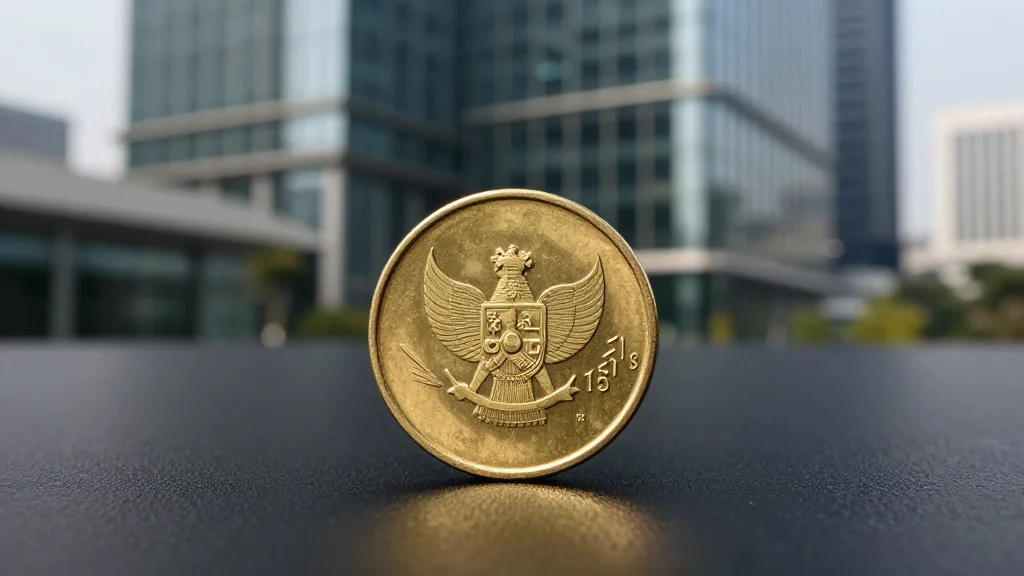
Indonesia’s Rupiah Strategy Faces Credibility Test as Policy Mix Stalls Appreciation

Why It Matters
The rupiah’s stability is a bellwether for emerging‑market currencies that balance commodity dependence with external financing needs. Indonesia’s large economy and strategic position in Southeast Asia mean that prolonged credibility issues could spill over into regional capital flows, affecting investors’ risk appetite for the broader market. Moreover, the country’s ability to manage its exchange rate influences inflation dynamics, sovereign borrowing costs, and the effectiveness of monetary policy in a global environment of tightening US rates. A credible exchange‑rate regime would also enable Indonesia to better harness its export earnings, retain foreign‑exchange reserves, and support domestic investment. Conversely, continued doubts about policy independence could force the government to rely more heavily on costly interventions, eroding reserves and limiting fiscal space for development projects.
Key Takeaways
- •Bank Indonesia continues spot‑market, DNDF, and offshore NDF interventions while tightening local dollar purchases.
- •Government incentives aim to keep export proceeds in the country, but critics say they lack structural depth.
- •Analysts argue that a credible policy mix requires fiscal discipline, central‑bank independence, and deeper domestic markets.
- •Rupiah target of not falling below Rp12,000 per USD (~$0.00084) is seen as a floor, not a path to appreciation.
- •Without credibility, Indonesia risks higher borrowing costs and vulnerability to external shocks.
Pulse Analysis
Indonesia’s exchange‑rate approach reflects a classic emerging‑market dilemma: short‑term stabilization versus long‑term credibility. The current toolbox—interventions, purchase limits, and export‑earnings incentives—mirrors tactics used by peers during periods of capital flight, but it stops short of addressing the root causes of investor skepticism. Historically, countries that transition from intervention‑heavy regimes to rule‑based, transparent policies (e.g., Chile in the 1990s) achieve more sustainable currency strength and lower risk premiums.
The author’s emphasis on institutional credibility aligns with the broader market trend that values policy predictability over ad‑hoc measures. As the US Federal Reserve continues to tighten, capital flows to emerging markets become more selective, rewarding those with clear, independent monetary frameworks. Indonesia’s challenge is to convert its sizable reserves and policy toolkit into a narrative of disciplined fiscal management and market‑friendly reforms. This could involve tightening the export‑proceeds regime, expanding domestic bond markets, and establishing a more transparent foreign‑exchange pricing mechanism.
Looking forward, the credibility gap may force Indonesia to choose between deeper market reforms or continued reliance on costly interventions. The former promises lower financing costs and a stronger rupiah, while the latter risks reserve depletion and heightened vulnerability to external shocks. Investors will be watching for concrete steps—such as a legislative push for fiscal consolidation or a clear, rule‑based monetary policy stance—that signal a shift from optics to substance.
Indonesia’s Rupiah Strategy Faces Credibility Test as Policy Mix Stalls Appreciation
Comments
Want to join the conversation?
Loading comments...