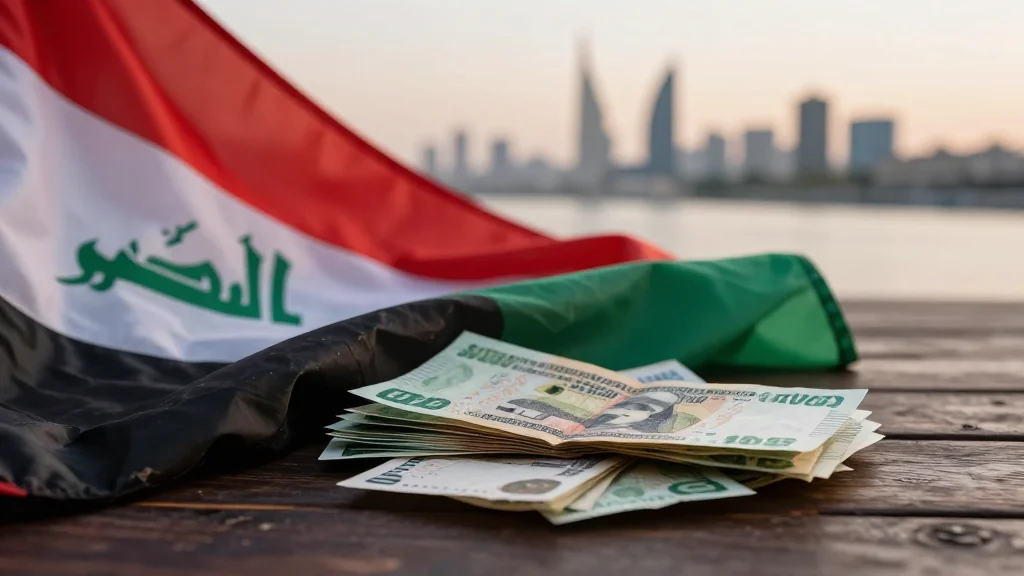
Iraqi Dinar Hits 155,250 per $100 Amid Political Deadlock

Why It Matters
The dinar’s surge signals that Iraq’s macro‑economic stability is now tightly linked to political outcomes. A widening official‑parallel gap erodes confidence in the Central Bank’s ability to manage liquidity, raising the cost of imports and feeding inflation, especially for essential food items. Moreover, the currency’s volatility could deter foreign investors eyeing Iraq’s oil‑linked growth and the nascent commodity exchange, slowing diversification efforts. If the political deadlock persists, the government may be forced to draw down foreign reserves or seek external financing, both of which could further weaken the dinar. Conversely, a swift political resolution and effective implementation of the food exchange could restore market confidence, narrow the exchange‑rate spread, and lay groundwork for broader economic reforms.
Key Takeaways
- •Iraqi dinar reached 155,250 IQD per $100 on the parallel market, a record high
- •Official Central Bank rate remains at 130,000 IQD, widening the premium to ~25%
- •January 2026 deficit of 339.5 billion IQD (~$219 million) amid a $9.5 billion funding gap
- •Public‑sector salaries consumed ~7.1 trillion IQD ($4.58 billion) of the budget
- •Iraq plans its first Food Commodity Exchange to stabilise food prices and support ‘Dinar‑to‑Dollar’ stability
Pulse Analysis
The dinar’s recent rally is less about pure market mechanics and more a symptom of Iraq’s fragile political architecture. Historically, Iraqi currency movements have mirrored oil‑price swings; this time, the catalyst is a constitutional impasse that stalls fiscal decision‑making. Traders are pre‑emptively hoarding dollars, betting that a prolonged deadlock will force the Central Bank to de‑value the dinar or to intervene with emergency liquidity. Such behavior creates a self‑fulfilling loop: higher premiums encourage more hoarding, which in turn pushes the premium higher.
The government’s launch of a Food Commodity Exchange is a strategic, albeit risky, attempt to decouple the economy from both oil volatility and political risk. By digitising price discovery and linking to regional markets, Iraq hopes to attract private capital into storage and processing infrastructure, which could generate a new revenue stream and cushion the dinar against future shocks. However, the exchange’s success hinges on political will, transparent governance, and the ability to enforce the digital tracking system across porous borders.
In the short term, the market’s focus will be on the Coordination Framework’s next steps. A swift appointment of a prime minister could allow the Central Bank to coordinate with the Ministry of Finance on a targeted dollar injection, narrowing the spread and restoring confidence. If the stalemate drags on, we may see a further erosion of the dinar’s purchasing power, heightened inflation, and a possible shift toward informal dollarisation. Investors should monitor both political developments and the rollout of the commodity exchange as dual indicators of Iraq’s currency trajectory.
Iraqi Dinar Hits 155,250 per $100 Amid Political Deadlock
Comments
Want to join the conversation?
Loading comments...