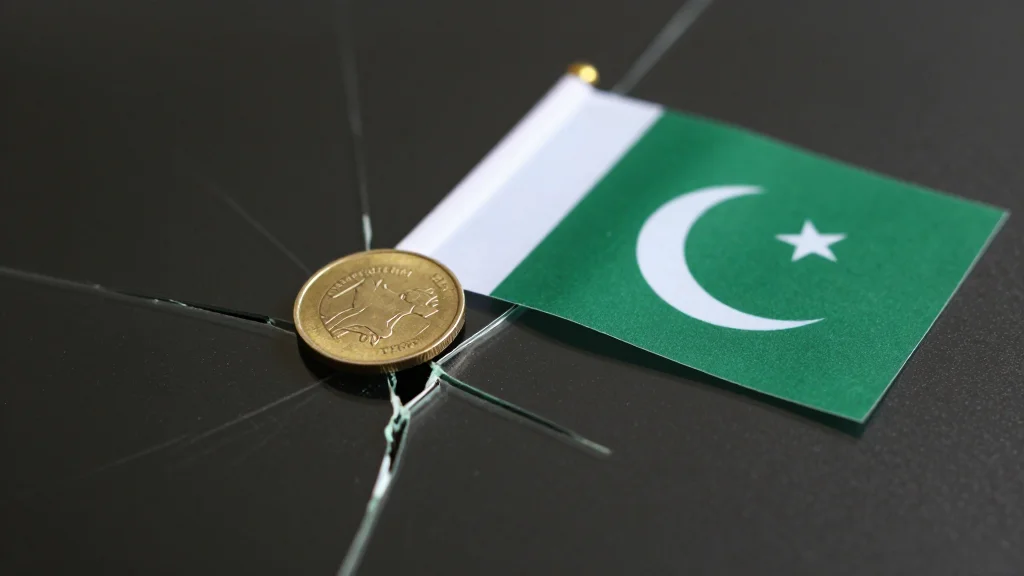
Pakistan's Forex Crunch Deepens as FDI Falls 33% and $4.8 Bn Debt Repayments Loom

Companies Mentioned

Why It Matters
The Pakistani foreign‑exchange crisis highlights how fragile emerging‑market currencies can become when external debt service, dwindling investment and geopolitical shocks converge. A sustained rupee depreciation would raise import costs, fuel inflation and erode real incomes, potentially sparking social unrest. Moreover, Pakistan’s debt exposure—$138 bn in external liabilities and $283 bn in public debt—makes it one of the most leveraged economies in the region, meaning any default risk reverberates through regional banks, sovereign funds and multinational firms with exposure to South Asia. The crisis also tests the effectiveness of alternative financing channels, such as yuan‑denominated panda bonds, and could set a precedent for how other debt‑laden economies diversify away from Western capital markets. For investors and policymakers, the situation serves as a barometer for the health of the broader South Asian FX ecosystem. A sharp rupee slide could pressure neighboring currencies, especially the Indian rupee, by prompting capital outflows and prompting regional central banks to intervene. The episode underscores the importance of structural reforms, transparent fiscal management, and diversified financing to safeguard currency stability in an era of heightened geopolitical uncertainty.
Key Takeaways
- •Pakistan must repay roughly $4.8 bn of external debt in the coming months, tightening foreign‑exchange supplies.
- •FDI fell 33% in FY26 to $1.195 bn, with total foreign investment for ten months at just $31.7 million.
- •Public debt reached about Rs 80.52 trillion (~$283 bn), while external debt stands at $138 bn.
- •Multinationals such as Procter & Gamble, Shell and Uber have scaled back or exited Pakistan, signaling eroding investor confidence.
- •The rupee’s depreciation threatens inflation and could spill over into regional FX markets if reforms are not enacted.
Pulse Analysis
Pakistan’s current forex squeeze is the product of a perfect storm: a debt service calendar that forces $4.8 bn out of a dwindling reserve pool, a steep decline in FDI that robs the economy of hard‑currency inflows, and a geopolitical backdrop that amplifies commodity price volatility. Historically, emerging markets that have faced similar debt‑service crunches—such as Argentina in 2018—have seen currency collapses that trigger capital flight and a sharp rise in inflation. Pakistan’s situation is compounded by its reliance on Gulf remittances, which, while sizable, are insufficient to offset the structural deficits in the balance of payments.
The push toward panda bonds illustrates a strategic pivot toward China’s financial ecosystem, but it also raises the spectre of over‑reliance on a single creditor. While yuan‑denominated debt can diversify funding sources, it does not eliminate the underlying need for credible fiscal discipline and a transparent investment climate. Without substantive reforms—particularly in tax policy, ease of doing business, and governance—any new financing will likely carry higher risk premiums, further weakening the rupee.
For regional markets, Pakistan’s crisis could act as a contagion catalyst. Investors may reassess risk premiums across South Asia, prompting tighter credit conditions and higher yields on sovereign bonds. Central banks in the region could feel pressure to intervene in FX markets to prevent spill‑over depreciation, potentially draining their own reserves. The upcoming IMF review will be a litmus test: a successful program could restore some confidence, but a missed target may accelerate capital outflows, deepening the crisis and reshaping the FX dynamics of the entire subcontinent.
Pakistan's Forex Crunch Deepens as FDI Falls 33% and $4.8 bn Debt Repayments Loom
Comments
Want to join the conversation?
Loading comments...