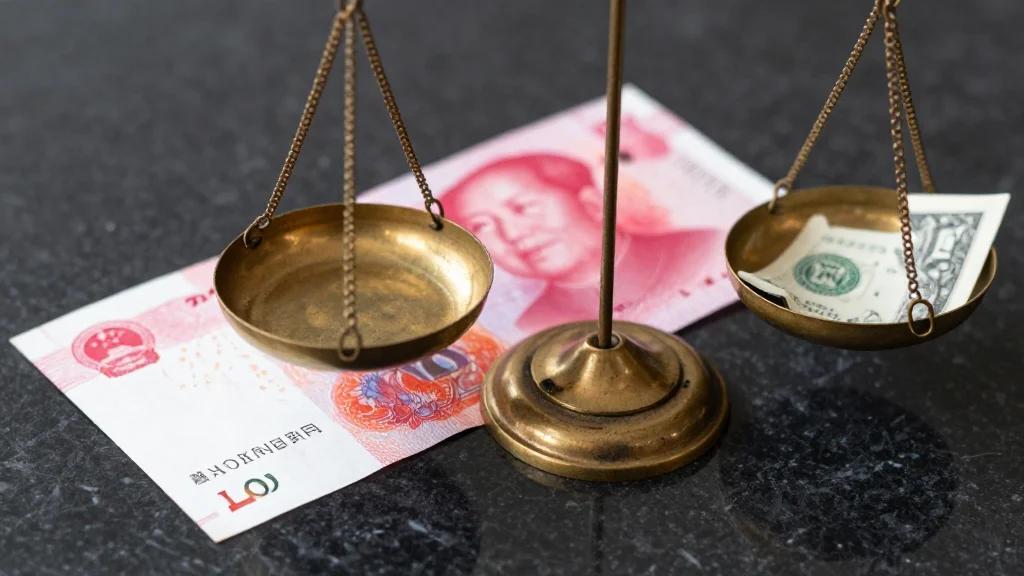
PBOC Sets Yuan Midpoint at Weakest Since April 13, Signaling Continued Depreciation

Why It Matters
The PBOC’s decision to set the yuan’s midpoint at its weakest since April 13 matters because it directly influences the pricing of Chinese exports, the cost of imports, and the broader dynamics of emerging‑market currencies. A depreciating yuan can make Chinese goods more competitive, potentially reshaping trade balances with major partners such as the United States and the European Union. At the same time, weaker yuan pressures Chinese firms that import raw materials, feeding into domestic inflation and prompting the central bank to consider monetary easing or liquidity support. For global investors, the yuan’s trajectory serves as a barometer of China’s economic health and its monetary policy stance. Persistent weakness may signal that the PBOC is prioritizing growth over currency stability, a stance that could affect capital flows into and out of China, influence sovereign bond yields, and alter risk assessments for emerging‑market assets worldwide.
Key Takeaways
- •PBOC set yuan daily midpoint at weakest level since April 13, confirming ongoing depreciation.
- •Onshore yuan anchored at a rate not seen in over three months, prompting a 0.2% drop in offshore CNH.
- •Weaker yuan makes Chinese exports cheaper but raises import costs for domestic firms.
- •Emerging‑market currencies experience heightened volatility as investors reassess China‑linked risk.
- •Next midpoint release and PBOC statements will be closely watched for policy direction.
Pulse Analysis
The PBOC’s latest midpoint guidance is less a surprise than a reaffirmation of a broader trend that has unfolded since the latter half of 2023: a yuan under pressure from a strong dollar, subdued Chinese growth, and a cautious monetary policy stance. Historically, the central bank has used the daily reference rate as a soft tool to signal its tolerance for currency fluctuations without resorting to outright market intervention. By allowing the midpoint to slide to its lowest point since April, the PBOC is effectively communicating that it does not view the current weakness as a crisis requiring immediate corrective action.
From a market perspective, this approach serves two purposes. First, it preserves the yuan’s role as a competitive export currency, which is crucial for China’s trade‑driven recovery strategy. Second, it avoids the perception of a forced defense that could trigger capital flight or speculative attacks. However, the downside risk is that a prolonged depreciation could erode confidence among foreign investors and raise the cost of dollar‑denominated debt held by Chinese corporations. The ripple effect into neighboring emerging markets—where many economies peg or closely manage their currencies against the yuan—adds another layer of systemic risk.
Looking ahead, the PBOC faces a tightrope walk. If domestic data improve, the central bank may feel emboldened to let the yuan appreciate modestly, supporting inflation targets and reducing import‑price pressures. Conversely, a further slowdown could compel the PBOC to deploy liquidity tools, such as lowering the reverse repo rate or providing targeted lending, to cushion the currency. In either scenario, the yuan’s trajectory will remain a key indicator for global investors assessing the health of the world’s second‑largest economy and the stability of emerging‑market FX corridors.
PBOC Sets Yuan Midpoint at Weakest Since April 13, Signaling Continued Depreciation
Comments
Want to join the conversation?
Loading comments...