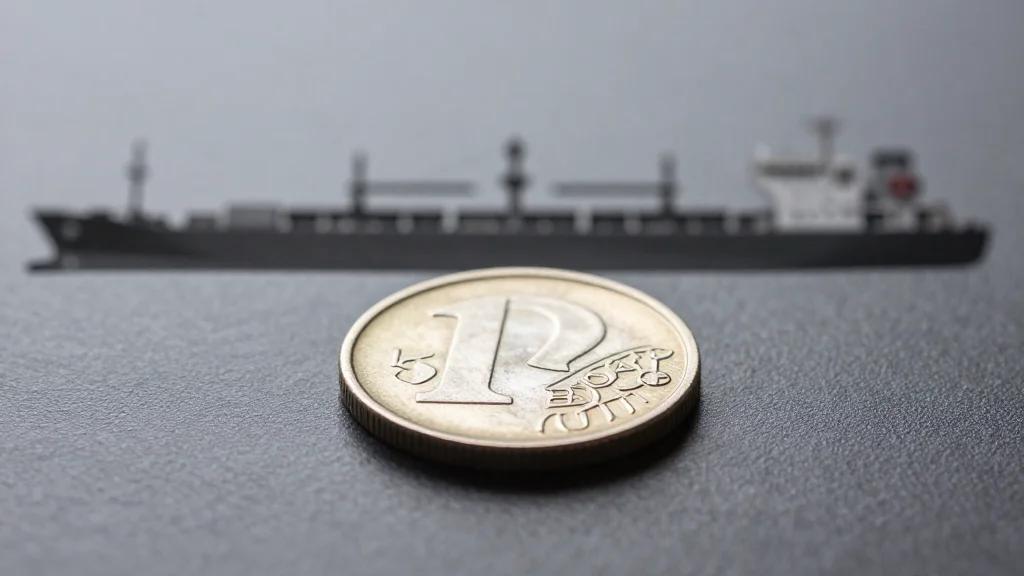
Ruble Set to Remain Strong as Export Revenues Bolster Currency, Central Bank Says

Why It Matters
A resilient ruble reduces the cost of imported goods, directly supporting Russia’s goal of bringing inflation down to the 4% target. By tying currency strength to export performance, the central bank signals that fiscal and monetary policy will be closely coordinated with trade dynamics, a strategy that could stabilize the broader financial system. Moreover, a firm ruble may attract foreign investors seeking exposure to Russian assets, potentially easing capital outflows that have plagued the market since sanctions intensified. If export revenues falter or external inflation spikes, the ruble could weaken, reigniting price pressures and forcing the central bank to tighten policy sooner than planned. The current outlook therefore sets the stage for a delicate balancing act between supporting growth through a strong currency and guarding against inflationary shocks.
Key Takeaways
- •Bank of Russia says export revenue growth will keep the ruble strong in coming months.
- •Q1 2026 inflation recorded at 5.9%, below the February forecast of 6.3%.
- •Central bank expects inflation to return to a 4% target by late 2026.
- •A strong ruble is viewed as a tool to limit the impact of external inflation on domestic prices.
- •Future policy will hinge on export performance and global commodity price trends.
Pulse Analysis
The central bank’s optimism hinges on a narrow set of variables: export earnings, ruble valuation, and the import basket’s composition. Historically, Russia has relied on a strong currency to anchor inflation expectations, but the current sanctions regime has limited access to foreign capital, making export performance even more critical. By explicitly linking the ruble’s strength to export revenues, the Bank of Russia is signaling a willingness to let market forces dictate currency dynamics rather than intervening aggressively, a departure from the heavy-handed tactics of the early 2020s.
If export flows remain robust, the ruble’s firmness could create a virtuous cycle: lower import‑price inflation, reduced pressure on the central bank to hike rates, and a more predictable environment for domestic investors. However, the strategy is vulnerable to external shocks—particularly a slowdown in demand from China or a sharp correction in oil prices. In such a scenario, the ruble could depreciate, eroding the disinflationary buffer and compelling the bank to tighten policy, which would risk slowing growth.
Investors should watch upcoming trade data and the ruble’s trajectory against the dollar and euro. A sustained appreciation would validate the bank’s forecast and could prompt a modest easing of the budget rule’s constraints, while a reversal would likely trigger a reassessment of inflation targets and possibly a shift toward tighter monetary conditions.
Ruble Set to Remain Strong as Export Revenues Bolster Currency, Central Bank Says
Comments
Want to join the conversation?
Loading comments...