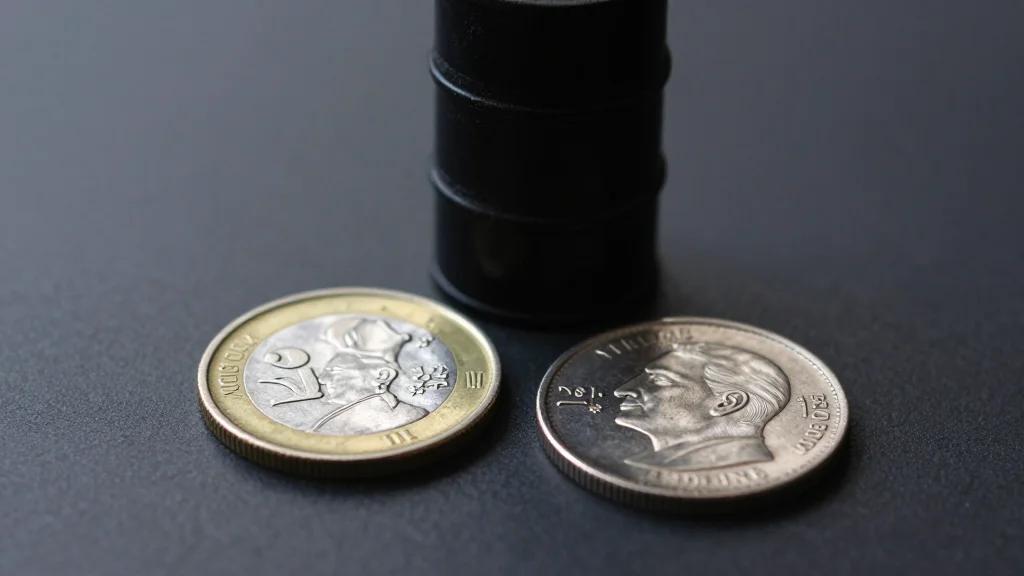
Rupee Slides to 94.27 per Dollar as Oil Spikes and FII Outflows Hit India

Why It Matters
The rupee’s slide to 94.27 per dollar signals heightened vulnerability to external shocks, notably oil price volatility and capital flow reversals. A weaker rupee raises the cost of imported crude, feeding into inflationary pressures that could force the RBI to reconsider its accommodative stance. For investors, the currency move underscores the importance of monitoring FX risk in Indian equities and debt. Persistent outflows from foreign institutional investors may constrain liquidity in the equity market, while a prolonged depreciation could affect corporate earnings tied to imported inputs.
Key Takeaways
- •Rupee fell to 94.27 per dollar, an 11‑paise drop from the previous close of 94.16.
- •Brent crude rose 1.16% to $106.55 per barrel, adding pressure on the currency.
- •Foreign institutional investors sold roughly $1.06 bn of Indian equities on Friday.
- •India's foreign‑exchange reserves stand above $703 bn as of April 17.
- •Technical support for the rupee is seen around the 92.80‑93.20 zone.
Pulse Analysis
The rupee’s recent weakness reflects a classic confluence of external and domestic factors. Oil price spikes have historically been a drag on emerging‑market currencies, and India’s heavy reliance on imported crude amplifies that effect. The 1.16% rise in Brent to $106.55 per barrel is not merely a headline number; it translates into higher import bills, a widening current‑account deficit, and upward pressure on consumer prices. In a scenario where inflation edges higher, the RBI may feel compelled to tighten monetary policy, which could further strain growth.
Equally significant is the reversal of foreign institutional flows. The $1.06 bn outflow suggests that investors are re‑pricing risk amid geopolitical uncertainty. While the domestic equity market posted modest gains, the underlying capital‑flight dynamic could limit the rally’s sustainability. If FIIs continue to sell, the rupee could breach the 94.50 barrier, prompting the RBI to intervene more aggressively, perhaps by tightening the foreign‑exchange rules it has recently loosened.
Looking ahead, the rupee’s path will be dictated by three variables: oil price stability, the trajectory of global risk sentiment, and RBI policy response. A de‑escalation in oil‑producing region tensions could ease price pressure, while a coordinated policy stance from the RBI—balancing inflation control with growth support—will be crucial to restore confidence. Investors should keep a close eye on the 92.80‑93.20 support zone; a break below could trigger a sharper correction, whereas a bounce back into the 93.50‑94.50 range may signal a temporary reprieve.
Rupee slides to 94.27 per dollar as oil spikes and FII outflows hit India
Comments
Want to join the conversation?
Loading comments...