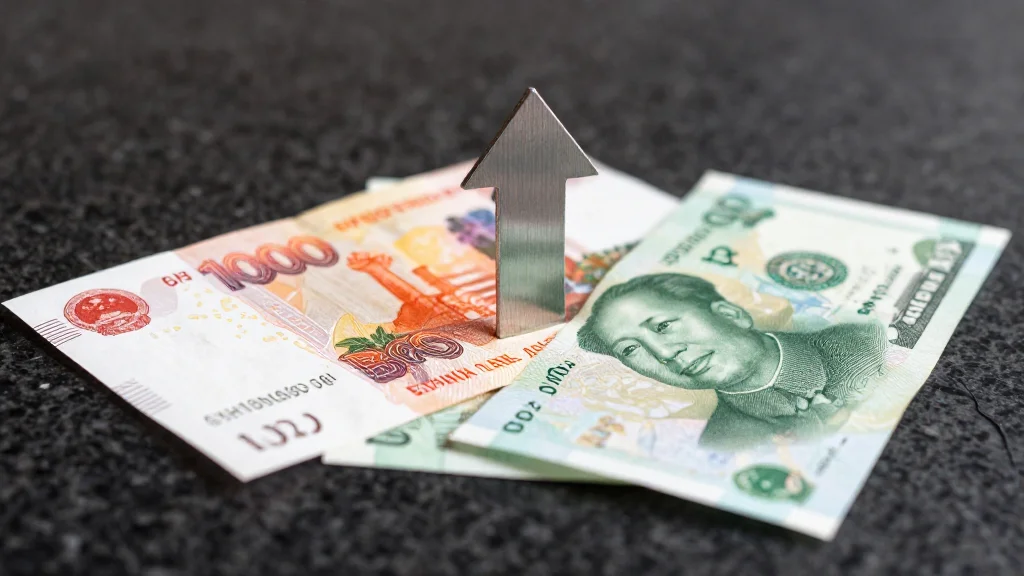
Russian MOEX Slides to 2,682 Points as Yuan Weakens to $0.15

Companies Mentioned
Why It Matters
The MOEX’s slide and yuan’s depreciation highlight the fragility of Russia’s currency ecosystem, where shifts in the Chinese yuan can ripple through the ruble and affect equity valuations. For investors, the movement signals heightened risk in cross‑border capital flows, especially as geopolitical tensions linger. A sustained yuan weakness could erode demand for Russian exports priced in yuan, pressuring the ruble and prompting a shift toward dollar‑denominated hedges. Moreover, the episode underscores the importance of monitoring not just domestic indicators but also external currency dynamics. As Russia seeks to diversify away from the dollar, the yuan’s trajectory becomes a barometer for the success of that strategy. Persistent weakness may force policymakers to reconsider the pace of de‑dollarisation and could influence future monetary‑policy decisions aimed at stabilising the ruble.
Key Takeaways
- •MOEX index fell to 2,682 points on May 13, a 0.29% decline.
- •Yuan exchange rate dropped to 10.81 rubles per yuan (~$0.15).
- •Dollar‑ruble rate held steady at 73‑75 rubles per dollar (~$0.014 per ruble).
- •Analysts cite Putin’s conflict comments and yuan weakness as market drivers.
- •Forecasts keep MOEX in 2,620‑2,750 range; yuan expected between 10.6‑11.2 rubles.
Pulse Analysis
The recent dip in the MOEX, paired with a softer yuan, signals a re‑balancing act in Russia’s currency strategy. While the ruble has held its ground against the dollar, the yuan’s slide erodes one of the alternative anchors Moscow has been courting. Historically, Russia’s push to integrate the yuan into its trade settlements has been a hedge against sanctions, but a weaker yuan reduces its attractiveness for exporters and investors, potentially nudging capital back toward the dollar.
From a market‑structure perspective, the volatility reflects a classic feedback loop: a softer yuan raises the ruble cost of Chinese goods, squeezing corporate margins and prompting equity sell‑offs, which in turn depresses the MOEX. The reaction is amplified by the limited depth of Russia’s foreign‑exchange market, where even modest shifts in a major currency can trigger outsized moves in equity indices. Traders should therefore monitor not only domestic policy cues but also Chinese monetary policy and trade data, as these will likely dictate the next swing in the ruble‑yuan corridor.
Looking forward, the key question is whether the ruble can sustain its current dollar parity amid a potentially prolonged yuan weakness. If diplomatic talks on Ukraine yield tangible progress, we may see a rally in both the MOEX and the ruble, as confidence returns. Conversely, a continuation of yuan depreciation could force Russian authorities to lean more heavily on the dollar, re‑centralising risk and possibly prompting a policy shift toward tighter monetary measures to protect the ruble’s purchasing power.
Russian MOEX Slides to 2,682 Points as Yuan Weakens to $0.15
Comments
Want to join the conversation?
Loading comments...