How Cybersecurity Firms Took Down Glassworm Botnet in One Shot
Key Takeaways
- •CrowdStrike, Google, Shadowserver simultaneously disabled all four Glassworm C2 channels.
- •Glassworm infected developers via VS Code extensions, npm, PyPI, and GitHub repos.
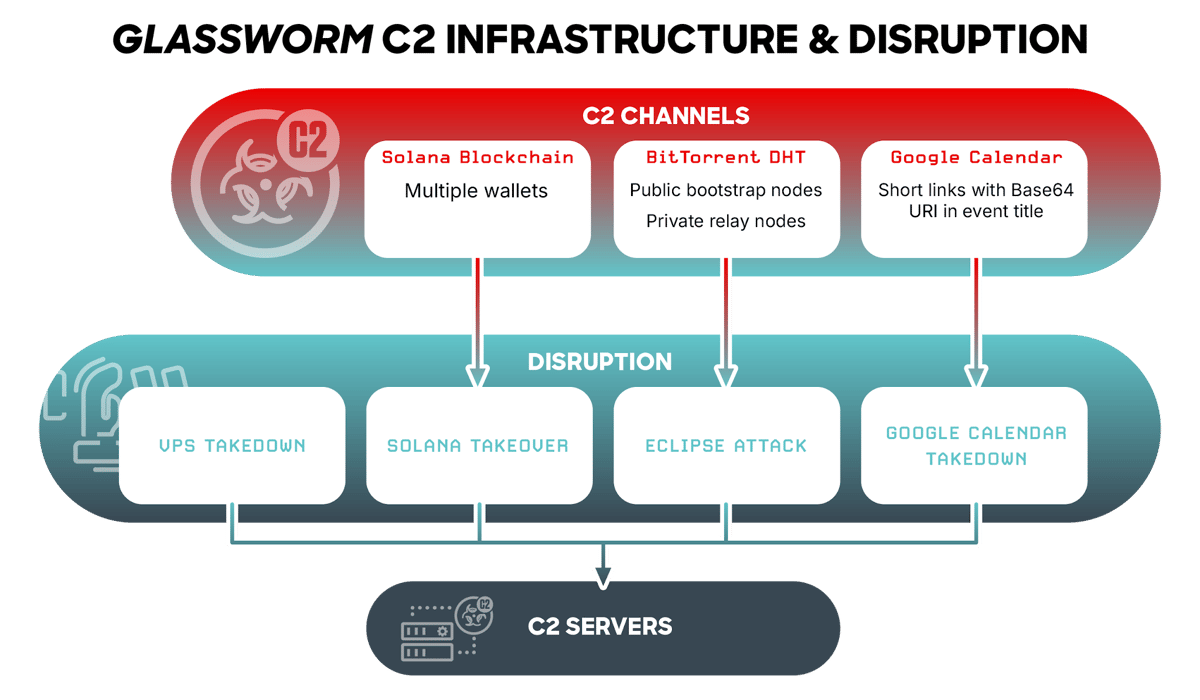
- •Botnet leveraged blockchain, BitTorrent DHT, and Google Calendar for resilient C2.
- •CrowdStrike published YARA rules and a benign beacon IP for remediation.
Pulse Analysis
Developers have become a prized attack surface because their credentials unlock source code, cloud keys, CI/CD pipelines, and package registries. Since early 2025, the Glassworm campaign has morphed from simple malicious npm packages into a sophisticated supply‑chain operation that poisons VS Code extensions, Python wheels, and even GitHub repositories. By compromising a single developer, threat actors can inject malicious code into thousands of downstream products, turning everyday tooling into a vector for large‑scale espionage and financial theft.
What set Glassworm apart was its multi‑layered command‑and‑control architecture. The operators encoded server addresses in immutable Solana blockchain memo fields, stored configuration hashes in the BitTorrent distributed hash table, and hid C2 URLs inside Google Calendar event titles. This blend of blockchain immutability, peer‑to‑peer distribution, and legitimate web services created a resilient network that could survive conventional takedowns. Only a precisely timed, coordinated strike by CrowdStrike, Google, and Shadowserver could sever all four channels at once, demonstrating the logistical complexity required to neutralize such adaptive threats.
The broader implication for the industry is clear: protecting developer ecosystems must move beyond perimeter defenses. Organizations should enforce strict provenance checks for third‑party extensions, adopt automated scanning of dependency trees, and monitor anomalous outbound traffic to known remediation IPs like 164.92.88.210. The release of YARA signatures and the benign beacon provide immediate detection tools, but lasting security will depend on tighter vetting processes within package registries and continuous threat‑intelligence sharing across the software supply chain.
How cybersecurity firms took down Glassworm botnet in one shot
Comments
Want to join the conversation?