Spilling the Neural Tea: A Journey Down the Side-Channel
Key Takeaways
- •Side-channel attacks expose DNN architecture on edge devices.
- •Cloud microarchitectural leaks reveal model topology via cache timing.
- •Full weight recovery remains infeasible for billion‑parameter models.
- •Coarse weight statistics enable functional equivalence attacks.
- •Future GPU designs may create new side‑channel vectors.
Pulse Analysis
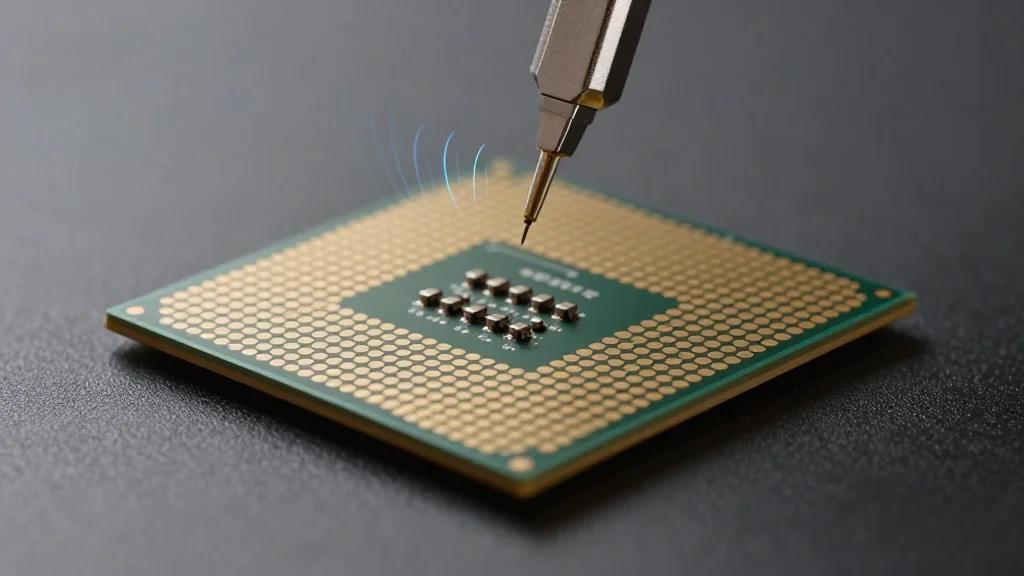
Side‑channel analysis has evolved from early proofs of concept, such as CSI‑NN and Cache Telepathy, into a viable threat vector against modern AI workloads. Physical emanations on embedded platforms can disclose layer counts and activation patterns, while cloud‑based micro‑architectural channels exploit shared caches, memory‑access traces, and GPU context switches to infer model topology. These techniques have already demonstrated architecture recovery for modest networks, underscoring the need for robust isolation and constant‑time implementations in multi‑tenant AI services.
The real challenge lies in scaling attacks to today’s massive models. GPT‑4’s training cost exceeds $100 million, and GPT‑5 is projected to cost over $500 million, making the intellectual property extremely valuable. Directly extracting billions of weights via side channels is currently infeasible; instead, researchers aim for functional equivalence by capturing statistical weight properties such as sparsity, quantization levels, and sign patterns. Combining these coarse‑grained leaks with learning‑based reconstruction can approximate the original model’s behavior without needing exact parameters, opening a pragmatic attack pathway.
Looking ahead, next‑generation GPUs equipped with tensor cores and specialized inference engines will likely emit novel side‑channel signatures. Attackers will need to adapt to these hardware changes, while defenders must anticipate leakage points in emerging compute pipelines. Investing in hardware‑level noise injection, constant‑time kernels, and rigorous threat modeling will be essential to protect AI assets worth hundreds of millions of dollars and to preserve privacy in an increasingly AI‑driven ecosystem.
Spilling the Neural Tea: A Journey Down the Side-Channel
Comments
Want to join the conversation?