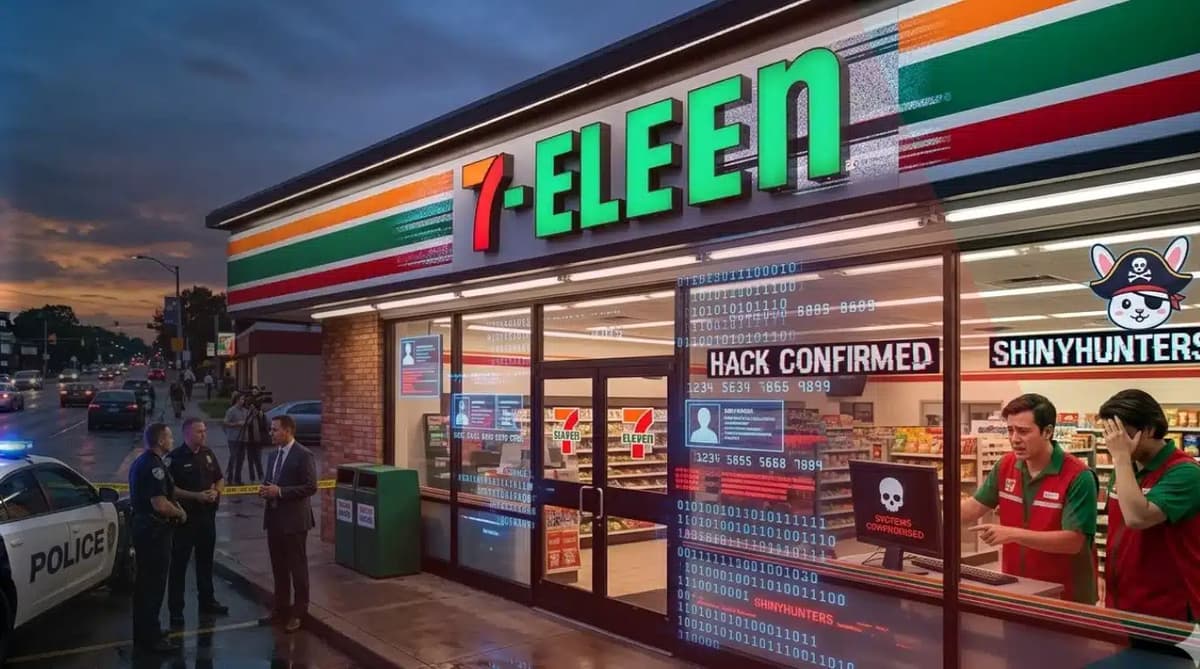
7-Eleven Confirms Hack After Appearing on ShinyHunters Leak List
Why It Matters
The incident underscores the security risks inherent in franchise‑level data stores and could affect thousands of prospective owners, creating regulatory, reputational, and financial exposure for the global convenience‑store chain.
Key Takeaways
- •Breach accessed franchisee application records containing names and addresses
- •Incident discovered April 8, 2026; investigation launched immediately
- •7‑Eleven offers 24 months of free identity theft protection
- •ShinyHunters listed 7‑Eleven in a pay‑or‑leak extortion campaign
- •Franchise network spans 13,000 U.S. stores, amplifying breach impact
Pulse Analysis
The April 2026 breach at 7‑Eleven illustrates how attackers target the less‑protected layers of a massive retail operation. Hackers gained unauthorized access to the systems that store franchisee application data, leaking names, addresses and other undisclosed personal details. The timing coincided with ShinyHunters’ public “pay‑or‑leak” campaign, a tactic that pressures victims to pay to keep stolen data off the dark web. While 7‑Eleven has not formally attributed the intrusion to the group, the overlap raises concerns about ransomware‑driven extortion becoming a preferred vector against franchise networks.
Franchise models amplify cyber risk because each outlet often relies on shared back‑office platforms that house sensitive applicant information. With roughly 13,000 U.S. stores operated by independent owners, a breach can ripple across thousands of potential entrepreneurs, exposing personal identifiers and possibly financial data. Regulators, such as the Maine Attorney General’s Office, are scrutinizing the incident, and the lack of a disclosed victim count may trigger broader state‑level investigations. Industry analysts warn that the breach could pressure other franchisors to reassess data‑segmentation practices and invest in zero‑trust architectures to protect distributed assets.
In response, 7‑Eleven engaged a forensic security firm, remediated vulnerable systems, and extended 24 months of complimentary identity‑theft protection and credit‑monitoring through IDX. The company’s proactive notification aligns with best‑practice breach‑response protocols, yet the episode serves as a cautionary tale for retailers relying on franchisee data pipelines. Cybersecurity experts recommend continuous monitoring, multi‑factor authentication, and regular penetration testing for franchise portals. As the investigation unfolds, the incident is likely to influence both compliance standards and insurance underwriting for franchise‑heavy businesses across the sector.
7-Eleven Confirms Hack After Appearing on ShinyHunters Leak List
Comments
Want to join the conversation?
Loading comments...