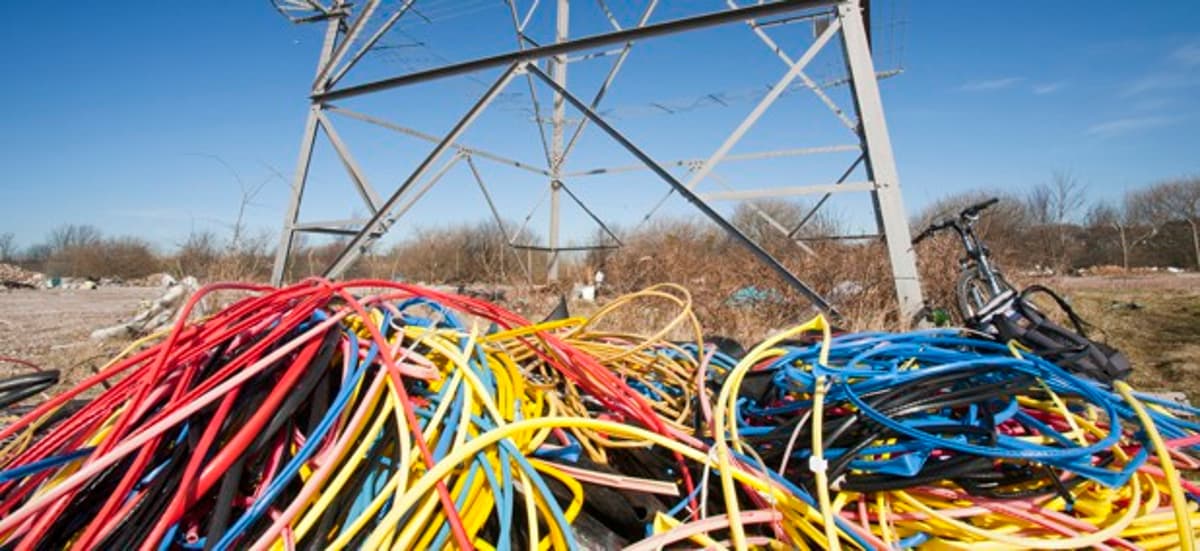
Attacks on Telecom Infrastructure Are Growing, Report Says
Why It Matters
The growing wave of vandalism threatens critical communications services, from 911 calls to hospital networks, imposing billions in hidden economic losses and prompting urgent regulatory action.
Key Takeaways
- •18,000 telecom attacks reported in 2025, 59% rise YoY
- •Attacks affected 11.8 million customers, causing widespread outages
- •Societal costs estimated $294 M‑$1.47 B, far exceeding equipment loss
- •California led with 6,000 incidents; Los Angeles over 1,100
- •23 states proposed, 13 passed stricter scrap‑metal regulations
Pulse Analysis
The latest joint report from the NCTA, CTIA, USTelecom and other industry bodies paints a stark picture: telecom infrastructure is now a prime target for thieves and vandals. Rising copper prices have turned utility and network cables into high‑value loot, while the scrap‑metal market remains loosely regulated, allowing stolen wire to disappear with minimal trace. The result is a 59% jump in reported attacks year‑over‑year, translating into more than 1,500 monthly incidents that disrupt service for millions of households and businesses.
Beyond the immediate inconvenience, the economic fallout is staggering. An independent analysis by economist Edward Lopez quantifies the societal cost of these outages at $294 million to $1.47 billion for 2025—figures that dwarf the replacement cost of the stolen copper itself. The impact ripples through essential services: 911 dispatch centers, telemedicine platforms, airport operations, and even military communications can be compromised, amplifying the financial toll. California bears the brunt, with over 6,000 attacks, while Texas, Missouri, Washington and Georgia also see significant activity.
In response, telecom operators are bolstering physical security, launching public tip programs, and tightening contractor verification. Meanwhile, state legislators are moving to close regulatory gaps, with 23 states introducing, and 13 enacting, stricter scrap‑metal rules and higher penalties for infrastructure damage. Experts argue that lasting mitigation will require a coordinated approach—stronger laws, better oversight, and sustained collaboration between industry and law‑enforcement—to safeguard the backbone of America’s always‑connected economy.
Attacks on telecom infrastructure are growing, report says
Comments
Want to join the conversation?
Loading comments...