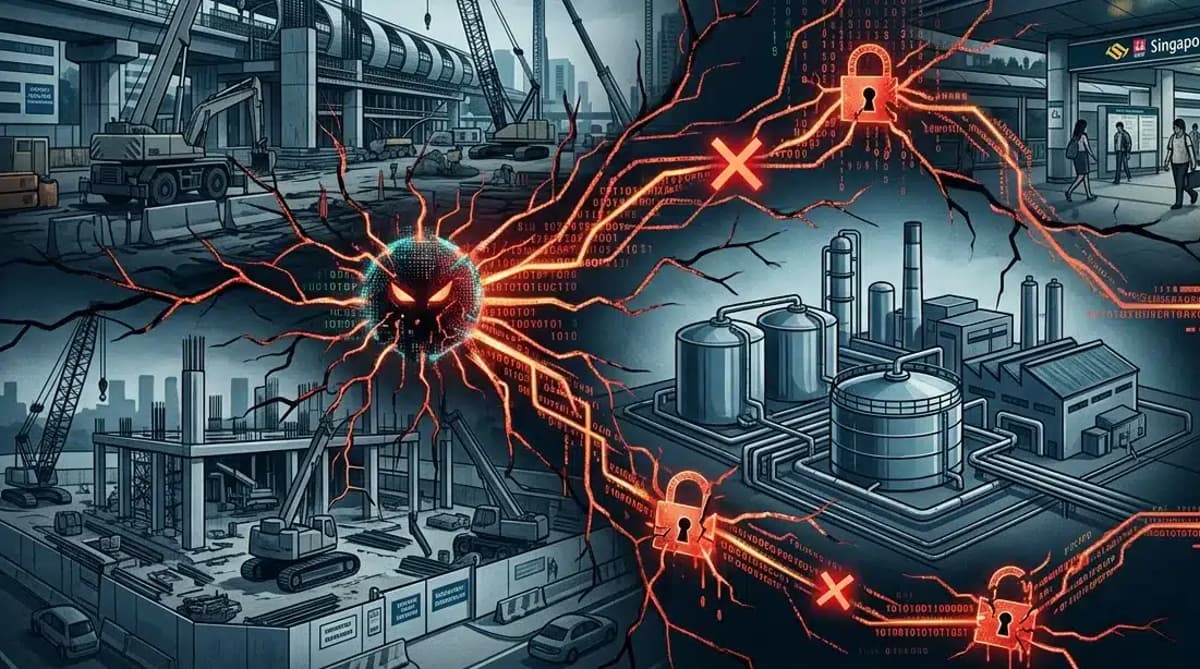
Cybersecurity Incident Strikes Contractor Handling JRL MRT Stations and NEWater Factory 3 Projects
Why It Matters
The breach highlights vulnerabilities in the supply chain of essential public‑sector projects, prompting tighter cyber‑risk oversight for infrastructure contractors. It underscores the potential financial and reputational stakes for firms handling sensitive government contracts.
Key Takeaways
- •Shanghai Tunnel Engineering Co's tender data for JRL and NEWater leaked
- •LTA suspended contractor's system access but construction continues unhindered
- •PUB confirmed no breach of its digital systems or NEWater data
- •$465.2M (≈$344M) JRL contract and $205M (≈$152M) NEWater contract at risk
- •Contractor engaged external cybersecurity specialist and is fully cooperating
Pulse Analysis
Singapore’s rapid expansion of its mass‑transit network and water‑recycling capacity places the Jurong Region Line and Changi NEWater Factory 3 at the forefront of national development. Both projects are funded through multi‑hundred‑million‑dollar contracts, with the JRL alone representing a $465.2 million (≈$344 million) investment to connect new residential hubs. The NEWater facility, slated to produce 50 million gallons of reclaimed water daily by 2028, is a cornerstone of the city‑state’s sustainability agenda, making any operational disruption a matter of public concern.
The breach, discovered in late April, involved the theft of publicly posted tender documents rather than proprietary design data, mitigating immediate operational risk. Nonetheless, the Land Transport Authority acted swiftly, revoking Shanghai Tunnel Engineering Co’s access to its digital platforms to prevent further exposure. The Public Utilities Board’s audit confirmed that its own systems remained untouched, reinforcing confidence in Singapore’s layered cyber‑defense posture. The contractor’s decision to enlist an external cybersecurity specialist signals a proactive stance, yet the incident spotlights gaps in third‑party risk management across government‑linked supply chains.
Industry observers see this episode as a cautionary tale for infrastructure firms worldwide. As governments increasingly digitize procurement and project management, contractors must embed robust cyber‑hygiene and continuous monitoring into their operations. The financial stakes—over $500 million combined in USD equivalents—mean that even a minor data leak can trigger regulatory scrutiny, project delays, and reputational damage. Moving forward, Singapore is likely to tighten cybersecurity requirements for future tenders, prompting a market shift toward vendors with certified security frameworks and incident‑response capabilities.
Cybersecurity Incident Strikes Contractor Handling JRL MRT Stations and NEWater Factory 3 Projects
Comments
Want to join the conversation?
Loading comments...