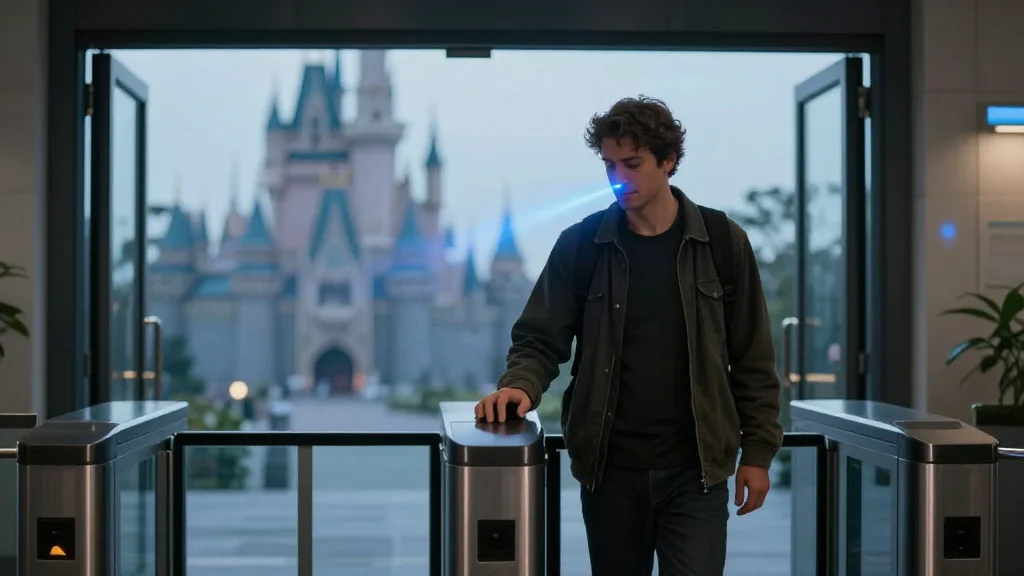
Disneyland Introduces Optional Facial‑Recognition Entry Lanes, Sparking Privacy Debate

Companies Mentioned
Why It Matters
Disneyland’s facial‑recognition lanes illustrate how biometric surveillance is moving from high‑security contexts into everyday consumer experiences. The deployment tests the limits of current privacy legislation, especially California’s robust data‑protection framework, and could influence how other public venues approach biometric authentication. Moreover, the temporary retention policy highlights a growing industry focus on minimizing data exposure while still leveraging convenience‑driven technologies. If Disney’s model proves secure and well‑received, it may accelerate adoption across the hospitality and entertainment sectors, reshaping guest interaction standards. Conversely, any breach or regulatory pushback could trigger a backlash that slows biometric rollouts and prompts stricter oversight, reinforcing the need for transparent data‑handling practices.
Key Takeaways
- •Disneyland and Disney California Adventure introduce optional facial‑recognition entry lanes.
- •Biometric data is converted to a numeric template and deleted after 30 days, unless needed for legal reasons.
- •All guests are photographed regardless of opt‑in status, raising consent concerns.
- •Privacy groups cite California’s CCPA/CPRA as potential regulatory hurdles.
- •Industry analysts warn that short‑term biometric storage still poses breach risks.
Pulse Analysis
Disney’s foray into biometric entry reflects a broader commercial push to embed AI‑driven identification into high‑traffic venues. Historically, facial recognition has been confined to law‑enforcement and secure facilities; its migration to a family‑friendly theme park marks a cultural shift in how convenience is prioritized over privacy. The company’s 30‑day data‑retention window is a tactical compromise, aiming to allay regulator concerns while still harvesting enough data for operational gains. However, the fact that images are captured even for non‑opt‑in guests undermines the opt‑in narrative and could be interpreted as de‑facto surveillance.
From a market perspective, Disney’s move could create a competitive ripple effect. Rival amusement operators may feel pressure to adopt similar technologies to avoid perceived inefficiencies, potentially leading to a cascade of biometric deployments across the sector. Yet the heightened visibility of Disney’s brand also amplifies any misstep; a single breach involving facial templates could erode consumer trust not only in Disney but in the broader ecosystem of biometric services.
Regulatory dynamics will likely shape the rollout’s trajectory. California’s privacy statutes grant consumers the right to know, delete, and opt out of data collection, and the state’s attorney general has signaled willingness to enforce these rights aggressively. Disney’s commitment to third‑party audits and transparency reporting may pre‑empt harsher penalties, but the lack of an independent oversight body for biometric data remains a gap. In the longer term, the industry may see the emergence of standardized biometric‑privacy frameworks, akin to the FIDO Alliance’s work on authentication, to provide clearer guidelines for consent, storage, and breach response. Disney’s experiment will serve as a real‑world case study for how such standards can be operationalized in a consumer‑facing environment.
Disneyland Introduces Optional Facial‑Recognition Entry Lanes, Sparking Privacy Debate
Comments
Want to join the conversation?
Loading comments...