Evoke Wellness at Hilliard Updates Its Breach Notification
•March 2, 2026
0
Why It Matters
The inconsistent breach reporting undermines patient trust and raises regulatory scrutiny for health‑care providers handling sensitive data. It also highlights the broader compliance risks when organizations face simultaneous privacy and advertising violations.
Key Takeaways
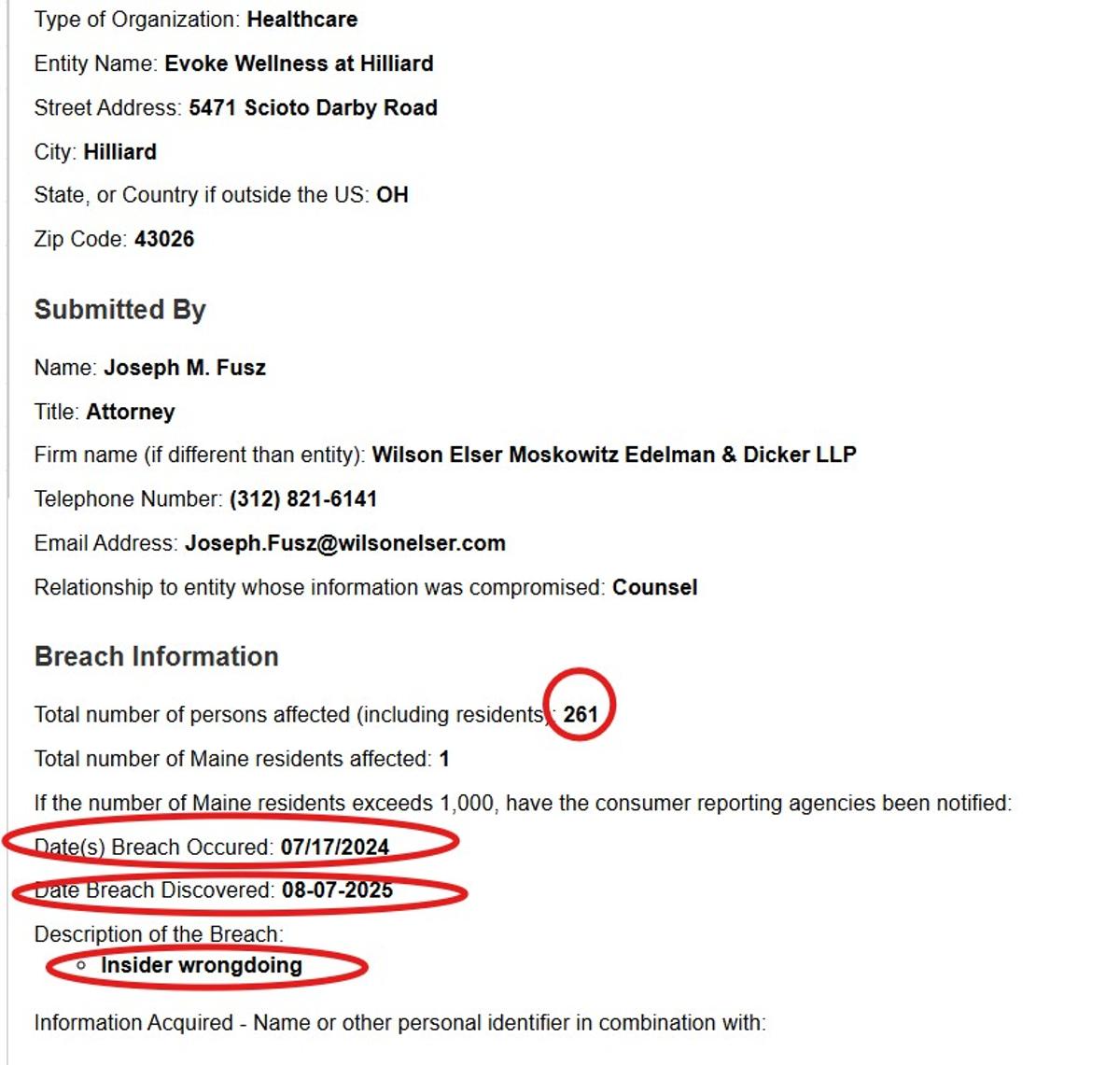
- •Breach notification lists 261 affected, contradicts earlier counts
- •Insider employee sold patient data on dark web
- •FTC settlement required $1.9M payment for deceptive ads
- •Notification timeline shows over year delay in discovery
- •Evoke has not responded to data breach inquiries
Pulse Analysis
The Evoke Wellness at Hilliard case illustrates how fragmented breach communications can amplify reputational damage for health‑care operators. Initial investigations in mid‑2025 uncovered an insider who extracted patient records and marketed them on the dark web, prompting law‑enforcement involvement and a July 2025 patient notice. Yet the subsequent Maine filing introduced a new timeline—July 2024 to August 2025—and a reduced victim count, creating confusion about whether the organization faced multiple incidents or simply revised its reporting. Such inconsistencies erode confidence among patients, insurers, and regulators, especially when personal health information, including Social Security numbers and medical histories, is at stake.
Compounding the privacy fallout, Evoke settled a Federal Trade Commission case in June 2025, agreeing to a $1.9 million penalty for misleading advertising. The FTC action underscores that compliance failures are rarely isolated; violations in one domain often signal broader governance weaknesses. For addiction‑treatment centers, which already operate under heightened scrutiny due to the sensitivity of their clientele, the dual pressure of data‑security breaches and deceptive marketing can trigger intensified oversight from state health agencies and the Department of Health and Human Services.
Looking ahead, Evoke’s silence to data‑breach inquiries may invite further enforcement actions, including potential HHS investigations into the accuracy of its breach counts. Stakeholders should monitor any updates to the notification, as clarified timelines and victim numbers will affect credit‑monitoring obligations and possible class‑action exposure. Organizations in the behavioral‑health space can learn from this episode by aligning breach detection, reporting, and remediation processes with both HIPAA and state‑level notification statutes, while ensuring transparency to preserve patient trust and avoid compounded regulatory penalties.
Evoke Wellness at Hilliard updates its breach notification
0
Comments
Want to join the conversation?
Loading comments...