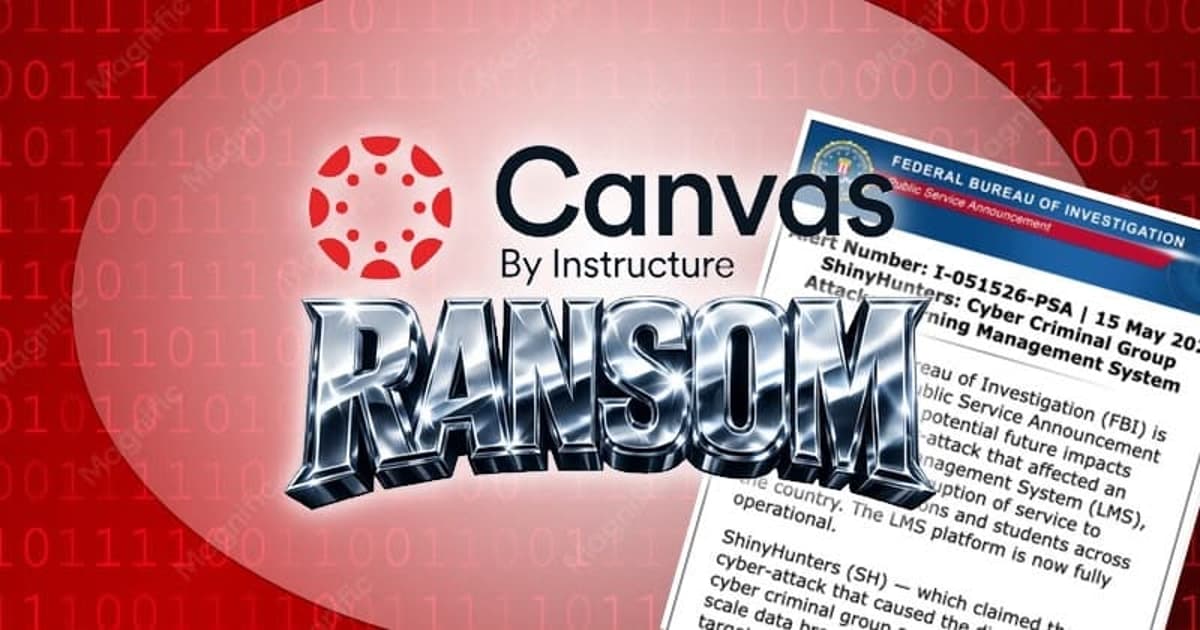
FBI Warns Students and Staff that ShinyHunters May Come Knocking After Canvas Breach
Key Takeaways
- •FBI alerts that ShinyHunters may harass victims post‑Canvas breach
- •Instructure paid ransom, received confirmation of data destruction
- •Extortion tactics include threatening texts, swatting, and phishing using stolen IDs
- •Schools urged to enforce MFA and ignore unsolicited ransom demands
Pulse Analysis
The education sector has become a lucrative target for ransomware gangs, with learning management systems storing vast troves of personal data. Over the past few years, groups like Conti, LockBit, and now ShinyHunters have repeatedly exploited the open‑access nature of university networks, leveraging weak authentication and legacy software. The financial incentives are clear: a single breach can yield millions in ransom and a subsequent market for stolen credentials. This trend forces institutions to balance open‑learning environments with robust cyber defenses, a challenge amplified by budget constraints and the rapid shift to hybrid instruction.
In the latest episode, the FBI’s Internet Crime Complaint Center issued a public service announcement on May 15, 2026, after Instructure confirmed a ransom payment to ShinyHunters for the compromise of its Canvas platform. The attackers reportedly provided “shred logs” to prove data destruction, yet the FBI cautions that such assurances are unreliable. The breach exposed student IDs, faculty emails, and potentially sensitive communications, creating a fertile ground for extortion, swatting, and spear‑phishing campaigns. By publicly naming the threat actor without naming the vendor, the FBI aimed to alert millions of users while avoiding legal complications.
For universities and K‑12 districts, the immediate response should focus on hardening accounts with multi‑factor authentication, conducting comprehensive credential resets, and educating users about phishing tactics that exploit stolen data. Longer‑term strategies include investing in zero‑trust architectures, regular penetration testing, and cyber‑insurance that accounts for ransom‑related losses. The Canvas incident also signals that ransomware groups will continue to target education providers, prompting regulators to consider stricter reporting requirements. Institutions that proactively adopt layered security controls will not only mitigate financial fallout but also protect their reputations in an increasingly data‑driven academic landscape.
FBI warns students and staff that ShinyHunters may come knocking after Canvas breach
Comments
Want to join the conversation?