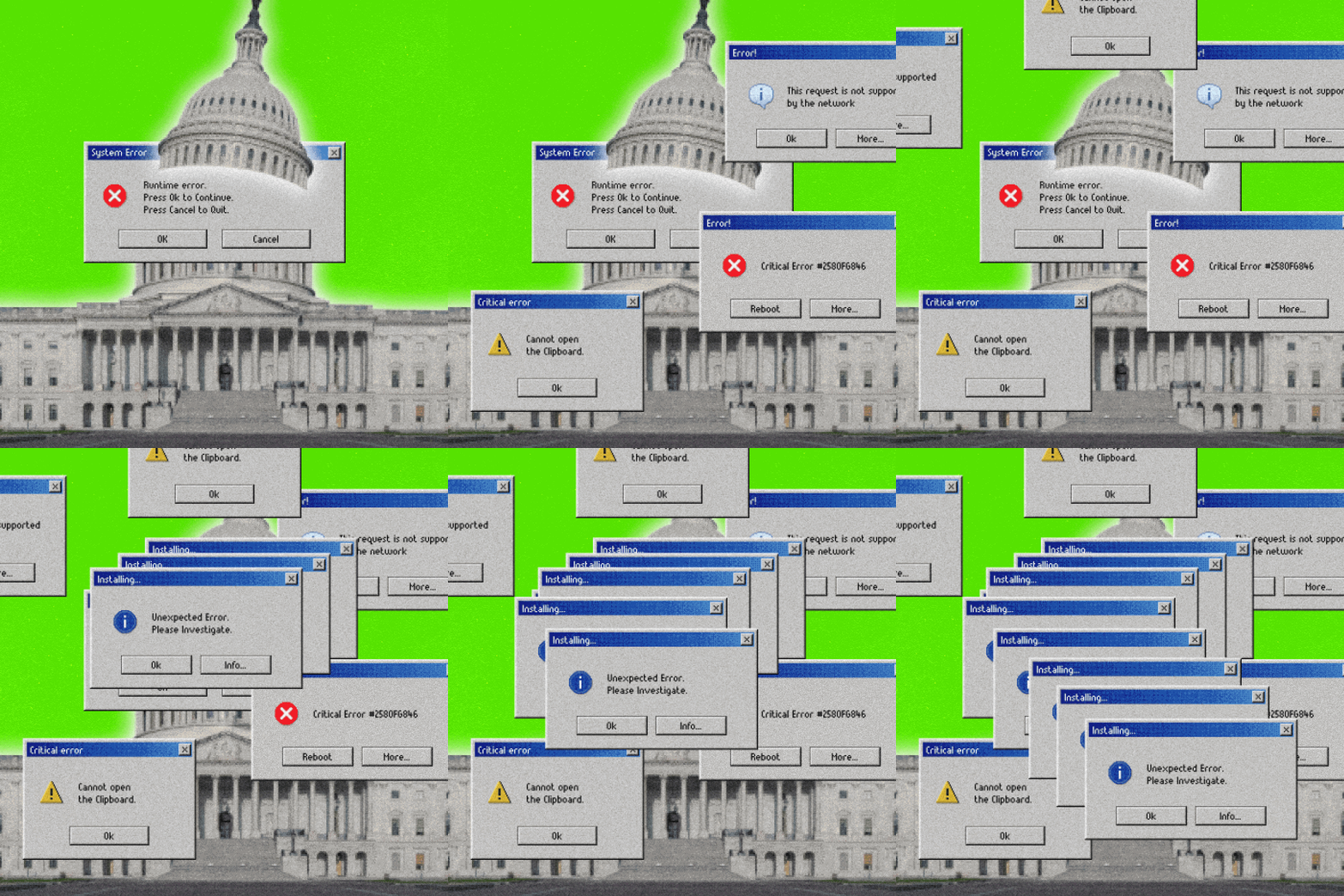
Fears Mount That US Federal Cybersecurity Is Stagnating—Or Worse
•December 31, 2025
0
Companies Mentioned

Why It Matters
The weakened federal cyber posture increases the risk of a large‑scale breach that could compromise sensitive government data and critical infrastructure, undermining national security and public trust.
Key Takeaways
- •CISA cut ~1,000 staff, 40% vacancy rate.
- •Staffing cuts risk reversing cybersecurity progress.
- •Shutdown exposed IT backlog and contractor knowledge gaps.
- •Experts warn major federal cyber incident inevitable.
- •Rebuilding plan scheduled for 2026 amid resource strain.
Pulse Analysis
Since its 2018 launch, the Cybersecurity and Infrastructure Security Agency has become the linchpin of the United States’ effort to modernize a sprawling, legacy‑laden federal IT environment. Early successes included mandating baseline patching, establishing the Continuous Diagnostics and Mitigation program, and issuing the first federal cybersecurity playbooks. These initiatives lifted minimum security standards and helped agencies move from reactive fire‑fighting to proactive threat hunting. However, the agency’s ability to sustain momentum depends heavily on staffing levels and consistent budgetary support.
The recent wave of personnel reductions—approximately 1,000 positions eliminated and a 40 percent vacancy rate in key CISA divisions—has sharply curtailed the agency’s operational bandwidth. Coupled with the 2023 partial government shutdown, which stalled contract renewals and forced seasoned IT contractors off‑board, the federal cyber workforce now faces knowledge gaps that are difficult to fill quickly. Analysts warn that such attrition erodes the depth of threat intelligence, slows incident response, and leaves critical infrastructure exposed to sophisticated adversaries seeking to exploit any lapse.
Looking ahead, CISA’s announced 2026 rebuilding effort will need to attract talent faster than the market currently supplies, while simultaneously restoring dormant contractor relationships. Policymakers may consider earmarking dedicated funding for cyber hiring, expanding public‑private partnership pipelines, and tightening oversight of agency staffing plans to prevent future backsliding. Until such measures take hold, the federal government remains vulnerable, and a major breach could have cascading effects on everything from election security to supply‑chain integrity, reinforcing the urgency of sustained investment in cyber resilience.
Fears Mount That US Federal Cybersecurity Is Stagnating—or Worse
0
Comments
Want to join the conversation?
Loading comments...