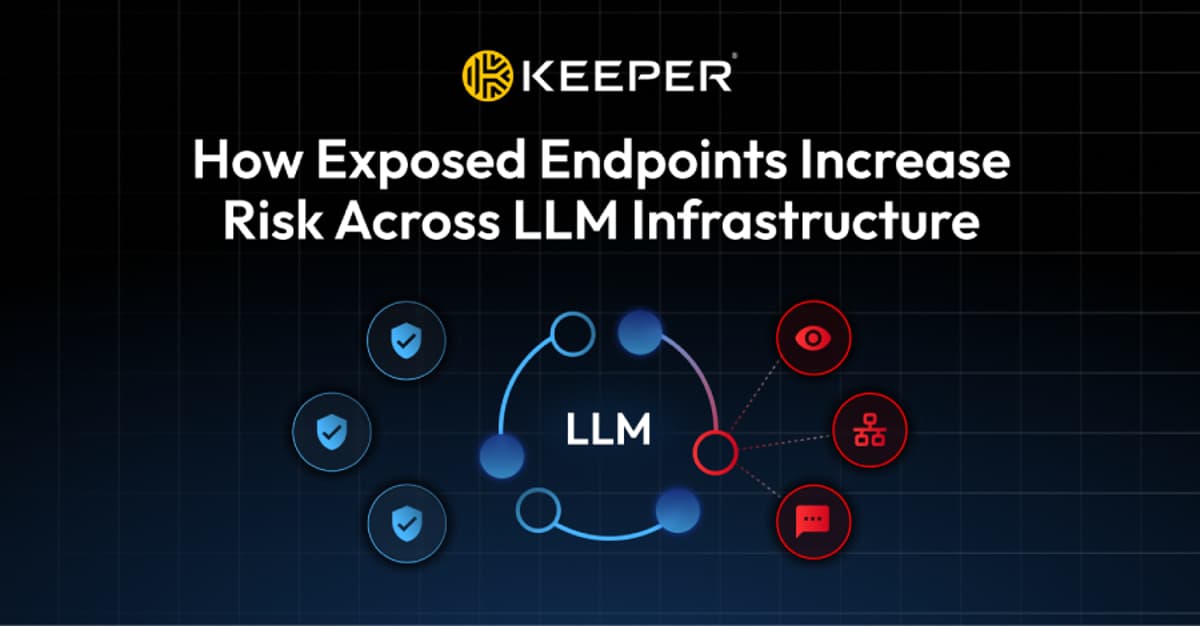
How Exposed Endpoints Increase Risk Across LLM Infrastructure
•February 23, 2026
0
Why It Matters
Compromised LLM endpoints can turn a single breach into a full‑scale compromise of an organization’s data and services, making endpoint privilege management a critical security priority.
Key Takeaways
- •LLM endpoints expand attack surface when over‑privileged
- •Unauthenticated public APIs expose models to external threats
- •Static tokens and NHIs enable long‑term credential abuse
- •Zero‑trust and JIT limit damage from compromised endpoints
- •Automated secret rotation mitigates long‑lived credential risk
Pulse Analysis
The surge in private LLM deployments has shifted security focus from model algorithms to the surrounding infrastructure. Organizations now run dozens of APIs that handle prompts, model updates, and tool integrations, each acting as a potential ingress point. Unlike traditional services, these endpoints often operate with elevated privileges to support automated workflows, making them attractive targets for threat actors seeking to leverage the model’s access to internal data stores and cloud resources.
A common weakness lies in the handling of non‑human identities (NHIs) such as service accounts and API keys. These credentials are frequently hard‑coded, left unrotated, and granted broad permissions to avoid development friction. When an endpoint is exposed—through misconfigured firewalls, public‑facing APIs, or forgotten test services—attackers inherit the NHI’s trusted access, enabling prompt‑driven data exfiltration or abuse of tool‑calling capabilities. The resulting credential sprawl amplifies risk, as each compromised token can act as a foothold for lateral movement across the AI stack.
Mitigating this threat requires a zero‑trust mindset tailored to LLM environments. Enforcing least‑privilege policies for both human users and NHIs, deploying just‑in‑time access, and continuously monitoring privileged sessions shrink the window of opportunity for attackers. Automated secret rotation and the elimination of long‑lived credentials further reduce exposure. As LLMs become core components of enterprise workflows, robust endpoint privilege management will be essential to safeguard sensitive data and maintain operational integrity.
How Exposed Endpoints Increase Risk Across LLM Infrastructure
0
Comments
Want to join the conversation?
Loading comments...