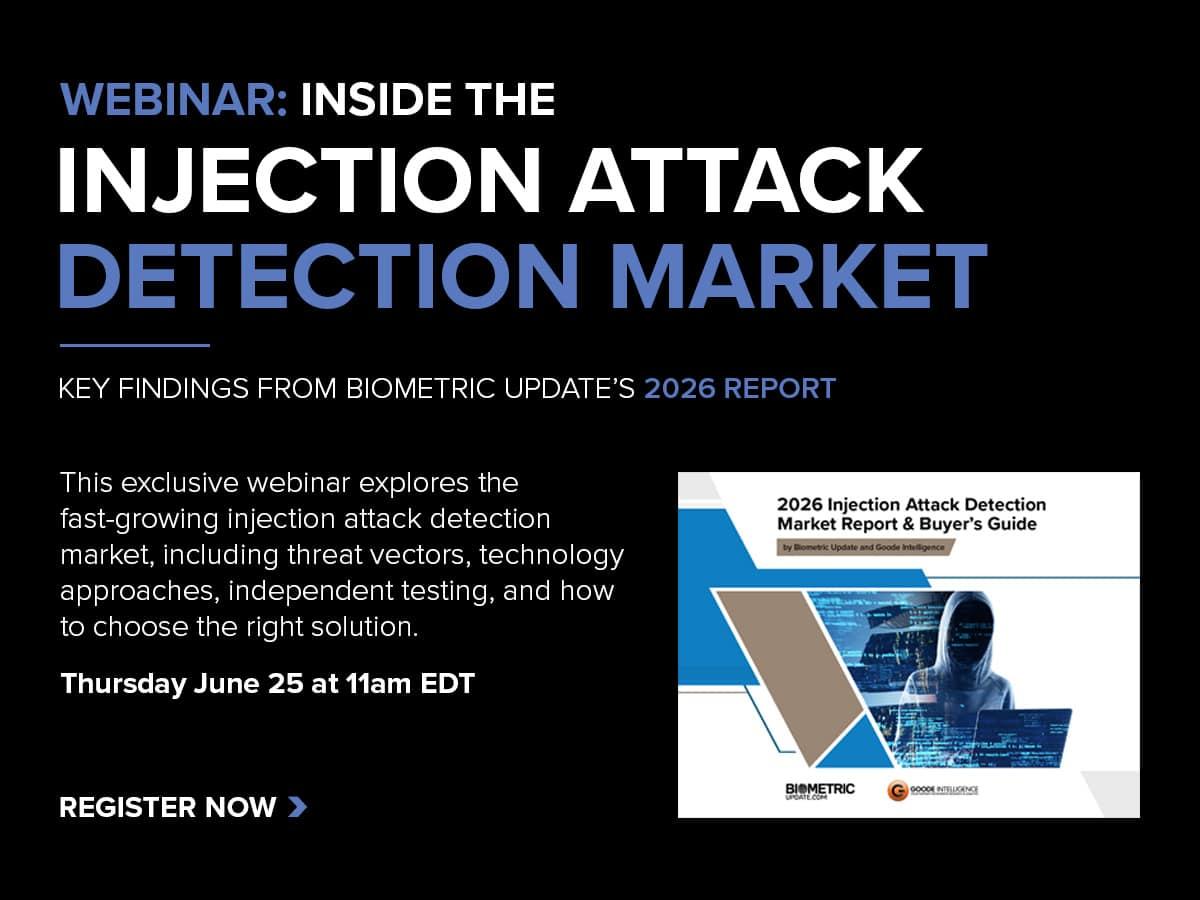
Inside the Injection Attack Detection Market
Companies Mentioned
Why It Matters
Injection attacks jeopardize the integrity of digital identity and financial fraud defenses, making specialized detection solutions a critical investment for security‑focused organizations.
Key Takeaways
- •Injection attacks exploit synthetic media to bypass biometric liveness checks
- •AI-generated deepfakes increase attack sophistication beyond traditional presentation attacks
- •2026 report forecasts $1.2 billion market size by 2030
- •Mitek and Innovatrics will demo live injection detection solutions
- •Compliance requires adherence to standards such as CEN/TS 18099
Pulse Analysis
The rise of generative AI has transformed the threat landscape for biometric authentication. Unlike classic presentation attacks that rely on physical artifacts, injection attacks inject manipulated data streams—virtual camera feeds, deepfake videos, or tampered sensor inputs—directly into the verification pipeline. This technique can bypass liveness detection, spoof facial, iris, or voice biometrics, and scale rapidly across digital onboarding platforms. As financial institutions, government agencies, and consumer apps increasingly depend on biometric identity proofing, the potential for large‑scale fraud and reputational damage has grown dramatically.
Industry analysts estimate the injection‑attack‑detection (IAD) market will exceed $1.2 billion by 2030, driven by heightened regulatory scrutiny and the need for AI‑resilient security controls. The 2026 report from Biometric Update and Goode Intelligence maps the emerging vendor ecosystem, highlighting leaders such as Mitek and Innovatrics that combine deep‑learning classifiers with hardware‑level signal verification. New standards—CEN/TS 18099, ISO/IEC 30107‑3 extensions, and emerging certification programs—are shaping product roadmaps and offering buyers measurable assurance. The report’s forecast also notes a shift toward integrated solutions that embed detection directly into SDKs and cloud APIs, reducing latency and simplifying compliance.
For enterprises evaluating IAD solutions, the webinar provides a practical decision‑making framework: assess detection accuracy across synthetic media variants, verify alignment with emerging standards, and evaluate scalability for high‑volume transaction environments. Selecting a partner that offers continuous model updates and transparent performance metrics is essential to stay ahead of adversarial AI tactics. As injection attacks become a mainstream vector, organizations that adopt robust detection early will safeguard digital trust, reduce fraud losses, and maintain regulatory compliance in an increasingly AI‑driven world.
Inside the injection attack detection market
Comments
Want to join the conversation?
Loading comments...