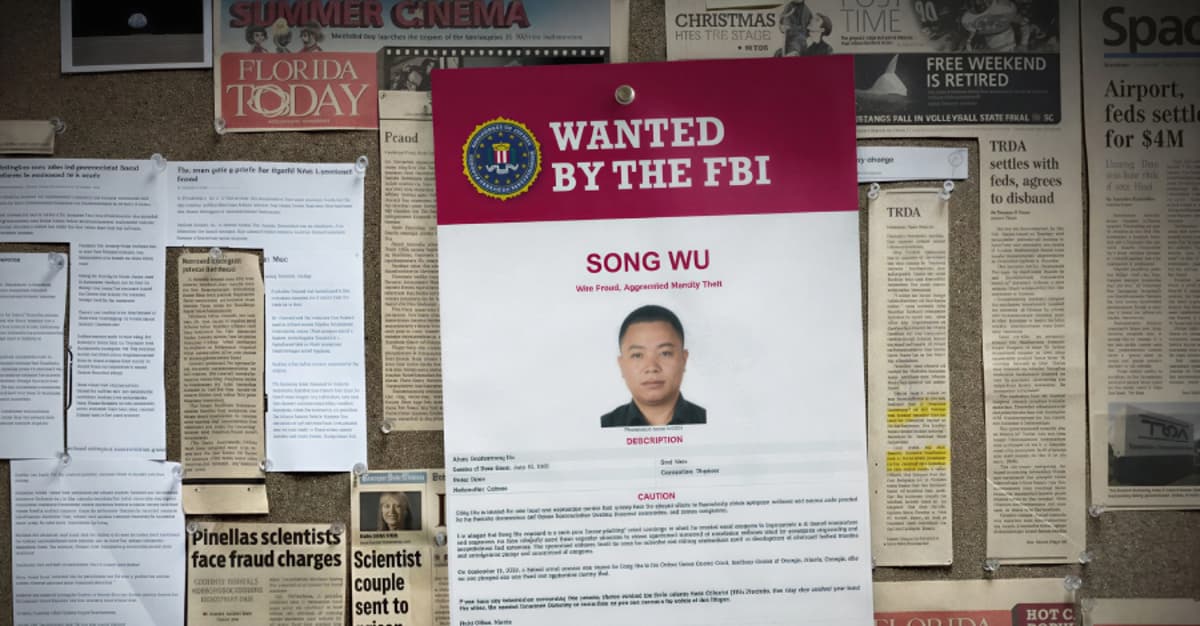
NASA Employees Duped in Chinese Phishing Scheme Targeting U.S. Defense Software
Why It Matters
The breach exposes how trusted collaboration channels can be weaponized to violate export‑control laws, threatening U.S. defense technology and prompting stricter cybersecurity and compliance measures.
Key Takeaways
- •Chinese national posed as U.S. researcher to steal aerospace software
- •NASA and defense agencies inadvertently shared export‑controlled code to the imposter
- •Indictment cites wire fraud and 14 aggravated identity‑theft counts
- •FBI adds suspect to Most Wanted list, warning of missile‑design misuse
Pulse Analysis
The recent revelation that a Chinese engineer successfully masqueraded as an American researcher to extract sensitive aerospace software underscores a growing convergence of cyber‑espionage and export‑control violations. While spear‑phishing has long been a staple of intelligence operations, this case is distinctive because the stolen assets included modeling tools used for missile design and aerodynamic analysis—materials that U.S. law classifies as controlled technical data. The Office of Inspector General’s report shows that the deception persisted for years, exploiting the trust inherent in academic and industry collaborations, and highlights how traditional security protocols can be bypassed by sophisticated social‑engineering tactics.
For NASA, the Air Force, the Navy, the Army and numerous universities, the breach represents both a data loss and a legal exposure. Employees unknowingly transmitted export‑controlled software to a foreign national, potentially violating the International Traffic in Arms Regulations (ITAR) and the Export Administration Regulations (EAR). The indictment of Song Wu, an engineer at the state‑owned Aviation Industry Corporation of China, carries up to 20 years per wire‑fraud count, signaling a harsh judicial response. The incident also raises concerns for private‑sector contractors who routinely share design files with external partners, prompting a reevaluation of data‑sharing agreements.
Policymakers are now urging tighter verification of email identities and more rigorous training on export‑control compliance. The FBI’s addition of Wu to the Most Wanted list serves as a deterrent, but it also illustrates the need for automated detection tools that can flag repeated requests for the same classified software. Organizations are advised to implement multi‑factor authentication, enforce least‑privilege access, and conduct regular audits of outbound data flows. As geopolitical competition intensifies, the blend of cyber‑intrusion and illegal technology transfer is likely to become a persistent threat to U.S. national security.
NASA Employees Duped in Chinese Phishing Scheme Targeting U.S. Defense Software
Comments
Want to join the conversation?
Loading comments...