One Telecom Provider Hosted Most of the Middle East ’S Active C2 Infrastructure
Key Takeaways
- •STC hosts 981 C2 servers, 72% of regional malicious infrastructure
- •Infrastructure patterns persist longer than rapidly rotating malware indicators
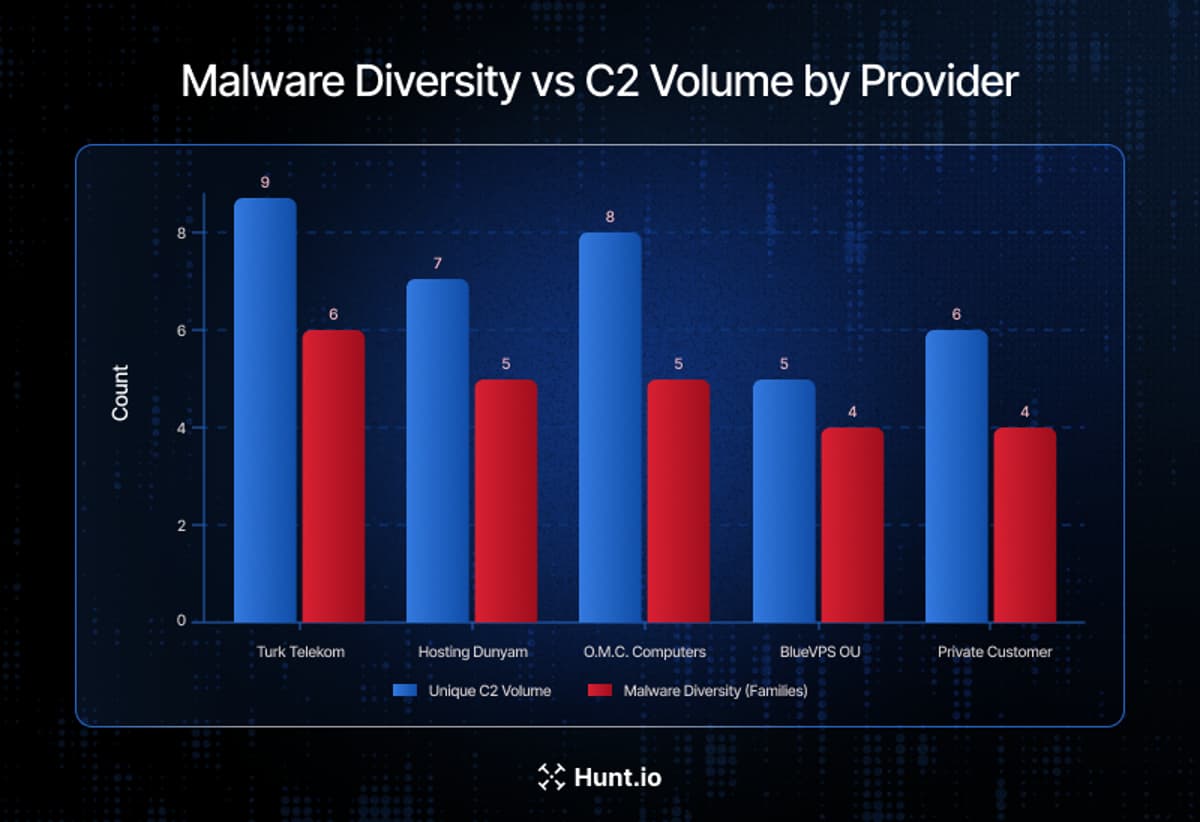
- •Türk Telekom shows highest malware family diversity across its C2 endpoints
- •Regxa identified as top bulletproof hosting provider for espionage campaigns
- •Provider-level tracking enables defenders to prioritize blocking stable threat infrastructure
Pulse Analysis
The Hunt.io investigation shines a light on a hidden dimension of cyber risk in the Middle East: the physical hosting ecosystem. By mapping over 1,350 C2 servers, researchers discovered that a single telecom carrier, Saudi Telecom Company, shoulders nearly three‑quarters of the region’s malicious traffic. This concentration is not unique to STC; a handful of providers—including SERVERS TECH FZCO in the UAE, OMC in Israel, and Iraq’s Regxa—repeatedly appear across unrelated campaigns. Such patterns suggest that attackers favor stable, readily available infrastructure, often compromising legitimate customer devices rather than relying on dedicated bullet‑proof hosts.
For threat‑hunting teams, the findings underscore a strategic shift from chasing fleeting indicators to monitoring enduring infrastructure footprints. Malware families like Cobalt Strike, AsyncRAT, and Mirai may change daily, but the underlying VPS, ISP networks, and reseller services persist, offering a more reliable signal of adversary intent. This reality forces defenders to balance operational constraints—blocking an entire provider can disrupt legitimate business—with the need to isolate high‑risk traffic. Advanced telemetry, certificate analysis, and provider‑level reputation scoring become essential tools for narrowing the focus without collateral damage.
Looking ahead, the cybersecurity community must deepen collaboration with telecom operators and hosting providers to remediate compromised assets quickly. Joint threat‑intelligence sharing, automated abuse‑reporting pipelines, and proactive network hygiene can reduce the attack surface that malicious actors exploit. As the Middle East’s digital economy expands, the convergence of consumer ISP networks and bullet‑proof hosting will likely intensify, making infrastructure‑centric defenses a cornerstone of regional cyber resilience.
One Telecom Provider Hosted Most of the Middle East ’s Active C2 Infrastructure
Comments
Want to join the conversation?