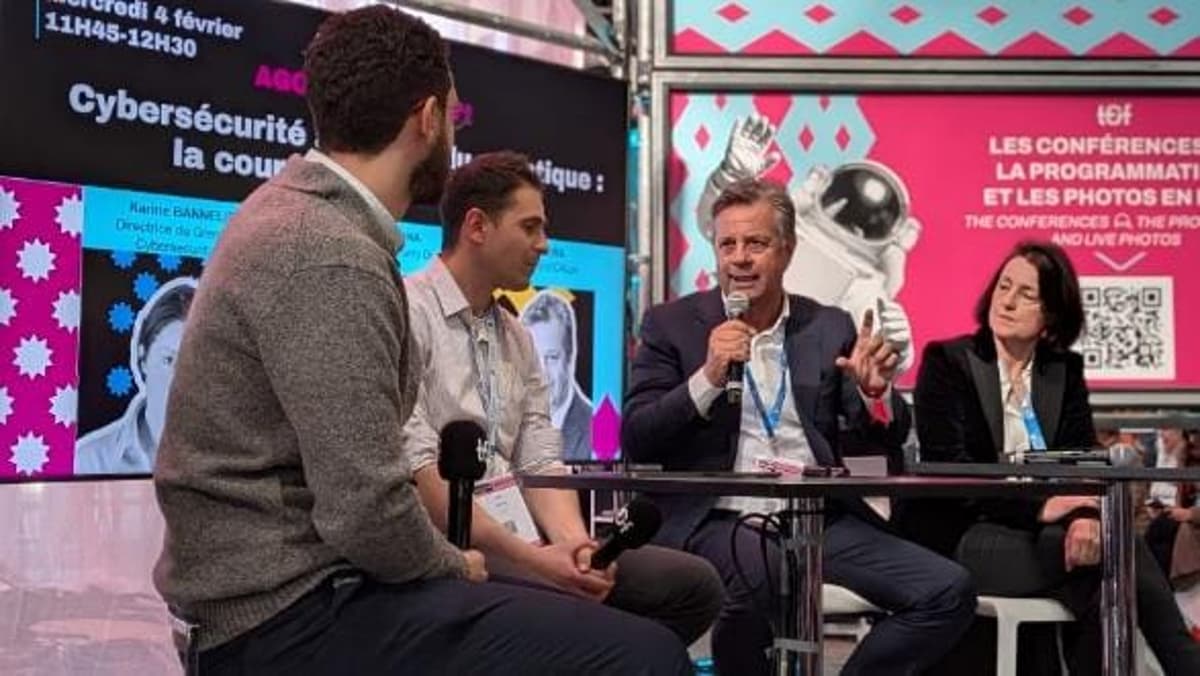
SEALSQ Corp (NASDAQ: LAES) Details Quantum-Resistant Security Vision
•February 4, 2026
0
Why It Matters
The platform addresses the imminent Q‑Day risk, giving European critical infrastructure a quantum‑resistant foundation and reducing reliance on foreign security stacks. Its end‑to‑end approach could set a new standard for sovereign cyber‑defense across multiple high‑value sectors.
Key Takeaways
- •Quantum‑resistant platform integrates hardware Root of Trust.
- •Enables cryptographic agility for evolving quantum threats.
- •Targets Europe’s defense, aerospace, and energy infrastructure.
- •Provides end‑to‑end lifecycle security from manufacturing to decommission.
- •Introduces proprietary quantum highway for secure node connectivity.
Pulse Analysis
The accelerating pace of quantum computing is forcing governments and enterprises to rethink traditional encryption. Industry analysts predict a "Q‑Day" within the next decade, when Shor’s algorithm could break RSA and ECC standards. SEALSQ’s announcement arrives at a critical juncture, positioning the company at the forefront of post‑quantum readiness. By embedding a silicon‑based Root of Trust directly into secure microcontrollers, the firm creates an immutable identity layer that resists both physical tampering and supply‑chain attacks, a capability increasingly demanded by regulators and defense ministries.
Beyond hardware, SEALSQ couples its trust anchor with quantum‑resistant key exchange and digital signature schemes optimized for constrained environments. This cryptographic agility allows customers to transition smoothly as new standards emerge, avoiding costly overhauls. The platform’s lifecycle governance—covering manufacturing, deployment, firmware updates, and secure decommissioning—addresses a common blind spot in many security solutions, ensuring long‑term resilience for mission‑critical systems in sectors such as aerospace, energy, and national defense.
For Europe, the initiative represents more than a technology upgrade; it is a strategic move toward digital sovereignty. By reducing dependence on non‑European cryptographic providers, the platform could reshape market dynamics and spur a regional ecosystem of quantum‑ready hardware vendors. Investors will likely watch SEALSQ’s progress closely, as successful deployment could unlock significant contracts with governments and large industrial players, establishing the company as a benchmark for secure, quantum‑future‑proof infrastructure.
SEALSQ Corp (NASDAQ: LAES) Details Quantum-Resistant Security Vision
0
Comments
Want to join the conversation?
Loading comments...