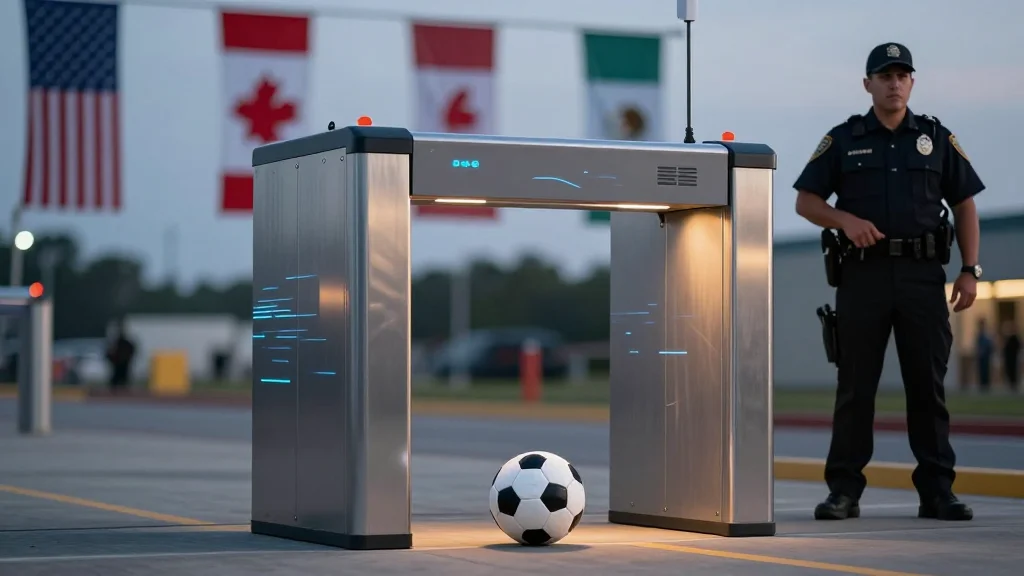
Securing LA28 and Mega-Events From Attacks in the Era of Data Overload
Companies Mentioned
Why It Matters
Without integrated, real‑time intelligence, agencies risk slow, fragmented responses that could jeopardize public safety and the reputation of host cities. Effective data fusion is essential to prevent both physical attacks and cyber fraud at high‑profile mega‑events.
Key Takeaways
- •LA28 will host ~6 million visitors, demanding advanced security coordination.
- •Data from sensors, OSINT, and agencies creates analysis paralysis risk.
- •Interpol's Project Stadia aims to centralize event intelligence globally.
- •Cyber attacks on mega‑events projected to exceed one billion attempts by 2026.
- •Integrated decision‑intelligence platforms fuse siloed data for rapid response.
Pulse Analysis
The security landscape for mega‑events is evolving from perimeter checkpoints to a data‑centric battlefield. LA28 and the 2026 World Cup will generate terabytes of information across open‑source channels, sensor networks, and inter‑agency reports. Traditional manual analysis cannot keep pace, leading to "analysis paralysis" where critical threats slip through. By leveraging OSINT, signal intelligence, and automated correlation tools, authorities can sift through the noise and surface actionable insights before an incident materializes.
Cyber threats compound the physical security challenge. Historical data shows a 2.5‑fold rise in attacks between the London 2012 and Tokyo 2020 Olympics, and forecasts predict over a billion attempted cyber operations targeting the 2026 World Cup. Fraudulent ticketing schemes, phishing campaigns, and crypto scams threaten both revenue streams and fan experience. Advanced analytics that link illicit financial flows to digital footprints enable rapid disruption of these networks, but only if the underlying data is unified and accessible across jurisdictions.
The answer lies in integrated decision‑intelligence platforms that break down silos between local police, federal agencies, and international partners like Interpol. These systems ingest heterogeneous data—social media chatter, watch‑list alerts, sensor feeds—and apply AI‑driven pattern detection to flag lone‑wolf actors and coordinated threats alike. When deployed consistently, such infrastructure not only safeguards individual events but also leaves a legacy of smarter, collaborative security frameworks for future host cities. The stakes are high, but the technology to turn data overload into decisive protection is already within reach.
Securing LA28 and Mega-Events From Attacks in the Era of Data Overload
Comments
Want to join the conversation?
Loading comments...