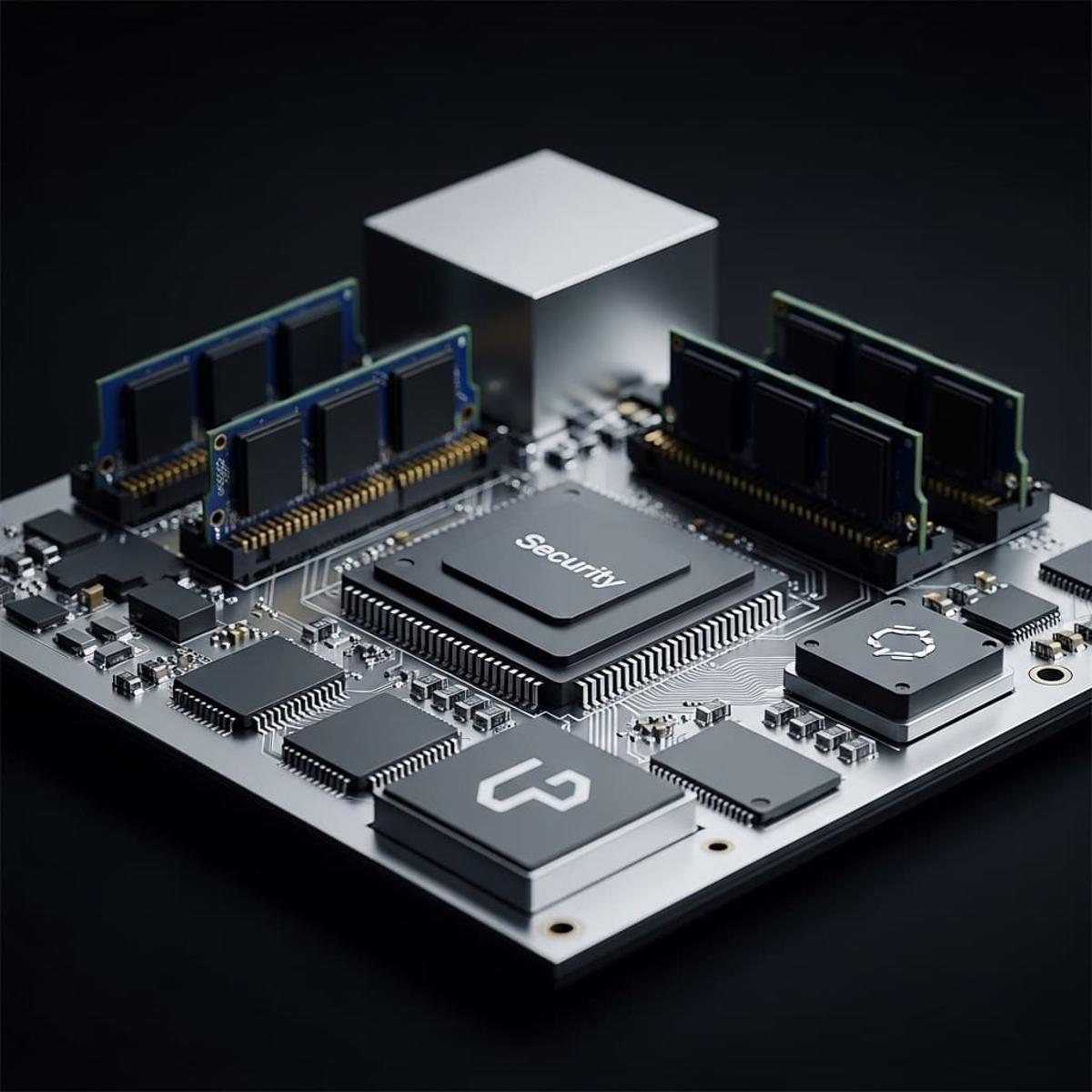
Shows Trojan-Resilient NTT Protects Post-Cryptography Against Control and Timing Faults
•February 4, 2026
0
Why It Matters
Securing the control path of NTT protects the integrity of post‑quantum cryptographic operations, a prerequisite for trustworthy high‑speed data communication and emerging security standards.
Key Takeaways
- •Secure NTT detects control‑flow and timing faults
- •Implemented on Artix‑7 FPGA with minimal overhead
- •Protects lattice‑based PQC like Kyber, Dilithium, NTRU
- •Addresses hardware Trojan risks in global FPGA supply chain
Pulse Analysis
Number Theoretic Transform (NTT) is the workhorse behind lattice‑based post‑quantum cryptography, enabling fast polynomial multiplication that underpins standards such as Kyber, Dilithium and NTRU. While the algorithm reduces computational complexity, its hardware realization on reconfigurable platforms introduces attack surfaces that traditional side‑channel countermeasures often overlook. In particular, manipulation of control signals or insertion of timing‑delay Trojans can silently corrupt an entire cryptographic operation, a threat amplified by the increasingly globalized FPGA supply chain. Consequently, protecting the control plane is as vital as encrypting the data payload.
The authors propose a Trojan‑resilient NTT that embeds fault‑detection modules directly into the datapath. By monitoring a clock‑cycle counter and a dedicated control‑status register, the design flags deviations from expected timing and control‑flow patterns, then applies a recomputation‑with‑negate‑operands (RENO) correction on the fly. Implemented on an Artix‑7 device with a five‑stage pipeline, the prototype adds only a few percent of logic resources and incurs no measurable latency increase, demonstrating that security can coexist with the high‑throughput demands of modern data‑center links. The approach also scales with larger transform sizes, preserving its low‑overhead profile.
With the FPGA market projected to exceed $11 billion by 2027, the ability to harden cryptographic primitives at the silicon level becomes a competitive differentiator for chip vendors and system integrators. The secure NTT architecture offers a template for embedding control‑flow integrity checks without sacrificing area efficiency, a crucial factor for edge devices and IoT gateways that rely on low‑cost reconfigurable logic. Future work that extends these techniques to ASICs and broader side‑channel models could accelerate the adoption of resilient post‑quantum solutions across telecommunications, cloud services, and national‑security infrastructures. Adopting such resilient designs early can mitigate costly retrofits once standards solidify.
Shows Trojan-Resilient NTT Protects Post-Cryptography Against Control and Timing Faults
0
Comments
Want to join the conversation?
Loading comments...