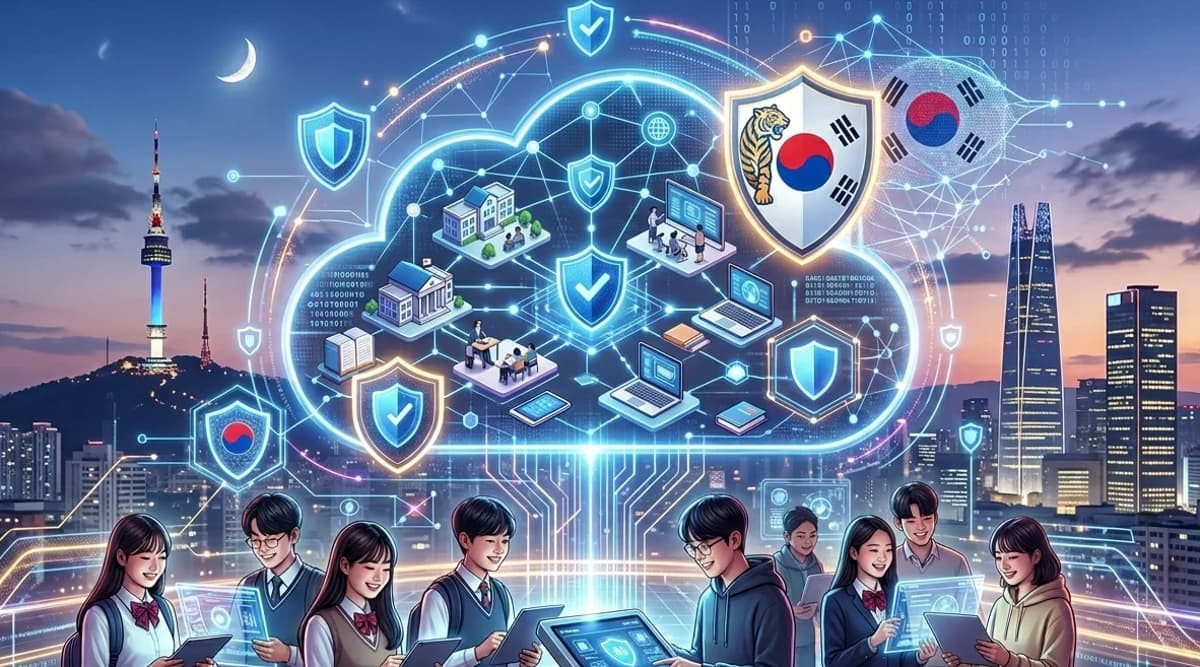
South Korea Expands AI Cybersecurity to Safeguard Cloud-Based Education Systems
Companies Mentioned
Why It Matters
The upgrade strengthens the nation’s digital education infrastructure, reducing disruption risk and setting a benchmark for AI‑enabled security in cloud‑based learning environments.
Key Takeaways
- •AI system flagged 480 million threat indicators in 2025, 86 k confirmed intrusions
- •AI Cyber Safety Center launched April 23 2026 to centralize monitoring
- •Pilot links detection with NAVER, NHN, KT; expanding to seven providers
- •By Dec 2026, AI model will train on regional education log data
Pulse Analysis
Globally, education institutions are accelerating cloud adoption to deliver AI‑enhanced learning tools, but this shift also widens the attack surface for cyber threats. Traditional security stacks often lag behind the speed of cloud deployments, prompting governments to explore AI‑driven solutions that can ingest massive data streams and flag anomalies in real time. South Korea’s approach reflects a broader trend where public sectors leverage homegrown AI models to meet unique regulatory and operational demands, rather than relying solely on off‑the‑shelf products.
The Korean Ministry of Education’s partnership with KERIS illustrates how a centralized AI security framework can scale across a heterogeneous network of 435 institutions, from universities to regional offices. By detecting 480 million potential threats and confirming 86 000 intrusions in a single year, the system demonstrates both the volume of risk and the efficacy of automated response. The launch of the AI Cyber Safety Center consolidates expertise, enabling faster incident triage and fostering collaboration with private cloud providers such as NAVER, NHN, and KT. This integration ensures that threat intelligence flows seamlessly between on‑premise and cloud environments, a critical capability as 158 schools already rely on private clouds for AI‑driven curricula.
Looking ahead, the plan to train a specialized AI model on education‑specific log data by the end of 2026 promises more precise detection of sector‑tailored attacks, reducing false positives and improving remediation speed. As the pilot expands to seven cloud partners and the enhanced model rolls out nationwide in 2027, South Korea positions itself as a pioneer in AI‑centric cybersecurity for education. Other nations are likely to watch closely, potentially adopting similar frameworks to safeguard the next generation of digital classrooms.
South Korea Expands AI Cybersecurity to Safeguard Cloud-Based Education Systems
Comments
Want to join the conversation?
Loading comments...