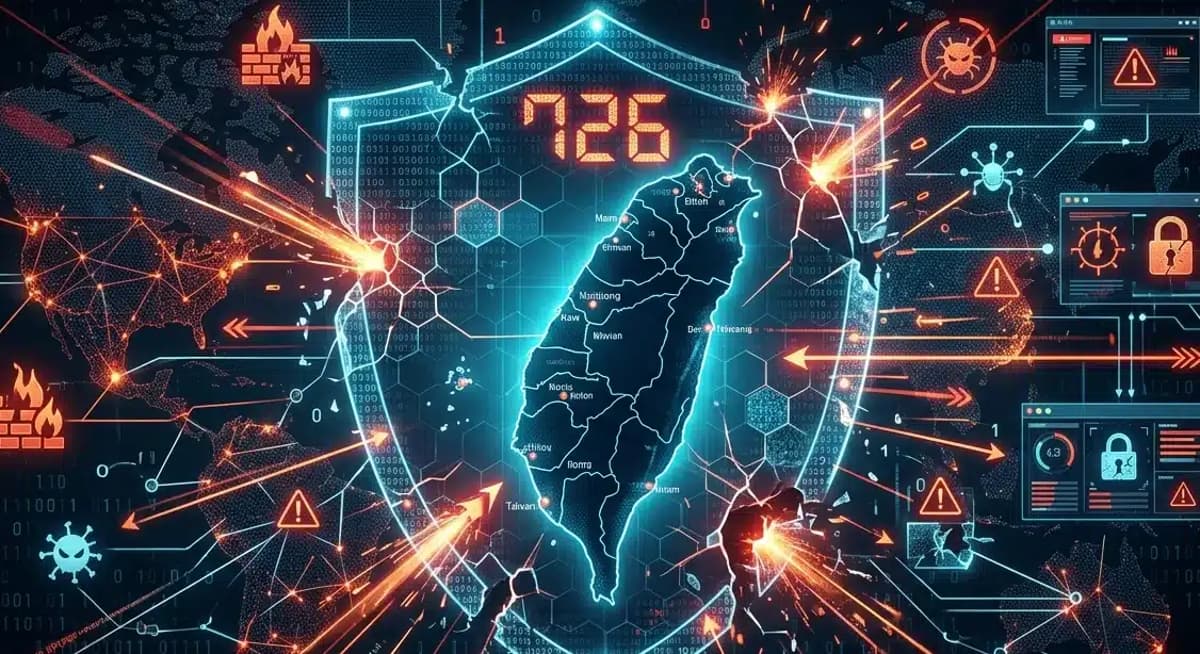
Taiwan Flags Five Major Cyber Risks After 726 Security Incidents in 2025
Why It Matters
The highlighted risks reveal a shift toward more sophisticated attacks that can compromise critical public services and supply‑chain partners, raising the urgency for stronger cyber governance across Taiwan’s digital ecosystem.
Key Takeaways
- •Taiwan logged 726 cyber incidents in 2025, 29 fewer than 2024
- •Unauthorized access made up 68.6% of incidents
- •Fake messaging apps used as backdoor vectors
- •Ransomware now employs custom drivers to evade detection
- •Supply‑chain weak spots expose agencies via third‑party remote tools
Pulse Analysis
Taiwan’s Ministry of Digital Affairs reported 726 cybersecurity incidents across government agencies in 2025, a modest drop of 29 cases from the previous year. While the majority were low‑severity Level 1 events, the distribution—87 % Level 1, 10 % Level 2, and just under 3 % Level 3—shows that even minor breaches can cascade into operational disruption. 6 % of all reports, followed by equipment failures and denial‑of‑service attacks. The data underscores a persistent threat environment despite a slight year‑over‑year decline.
The administration highlighted five risk vectors, three of which dominate headlines. Counterfeit messaging apps downloaded from unofficial sites act as backdoors, allowing attackers to infiltrate sensitive networks. Ransomware groups have upgraded their arsenals, using custom‑built drivers to slip past conventional endpoint defenses, while supply‑chain weaknesses—exemplified by a contractor’s remote‑desktop software mishap—create hidden entry points. These trends reveal a shift from opportunistic malware toward more sophisticated, targeted campaigns that exploit both human error and third‑party dependencies.
Officials urge a multi‑layered response: mandatory pre‑approval for all software installations, rigorous patch management, and hardened remote‑access controls. Strengthening vendor oversight and enforcing strict password policies can blunt supply‑chain attacks, while advanced threat‑detection tools are essential against driver‑based ransomware. For multinational firms operating in the region, Taiwan’s evolving threat profile signals the need for harmonized security standards and continuous monitoring. As the island’s digital infrastructure deepens, proactive governance will be critical to safeguarding both public services and private sector partners.
Taiwan Flags Five Major Cyber Risks After 726 Security Incidents in 2025
Comments
Want to join the conversation?
Loading comments...