The Behavioral Shift: Why Trusted Relationships Are the Newest Attack Surface
Companies Mentioned
Why It Matters
Targeted relationship‑based attacks generate higher financial losses and evade traditional security controls, forcing organizations to rethink email defense strategies.
Key Takeaways
- •Phishing accounts for 58% of email attacks, still dominant vector
- •BEC makes up 11% of attacks but yields higher financial impact
- •Vendor email compromise now exceeds personal BEC, driven by invoice fraud
- •AI-driven behavioral baselines can flag trusted‑relationship attacks before user interaction
- •Lateral BEC attacks rise to 23% in large enterprises, especially higher education
Pulse Analysis
The 2026 email threat landscape reveals a fundamental behavioral shift. While classic phishing—often riddled with typos—still represents the majority of attacks, threat actors are increasingly embedding malicious lures within the very workflows employees trust. By exploiting document‑sharing tools, brand impersonations, and redirect chains, attackers blend seamlessly into routine communications, making detection by signature‑based solutions far more difficult. This evolution reflects a broader trend: adversaries are targeting the human element rather than relying solely on software vulnerabilities.
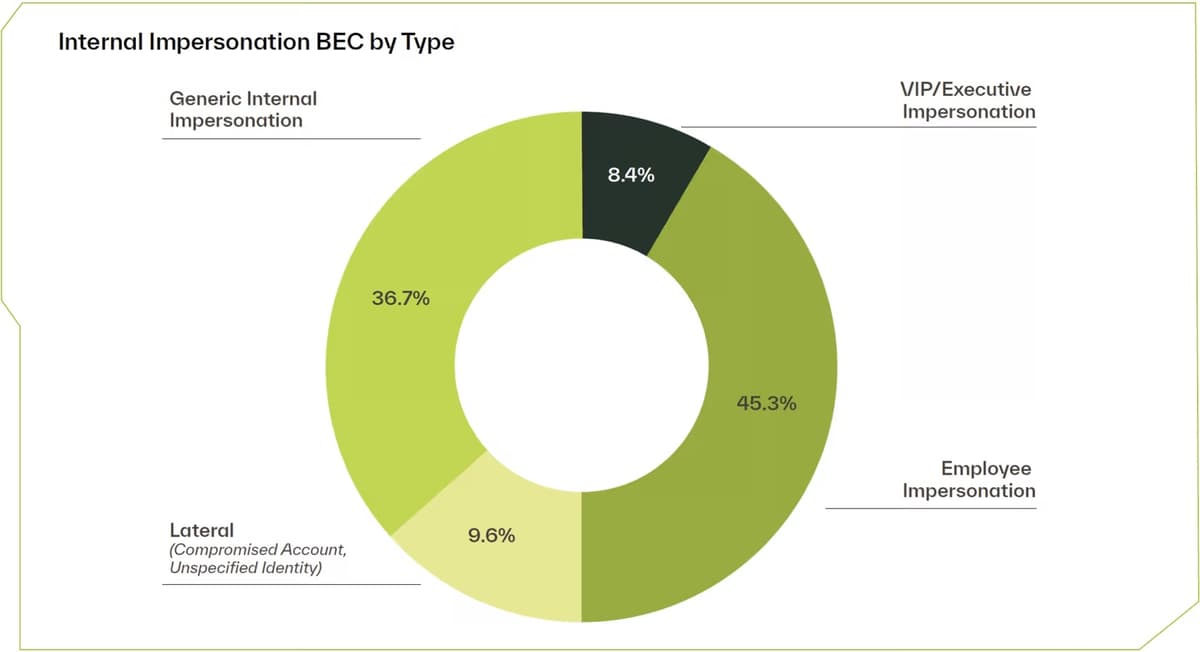
Business Email Compromise (BEC) and its vendor‑focused offshoot, VEC, now pose outsized risk despite representing a smaller slice of total attacks. BEC’s impact is amplified by sophisticated impersonation tactics—43% of small‑enterprise attacks mimic VIPs, while large firms see a 23% rise in lateral compromises, especially in higher‑education environments where turnover is high. VEC campaigns dominate invoice fraud in North America (42%) and procurement‑stage scams in EMEA (41%), leveraging the routine nature of vendor‑customer billing communications. These patterns underscore that attackers are customizing pretexts to match regional business practices, turning ordinary financial processes into covert attack vectors.
Defending against this nuanced threat surface demands more than traditional spam filters. AI platforms that construct identity, context, and content baselines for each employee and vendor can spot anomalies before a user clicks. By continuously learning typical communication patterns, such systems flag deviations—like an unexpected banking detail change—from trusted contacts. Organizations should pair these technologies with robust security awareness programs that emphasize verification of internal requests, especially those involving payments. Together, behavioral AI and human vigilance create a layered defense capable of neutralizing the newest, relationship‑centric attack surface.
The Behavioral Shift: Why Trusted Relationships Are the Newest Attack Surface
Comments
Want to join the conversation?
Loading comments...