'The Biggest Student Data Privacy Disaster in History': Canvas Hack Shows the Danger of Centralized EdTech
Companies Mentioned
Why It Matters
The breach exposes a massive trove of personally identifiable information, putting students at risk of targeted phishing and violating FERPA protections, while forcing institutions to confront the perils of relying on a single, cloud‑based LMS provider.
Key Takeaways
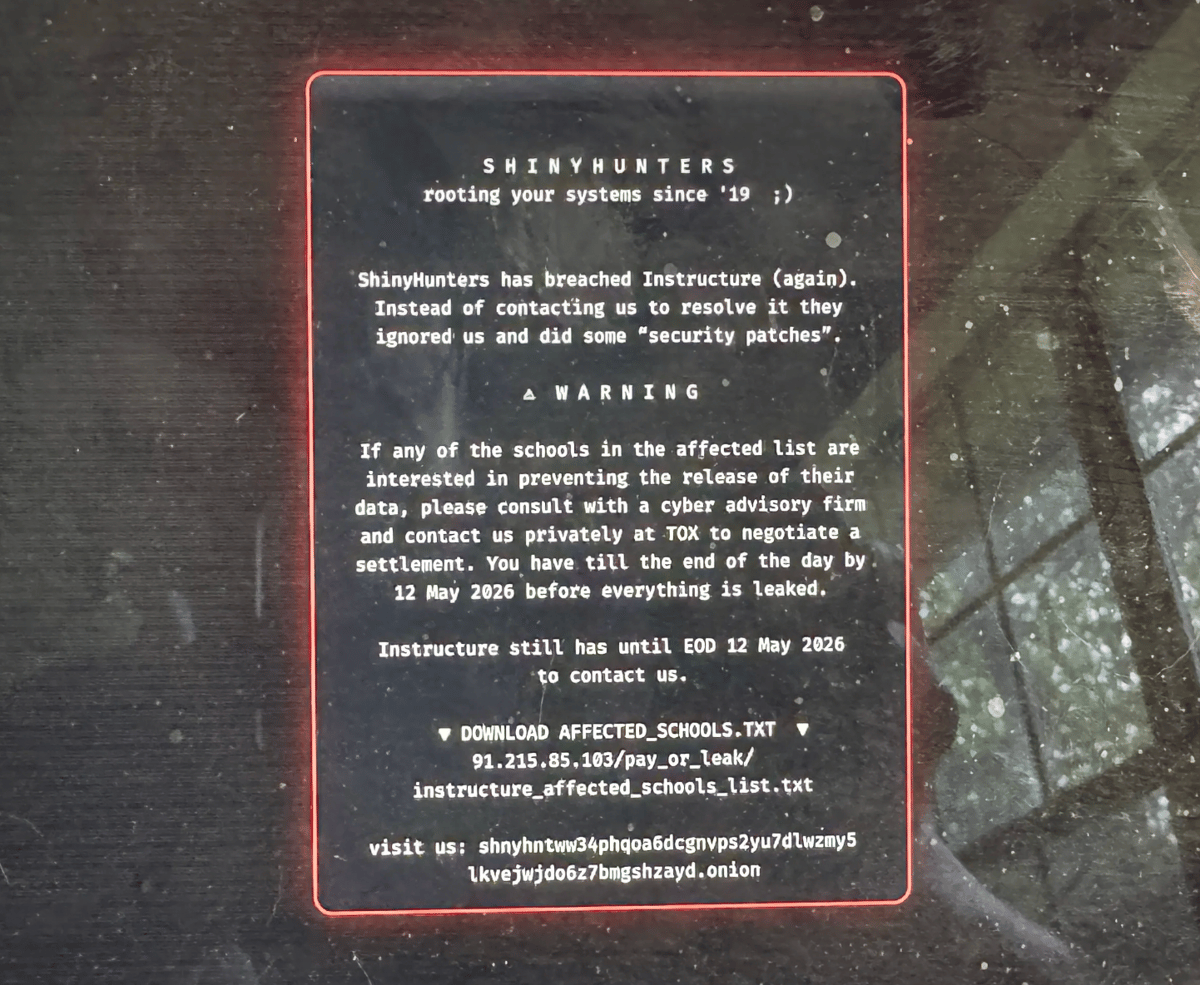
- •ShinyHunters accessed data of over 275 million Canvas users.
- •Stolen data includes names, emails, student IDs, and private messages.
- •The outage disrupted grading, finals, and daily class communications.
- •Centralized LMS architecture amplified the breach’s scope and impact.
- •Institutions face legal exposure under FERPA and heightened phishing risk.
Pulse Analysis
The Canvas hack underscores a growing tension between the convenience of cloud‑based education platforms and the security risks of data centralization. As schools migrated from self‑hosted systems to services like Instructure’s Canvas, they gained seamless integration of assignments, discussions, and analytics, but also handed a single vendor control over billions of records. ShinyHunters’ ability to infiltrate that repository demonstrates how a breach in one vendor can cascade across thousands of institutions, amplifying the fallout far beyond a typical cyber incident.
Beyond the immediate disruption of classes and exams, the exposure of private communications raises serious privacy and compliance concerns. FERPA mandates strict safeguards for student information; the leak of emails, IDs and sensitive messages could enable sophisticated phishing attacks and even identity theft. Universities and school districts now face potential lawsuits, regulatory scrutiny, and the costly task of notifying affected individuals. The incident also forces administrators to reassess incident‑response plans, password policies, and the transparency of breach notifications to protect student welfare.
Looking ahead, the Canvas breach may accelerate a shift toward more federated or hybrid learning‑management architectures that limit data aggregation. Vendors are likely to invest in zero‑trust models, end‑to‑end encryption, and granular access controls to regain trust. Meanwhile, policymakers could consider tighter standards for EdTech providers, similar to those applied in the financial sector. For educators and IT leaders, the lesson is clear: balancing innovation with robust security frameworks is essential to safeguard the next generation’s digital learning environment.
'The Biggest Student Data Privacy Disaster in History': Canvas Hack Shows the Danger of Centralized EdTech
Comments
Want to join the conversation?
Loading comments...