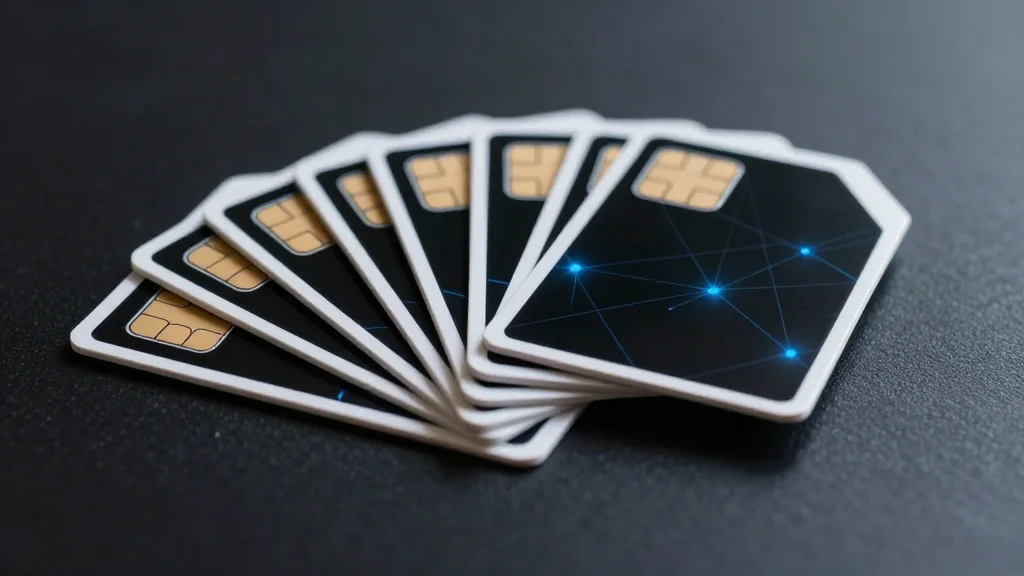
SIM‑Farm‑as‑a‑Service Fuels Global Scam Text Surge, Probe Finds

Why It Matters
SIM‑farm‑as‑a‑service platforms represent a new supply‑chain layer for cybercriminals, turning ordinary mobile infrastructure into a weaponized communications grid. By eroding the trust in local phone numbers, these farms amplify phishing success rates and enable rapid, low‑cost fraud campaigns that can drain millions from victims worldwide. For telecom operators, the unchecked proliferation of rented SIMs threatens network stability, increases operational costs for spam mitigation, and exposes carriers to regulatory penalties. From a broader security perspective, the ability of organized crime groups to lease bulk SIMs without robust identity checks creates a covert channel for encrypted coordination, potentially facilitating cross‑border illicit activities beyond simple scams. The investigation’s revelation of links to Belarusian actors and Russian‑language promotion channels also highlights the geopolitical dimension of this threat, prompting national security agencies to prioritize dismantling these infrastructures as part of larger cyber‑crime counter‑measures.
Key Takeaways
- •Infrawatch mapped 94 SIM‑farm sites in 17 countries, many in the U.S.
- •The farms connect to at least 24 commercial proxy providers and 35 cellular carriers.
- •Control panels advertised on Telegram to Russian‑speaking audiences.
- •Few KYC checks allow "any buyer" to rent bulk SIMs for a few dollars per month.
- •U.S. Secret Service warns the farms could disrupt telco services and aid criminal groups.
Pulse Analysis
The emergence of SIM‑farm‑as‑a‑service marks a shift from ad‑hoc phone‑number theft to a commoditized, on‑demand model that mirrors cloud‑infrastructure services. Historically, scammers relied on SIM‑swapping or stolen numbers, which limited scale and increased risk. By abstracting the acquisition process behind a shared control panel, criminals can instantly spin up thousands of local‑appearing numbers, dramatically lowering the barrier to entry for low‑skill fraud operators. This democratization of bulk communications is analogous to the rise of bot‑net‑as‑a‑service in the early 2010s, which forced security vendors to develop automated detection and takedown capabilities.
For carriers, the challenge is two‑fold: first, to retrofit legacy provisioning systems with real‑time risk analytics that can flag anomalous bulk‑SIM orders; second, to collaborate with regulators and law‑enforcement to enforce stricter KYC standards without stifling legitimate bulk‑messaging businesses. The current patchwork of national regulations creates arbitrage opportunities for farm operators, who can register SIM blocks in lax jurisdictions and then route traffic globally. A coordinated international framework, perhaps under the ITU or a new cyber‑crime treaty, could close these loopholes.
Looking ahead, the battle will likely evolve into a cat‑and‑mouse game where farm operators adopt more sophisticated obfuscation techniques—such as rotating proxy chains, AI‑generated traffic patterns, and encrypted signaling—to evade detection. Security firms that can integrate SIM‑farm intelligence into threat‑intel platforms will gain a competitive edge, while carriers that invest in proactive monitoring may avoid costly network disruptions and regulatory fines. The Infrawatch expose is a wake‑up call: without decisive action, the SIM‑farm model could become the default infrastructure for a wide range of cyber‑crimes, from credential stuffing to ransomware extortion.
SIM‑Farm‑as‑a‑Service Fuels Global Scam Text Surge, Probe Finds
Comments
Want to join the conversation?
Loading comments...