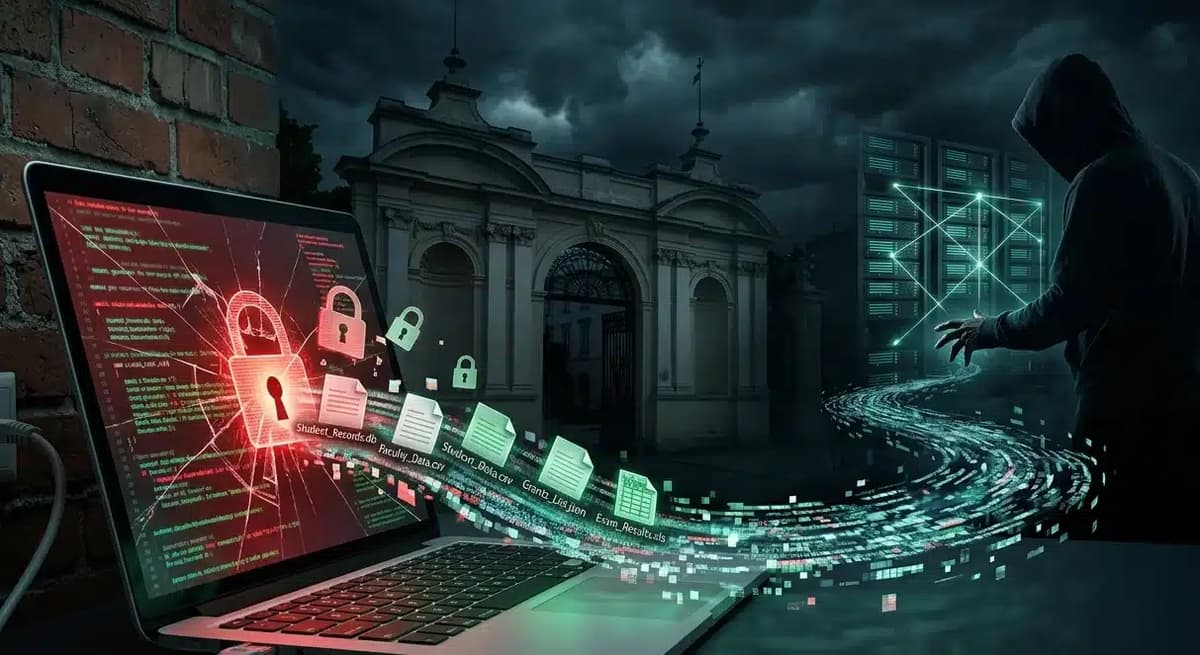
University of Warsaw Data Breach Exposes 200,000+ Sensitive Files on Darknet
Why It Matters
The breach underscores the vulnerability of higher‑education IT environments and raises the prospect of hefty EU GDPR penalties, while prompting institutions worldwide to tighten authentication and monitoring practices.
Key Takeaways
- •200,000+ documents, 850 GB dump, posted on darknet April 15, 2026.
- •Attack leveraged valid credentials compromised by malware on a user device.
- •Exposed data includes PESEL numbers, bank accounts, health certificates.
- •University reset passwords, expanded MFA, and partnered with CBZC and CERT Polska.
- •Potential EU GDPR penalties and reputational damage for the university.
Pulse Analysis
Universities have become attractive targets for cybercriminals because they store vast troves of personal, financial and health data across loosely controlled networks. The Warsaw breach follows a pattern seen at other academic institutions, where attackers first infiltrate a single user account—often through phishing‑laden malware—and then move laterally to harvest credentials. Once inside, they can remain undetected for months, quietly siphoning data until a large dump is released, as happened with the 850‑gigabyte leak that surfaced on the darknet.
The University of Warsaw’s incident is notable for the breadth of information exposed. Beyond basic identifiers such as names and birthdates, the dump contained PESEL numbers—a Polish national ID—bank account details, tax records, employment contracts and even medical certificates. Under the EU’s GDPR framework, the university now faces potential fines of up to 4% of annual turnover, alongside mandatory breach notifications and remediation costs. Its swift response—isolating systems, enforcing password resets, expanding multi‑factor authentication, and working with the Central Bureau for Combating Cybercrime and CERT Polska—demonstrates a growing awareness of regulatory pressure and the need for rapid containment.
For the broader education sector, the Warsaw breach serves as a cautionary tale. Institutions must adopt a zero‑trust architecture, enforce strong credential hygiene, and continuously monitor network traffic for anomalous behavior. Students and staff should be educated on phishing tactics and encouraged to use unique, complex passwords paired with MFA. As cyber threats evolve, proactive investment in advanced authentication, segmentation and threat‑intelligence sharing will be essential to protect sensitive academic data and maintain public trust.
University of Warsaw Data Breach Exposes 200,000+ Sensitive Files on Darknet
Comments
Want to join the conversation?
Loading comments...