Using Data Upsert to Optimize Test Data Management
•January 21, 2026
0
Why It Matters
Upsert eliminates costly data‑reset cycles, accelerating testing and continuous delivery pipelines. It ensures data integrity across heterogeneous test environments, a critical factor for reliable software releases.
Key Takeaways
- •Upsert merges new and existing test data without overwriting
- •Preserves legacy fixtures while adding fresh synthetic records
- •Enables multiple teams to combine subset datasets in one environment
- •Protects mock data for unreleased features during schema changes
- •Reduces manual data refresh effort, accelerating test cycles
Pulse Analysis
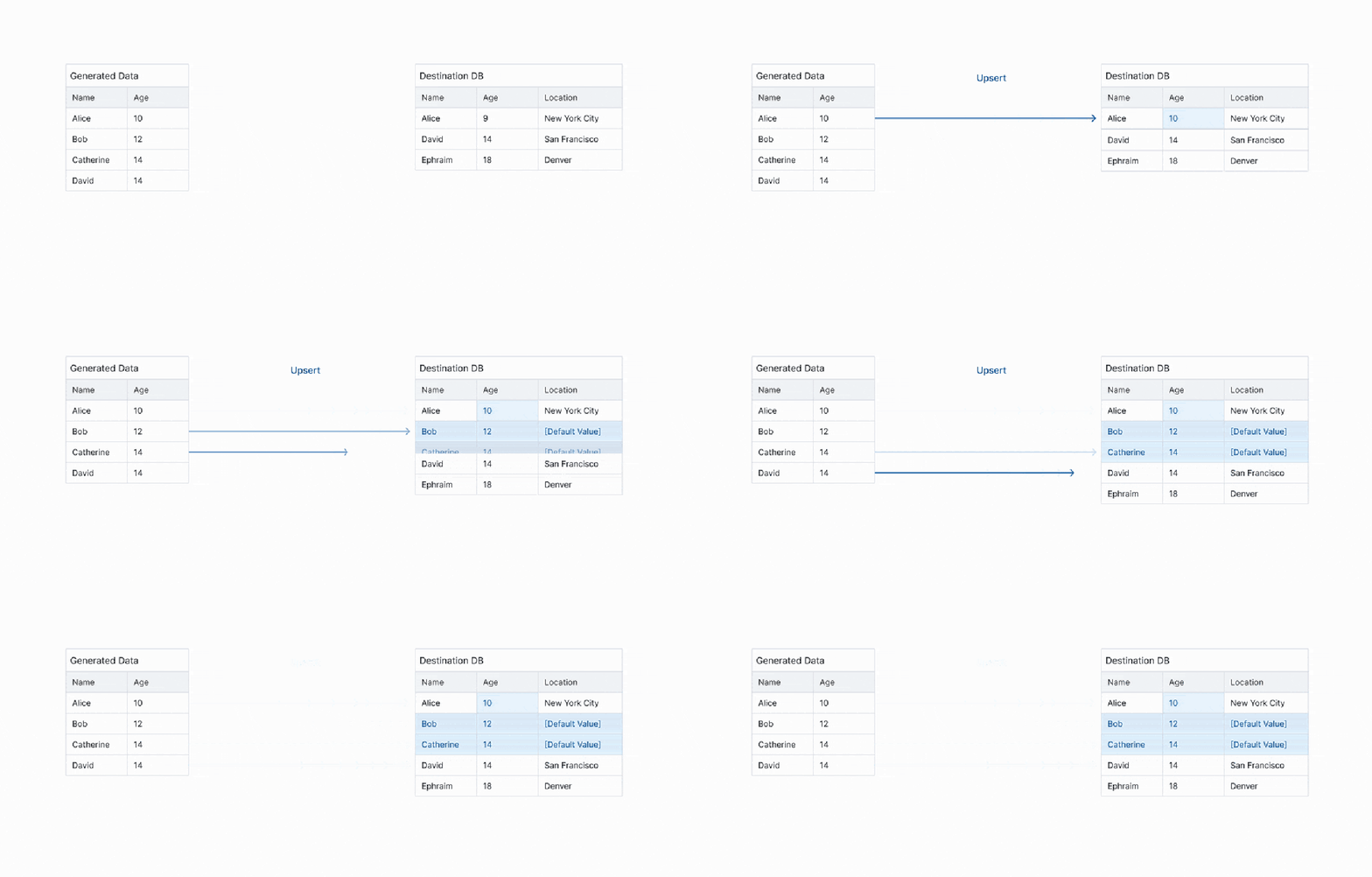
The rise of synthetic data platforms has shifted how organizations generate and maintain test environments, but the underlying challenge remains: keeping new data fresh without discarding valuable legacy records. Upsert—short for update‑or‑insert—addresses this gap by allowing a single transaction to either add a new row or modify an existing one based on key criteria. In practice, this means developers can run automated data‑generation scripts that intelligently reconcile with the current state of the database, preserving data integrity while eliminating the need for full dataset reloads.
Three use cases illustrate why upsert is becoming a staple for modern test data management. First, teams can retain critical fixture data—such as predefined user accounts or configuration settings—while layering new synthetic rows for each test run. Second, disparate squads working on different product modules can generate their own data subsets and then upsert them into a shared environment, creating a unified view without manual merging. Third, when feature teams prototype unreleased functionality, they often need mock records that would otherwise be overwritten by production‑like data; upsert safeguards these mock entries, even across schema migrations, ensuring continuity in feature‑branch testing.
Beyond immediate productivity gains, upsert aligns with broader DevOps objectives. By reducing the time spent on environment provisioning and data reconciliation, teams can shorten feedback loops and maintain tighter integration between continuous integration pipelines and test environments. Moreover, the ability to preserve data across iterations supports compliance and audit trails, as historical test artifacts remain accessible. As synthetic data tools evolve, upsert is poised to become a foundational operation, enabling scalable, reliable, and cost‑effective testing strategies across enterprises.
Using data upsert to optimize test data management
0
Comments
Want to join the conversation?
Loading comments...