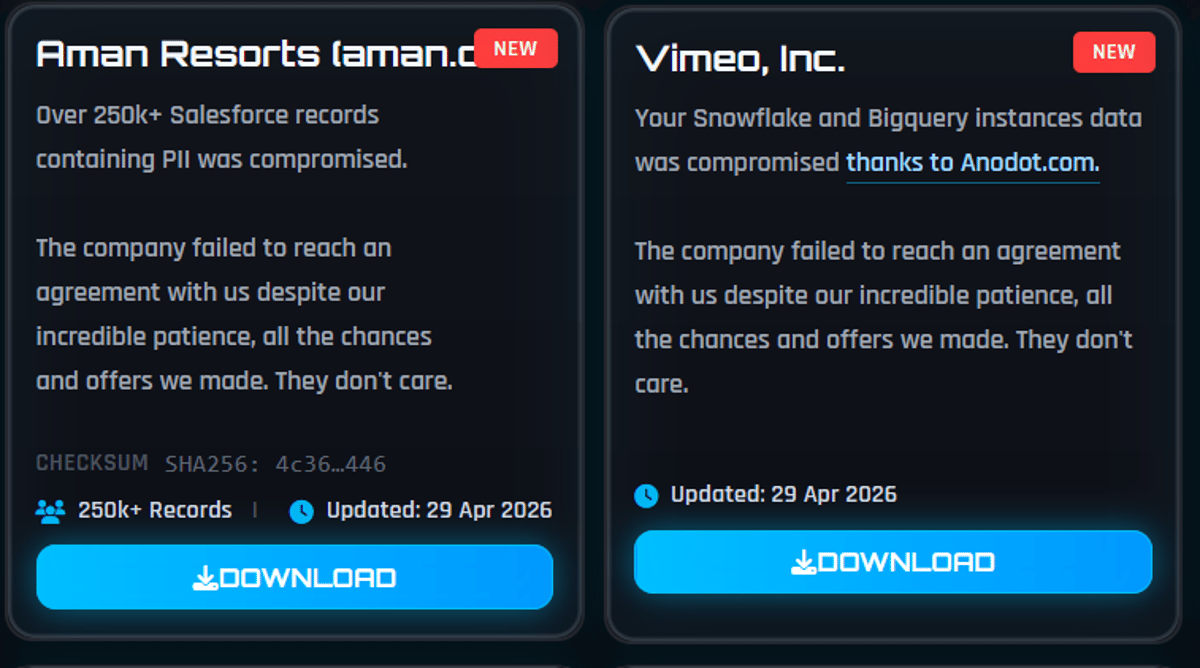
Vimeo Confirms Breach via Third-Party Vendor Impacts 119K Users
Key Takeaways
- •119,000 Vimeo users' emails and video metadata exposed
- •Breach originated from Anodot, Vimeo's analytics vendor
- •No video content, passwords, or payment data were compromised
- •Vimeo disabled Anodot integration and engaged external security experts
Pulse Analysis
Supply‑chain attacks have become a favorite vector for cybercriminals, and the Vimeo breach is a textbook example. By infiltrating Anodot—a analytics service used by dozens of enterprises—ShinyHunters leveraged a trusted relationship to harvest data without directly targeting Vimeo’s own infrastructure. This approach sidesteps many traditional defenses, as the compromised vendor already enjoys privileged access. Companies that embed third‑party tools must therefore adopt continuous monitoring, enforce least‑privilege principles, and regularly audit the security posture of their suppliers to mitigate such indirect exposure.
For Vimeo’s customers, the leak of email addresses and video metadata raises immediate concerns about credential‑stuffing and targeted phishing campaigns. Although no passwords or payment information were disclosed, attackers can combine the exposed data with publicly available information to craft convincing social‑engineering attacks. The incident also puts pressure on regulators, as data‑privacy laws like GDPR and the California Consumer Privacy Act require prompt notification and may impose penalties if adequate safeguards were lacking. Vimeo’s swift public disclosure and the decision to sever the Anodot connection demonstrate a proactive stance, yet the episode serves as a reminder that even well‑known platforms are vulnerable to third‑party failures.
ShinyHunters’ broader campaign, which has hit entities ranging from the European Commission to major consumer brands, signals an escalation in ransomware‑as‑a‑service tactics. Their model of stealing data, publishing large archives, and demanding cryptocurrency payments forces victims to weigh the cost of ransom against reputational damage. For SaaS providers, the lesson is clear: invest in robust vendor risk management, implement zero‑trust network architectures, and maintain incident‑response playbooks that account for supply‑chain breaches. By doing so, firms can reduce the attack surface and protect both their brand and their users from the cascading effects of third‑party compromises.
Vimeo confirms breach via third-party vendor impacts 119K users
Comments
Want to join the conversation?