Why Pure Extortion Is Replacing Traditional Ransomware
Key Takeaways
- •Ransomware groups now favor data theft over encryption.
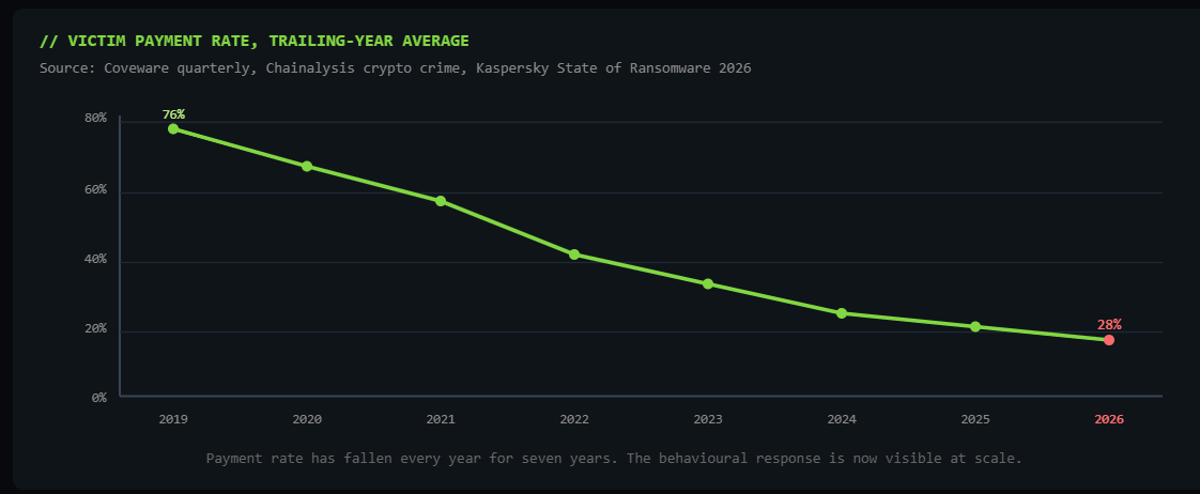
- •Payment rates fell from 76% in 2019 to 28% in 2026.
- •Leak sites act as marketplaces, earning revenue beyond victim payments.
- •Attack timelines shrink to under a week, exfiltration completes in days.
- •Defenders must focus on exfiltration detection, outbound traffic, and DLP.
Pulse Analysis
The 2026 ransomware landscape reflects a strategic pivot from noisy encryption attacks to stealthy data‑only extortion. By sidestepping the encryption phase, threat actors reduce forensic footprints, evade endpoint detection, and accelerate the attack lifecycle to a matter of days. This evolution is a rational response to improved backup solutions, tighter cyber‑insurance clauses, and heightened regulatory scrutiny that have eroded the profitability of classic ransomware. Consequently, attackers now prioritize rapid credential theft, lateral movement, and bulk exfiltration, leveraging the threat of public disclosure as the primary leverage point.
Economic incentives have also transformed. Leak sites have morphed from coercion tools into standalone marketplaces where stolen datasets are sold to fraud rings, identity‑theft operators, and even sanctioned entities. The revenue model no longer hinges on victim payment; instead, data resale can generate substantial returns regardless of whether the target pays. High‑profile breaches—such as the 275 million‑record exposure from Instructure and the multi‑terabyte Foxconn dump—demonstrate how a single exfiltration can create a long‑tail liability that dwarfs the immediate operational impact of encrypted lockouts.
For defenders, the old ransomware playbook is obsolete. Priorities must shift toward early exfiltration detection, rigorous outbound traffic monitoring, and robust data‑loss‑prevention controls. Deploying EDR‑killer detection, monitoring cloud‑storage abuse, and maintaining off‑host logs are essential to spot the silent data‑theft phase. While backups remain vital for recovery, they cannot mitigate the reputational and regulatory fallout of a massive data leak. Organizations should therefore integrate breach‑response drills that include public disclosure strategies, legal coordination, and rapid stakeholder communication to address the new, quieter but more damaging ransomware threat.
Why pure extortion is replacing traditional ransomware
Comments
Want to join the conversation?