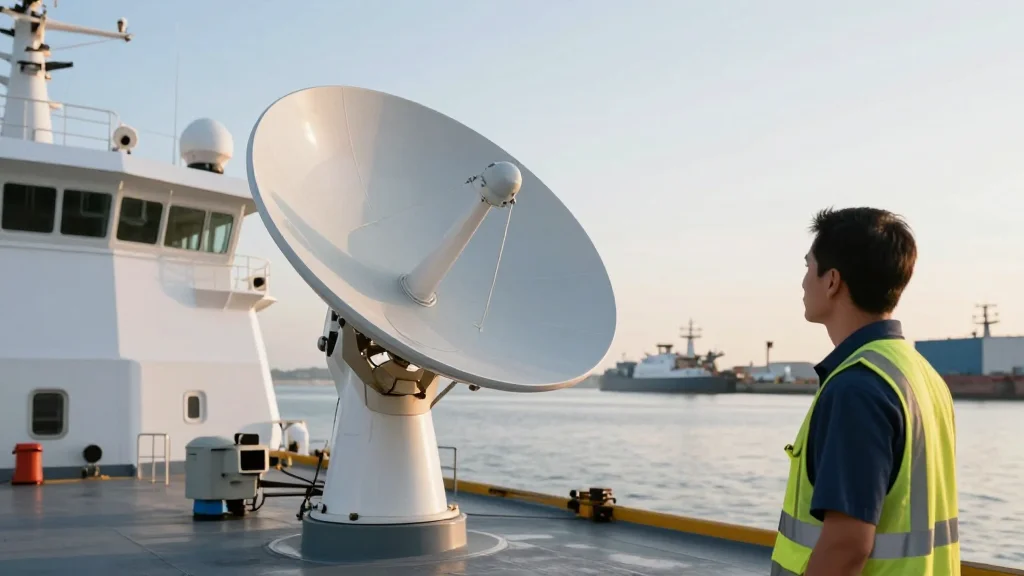
Hanwha Ocean Deploys Starlink to Power AI‑Driven Shipyard Overhaul

Companies Mentioned
Why It Matters
The deployment of Starlink at Hanwha Ocean’s Geoje shipyard illustrates how DevOps principles are moving beyond pure software environments into heavy‑industry domains. Real‑time telemetry, automated logbooks and continuous monitoring enable faster feedback loops, a hallmark of DevOps, while edge connectivity removes the geographic constraints that have traditionally limited such practices at sea. For the broader shipbuilding ecosystem, the move signals a shift toward digital twins and AI‑assisted decision‑making as standard operating procedures. As labor shortages intensify and shipyards compete for megaproject contracts, the ability to capture, analyse and act on data across the entire build lifecycle could become a decisive competitive advantage, reshaping procurement criteria and investment priorities across the maritime sector.
Key Takeaways
- •Hanwha Ocean will install Starlink on sea‑trial vessels in H2 2024 to enable stable offshore data links.
- •The AI‑driven platform consolidates over 1,500 real‑time data points per LNG carrier into a searchable digital logbook.
- •Smart Production Management Center uses a 3‑D digital twin and drone imagery to monitor yard operations in real time.
- •Hanwha estimates a 5‑7 % reduction in build time, equating to roughly $200 million annual savings.
- •Competitor Hyundai Heavy Industries has launched a similar Starlink pilot, indicating an emerging industry‑wide race for edge connectivity.
Pulse Analysis
Hanwha Ocean’s Starlink integration is more than a connectivity upgrade; it is a strategic bet that the shipbuilding sector can adopt the same continuous delivery pipelines that have transformed software firms. By moving data collection from siloed spreadsheets into a cloud‑native platform, Hanwha eliminates the manual hand‑offs that have historically introduced errors and delays. The real payoff comes from the ability to run predictive‑maintenance models on live vessel data, a capability that could shift the industry from reactive repairs to proactive engineering.
Historically, shipyards have been slow to digitise because of the sheer scale of physical assets and the entrenched culture of manual craftsmanship. Hanwha’s approach—digitising expert knowledge into AI‑driven decision tools—mirrors the “infrastructure as code” mindset that allows software teams to version‑control and test changes before deployment. If the Starlink trial proves the latency and reliability needed for such automated workflows, it could unlock a wave of software‑first solutions for other capital‑intensive industries, from offshore wind farms to large‑scale construction.
However, the initiative also raises questions about data security and vendor lock‑in. Relying on a commercial satellite constellation for mission‑critical shipyard operations introduces a new attack surface that regulators and ship owners will scrutinise. Moreover, the $4‑billion investment cited for the broader submarine partnership underscores the capital intensity of such transformations; only the largest shipbuilders can afford the upfront spend. The next few months will reveal whether the performance gains justify the cost, and whether smaller yards can adopt a scaled‑down version of Hanwha’s model without the same level of financial backing.
Hanwha Ocean Deploys Starlink to Power AI‑Driven Shipyard Overhaul
Comments
Want to join the conversation?
Loading comments...