
GitLab 19.0 Bets that the Real Bottleneck in Software Delivery Is Everything After Writing the Code
GitLab unveiled version 19.0, centering on "intelligent orchestration" that extends its Duo Agent Platform across the entire software lifecycle. The release introduces a generally available SBOM‑based dependency scanner for Maven, Gradle and Python, exposing hidden vulnerabilities in transitive libraries. It also adds support for Claude Opus 4.7, Google Gemini, and several open‑source models, while enhancing AI‑driven developer workflows and group‑level review policies. To manage AI costs, GitLab rolls out a credit‑based metering system for premium and ultimate tiers.

Introducing Nova, Our Internal Platform for Coding Agents
Dropbox has launched Nova, an internal platform that runs AI coding agents across its massive monorepo and CI infrastructure. The service lets engineers execute multiple parallel coding sessions, validate changes with Bazel, and integrate agents into automated workflows. Nova started...

Resolve AI Expands Platform with Always-On Agents and New Investigation Architecture
Resolve AI announced a major platform expansion that adds always‑on background agents and a new investigation architecture. The agents continuously monitor deployments, audit alerts, flag configuration drift and surface cost anomalies before engineers log in. The revamped investigation engine claims...
Neo Automations: Scheduled Tasks Shipped as Pull Requests
Pulumi Neo now lets teams schedule infrastructure tasks that automatically run on a chosen cadence and open pull requests with any required changes. The feature includes four ready‑made templates—provider freshness, encryption audit, backup audit, and activity digest—and supports hourly to...

The Dark Data Problem Hiding Inside Your AI Agents
OpenClaw recently broke the GitHub record with 250,000 stars, prompting NVIDIA CEO Jensen Huang to label it the "operating system for personal AI." While NemoClaw adds kernel‑level sandboxing for runtime governance, it leaves agent‑generated data vulnerable to loss. Autonomous agents...
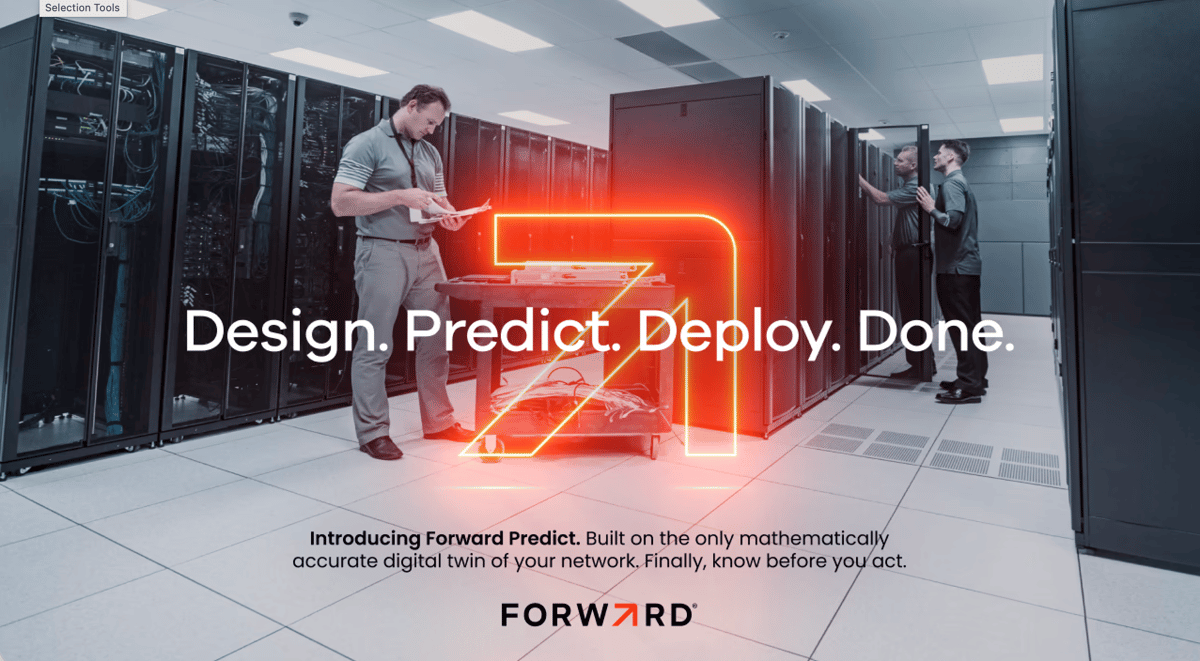
Move Fast, Break Nothing: How Forward Predict Brings CI/CD Discipline to Networking
Forward Networks, now rebranded as Forward, introduced Forward Predict—a network digital twin that simulates changes before they hit production. By modeling control‑ and data‑plane behavior, the platform brings CI/CD‑style validation to networking, turning change management from a reactive to a...

Google's Managed Agents API Promises One-Call Deployment at the Cost of Execution Layer Control
Google unveiled Managed Agents in its Gemini API at I/O, promising to compress weeks of agent deployment into a single API call. The preview, accessible through custom templates in Google AI Studio, bundles sandbox creation, infrastructure, and execution loops into...
How to Scale AI Test Automation without Losing Test Visibility
Software teams are racing ahead with AI‑generated code—93% already use it and 60% expect AI to write half of all code within a year. The speed surge is outpacing traditional testing, leaving 60% of teams reporting quality issues and fragmented...
Announcing Etcd 3.7.0-beta.0
SIG‑Etcd released the first beta of etcd v3.7.0, featuring the long‑awaited RangeStream RPC, a full removal of legacy v2store code, and updates to bbolt and raft libraries. RangeStream enables applications to receive large key‑value result sets in chunks, cutting latency...
Neo, Now in the Terminal
Pulumi has extended its Neo AI assistant from the cloud console to the developer terminal with the new `pulumi neo` command. The CLI inherits the user’s existing Pulumi login, kubeconfig, environment variables and project files, allowing Neo to operate against...

Meet Gordon: Docker’s AI Agent For Your Entire Container Workflow
Docker announced Gordon, an AI‑powered agent built into Docker Desktop 4.74+ and the CLI, that can read container logs, compose files, and the local environment to diagnose and fix issues. Gordon proposes actions—such as repairing broken builds, generating Dockerfiles, or...

AI Agents Work Fine, Your Workflow Doesn’t
Enterprises are rushing to deploy AI agents, but pilots often stall when moved to production because the surrounding workflow—monitoring, ownership, and failure handling—is missing. In regulated sectors, the model itself is trivial compared to the domain‑specific processes that must be...
The Agentic Infrastructure Era
Pulumi announced a suite of new platform features designed to make infrastructure management fully agentic. By leveraging infrastructure-as-code in familiar languages, the company reports that LLM‑driven agents now handle about 20% of deployments, with a goal of exceeding 50% by...
LogicMonitor Collaborates with IBM and Red Hat to Support Autonomous Data Centers?
LogicMonitor announced a partnership with IBM and Red Hat to embed IBM watsonx and the Red Hat Ansible Automation Platform into its Edwin AI agent. The integration lets Edwin AI automatically generate or trigger Ansible playbooks when anomalies are detected, enabling self‑healing across hybrid and...

Announcing AWS CDK Mixins: Composable Abstractions for AWS Resources
AWS announced CDK Mixins, a new composable abstraction layer for the Cloud Development Kit that lets developers attach reusable capabilities to any construct—L1, L2, or custom—without rewriting libraries. Mixins decouple features from concrete implementations, enabling day‑one access to new AWS...