How We Built a Distributed Work Scheduling System for Pulumi Cloud
Pulumi Cloud needed a unified scheduler to orchestrate deployments, Insights scans, and policy evaluations across both its own infrastructure and customer‑managed runners. The team built a database‑backed background activity system that treats each workflow as a typed, persistent activity with priority, routing, and retry metadata. A lease‑based optimistic concurrency model guarantees exactly‑once execution and automatic recovery from crashes or network failures. The design supports pull‑only agents, dependency DAGs, and a single handler interface for both hosted and remote execution modes, enabling rapid addition of new workflow types.

Deep Dive: How Linkerd-Destination Works in the Linkerd Service Mesh
The article dissects linkerd-destination, the core component of Linkerd’s control plane that drives service discovery, policy distribution, and service‑profile enforcement. It explains how the service uses Kubernetes watches and EndpointSlices to translate cluster events into real‑time gRPC streams for proxies....

6,000 AWS Accounts, Three People, One Platform: Lessons Learned
ProGlove runs a SaaS platform on AWS using an account-per-tenant architecture, currently operating about 6,000 tenant accounts—half active—with over 120,000 service instances and a million Lambda functions. The approach gives each customer isolated compute, storage, and IAM boundaries, simplifying security,...

Fix Cypress CI Failures Caused by No Spec Files Found
Cypress 15.11.0 introduces the --pass-with-no-tests CLI flag, allowing test runs that find zero spec files to exit with a zero status code instead of failing the CI pipeline. The failure previously occurred when configuration patterns like specPattern or --spec matched no files, often due to mis‑configured...
Percona Operator for MongoDB 1.22.0: Automatic Storage Resizing, Vault Integration, Service Mesh Support, and More!
Percona released Operator for MongoDB version 1.22.0, adding automatic Persistent Volume Claim resizing, HashiCorp Vault integration for system user credentials, and native service‑mesh compatibility via the appProtocol field. The update also expands backup and restore capabilities, including replica‑set name remapping,...
Rafay Joins VAST Cosmos to Enable Governed GPU-Powered AI Services
Rafay has joined the VAST Cosmos Community as a Technology Partner, aligning its AI‑native cloud control plane with VAST Data’s AI Operating System. The collaboration integrates Rafay’s orchestration platform with VAST’s governed storage services, creating a unified, multi‑tenant AI service...

Maintaining Compliance when Adopting AI in Regulated Industries
Regulated firms can integrate AI without sacrificing compliance by leveraging automated testing. Continuous validation mitigates risks from non‑deterministic model behavior, frequent updates, and limited explainability. The approach preserves audit‑readiness, traceability, and documented evidence across frameworks such as SOX, HIPAA, and...
Cagent: Dockers Newest Low Code Agentic Platform
Docker unveiled Cagent, an open‑source, low‑code framework that lets developers launch AI agents using a single YAML file instead of extensive code. The platform integrates the Model Context Protocol (MCP) and Docker Model Runner to support multiple LLM providers and...

CloudCasa Expands Red Hat OpenShift Data Protection Across Edge and Hybrid Cloud
CloudCasa has upgraded its backup and recovery platform to better serve Red Hat OpenShift deployments across core, edge, and hybrid cloud environments. The update adds native SMB protocol support as a backup target, letting customers use existing SMB storage or operator‑deployed...
Crossplane & AI: The Case for API-First Infrastructure
AI‑assisted development has moved the primary bottleneck from writing code to the myriad tasks that follow a git push, such as provisioning, policy enforcement, and drift remediation. Most existing platforms keep the desired state in Git while the actual state...
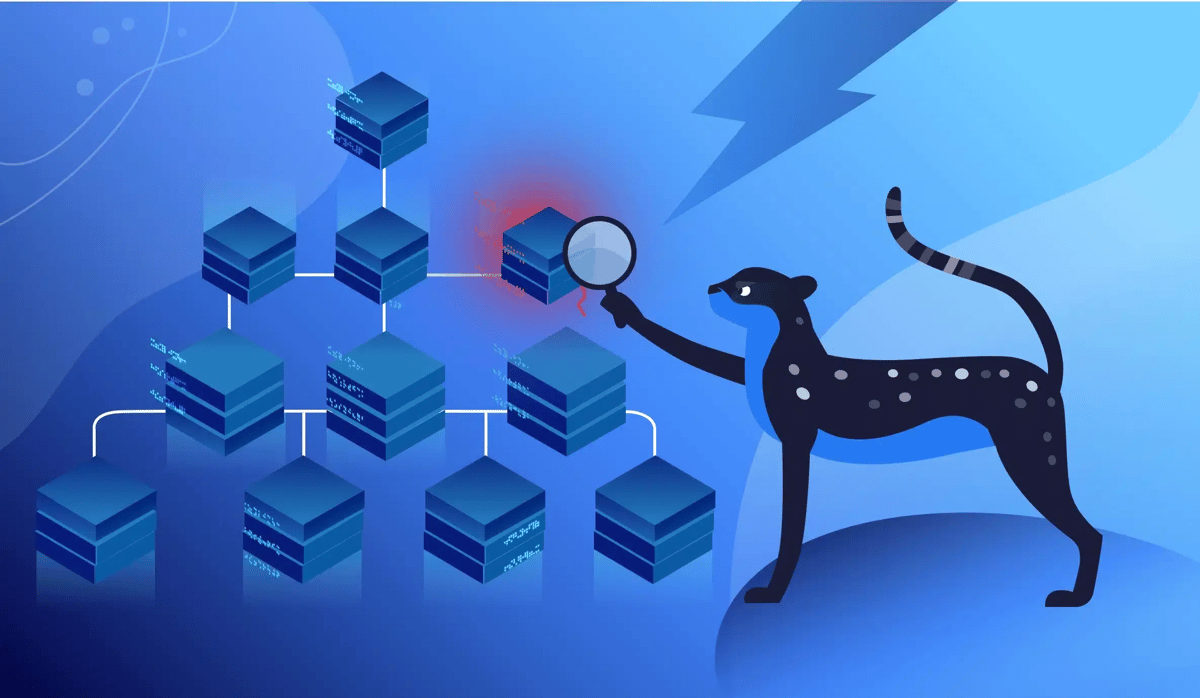
Lightrun Debuts Real-Time AI Site Reliability Engineer for Autonomous Software Remediation
Lightrun Inc. unveiled an AI‑powered Site Reliability Engineer that can generate missing runtime evidence on‑the‑fly, eliminating the need for redeployments. The tool leverages the company’s patented Sandbox and Runtime Context engine to capture live, line‑level execution data, prove root causes,...

Sauce Labs Launches Industry’s First Programmable Mobile Device Cloud for the AI Era
Sauce Labs announced the Real Device Access API, the first programmable mobile device cloud designed for the AI era. The API lets developers control real Android and iOS devices through HTTP, issuing ADB or xcrun commands, streaming video, and accessing...

What AX Can Do to Deliver Cohesion and Uniformity to AI Agents
The article introduces the concept of Agent Experience (AX), a discipline for preparing enterprise systems so AI agents can discover, invoke, and manage tools reliably. It stresses that agents require precise, structured documentation, robust API specifications, and context‑engineering such as...

Rootly | The Unofficial KubeCon EU '26 SRE Track
Rootly has published an unofficial KubeCon Europe 2026 SRE track, hand‑picking six sessions that focus on reliability, observability, incidents, and chaos engineering. The guide highlights high‑impact talks such as Airbnb’s zero‑downtime migration of 1,000 services, AI‑enabled control planes for alert fatigue,...

New GitLab Metrics and Registry Features Help Reduce CI/CD Bottlenecks
GitLab announced two beta features aimed at easing CI/CD bottlenecks: job‑level performance metrics and a Container Virtual Registry. The job metrics panel, available to Premium and Ultimate customers, displays median and 95th‑percentile durations, failure rates, and sortable tables directly in...

MCP Security: The Current Situation
The Model Context Protocol (MCP) standardizes LLM integration with external tools, but recent flaws expose enterprises to serious threats. A prompt‑injection bug in GitHub's MCP client leaked private repository data, while Anthropic's Filesystem server suffered CVE‑2025‑53109 and CVE‑2025‑53110 sandbox‑escape vulnerabilities....

Bi-Directional Sync for ServiceNow and Azure DevOps
incident.io announced bi-directional synchronization with ServiceNow and Azure DevOps, extending its integration beyond one-way data pushes. The new capability mirrors comments, images, and updates from external tickets back into the incident.io dashboard, including Slack and Microsoft Teams channels. This ensures...

How to Integrate an AI Chatbot Into Your Application: A Practical Engineering Guide
The guide outlines a disciplined engineering approach to embedding AI chatbots within existing applications, treating the bot as an interaction adapter rather than a core decision engine. It details a four‑layer architecture—client, backend orchestration, language processing, and data sources—plus a...
Integration Reliability for AI Systems: A Framework for Detecting and Preventing Interface Mismatch at Scale
AI integrations increasingly drift as independent teams modify contracts, causing silent performance degradation despite healthy dashboards. The article highlights schema fingerprinting as a low‑cost early warning and proposes a four‑layer architecture—static contract validation, pre‑production synthetic testing, runtime drift detection, and...

Most Platform Teams Build Products, but They Don’t Know It
Platform teams often treat internal platforms as pure infrastructure, overlooking their product nature. By failing to define specific user personas, they ship technically complete features that see low adoption. The article stresses that rollout activities differ from genuine adoption, which...

Terraform Enterprise 1.2 Upgrades Workflows, Visibility, and Brownfield Migration
Terraform Enterprise 1.2 is now generally available, adding a visual UI‑driven search and import tool that lets teams bring unmanaged, brownfield resources into Terraform without writing code. The release also graduates Explorer to GA, delivering a centralized dashboard that records...

Building Event-Driven Data Pipelines in GCP
Google Cloud Platform enables event‑driven pipelines that replace idle batch jobs with immediate reactions to data changes. The reference architecture uses Firestore as the event source, Cloud Functions or Eventarc to capture changes, Pub/Sub as the messaging backbone, and Dataflow...

Kilo Launches KiloClaw, Allowing Anyone to Deploy Hosted OpenClaw Agents Into Production in 60 Seconds
Kilo has launched KiloClaw, a fully managed service that provisions a production‑ready OpenClaw agent in under 60 seconds, removing the need for SSH, Docker, or YAML setup. The platform runs on multi‑tenant VMs hosted by Fly.io, providing enterprise‑grade isolation, security...

TASKING Integrates Modern AI Technology to Enable Robust Software Verification and Validation (V&V)
TASKING announced that its embedded software toolchain now incorporates agentic AI workflows, allowing OEMs and Tier 1 suppliers to automate design, debug, and verification tasks with large language models. The new capabilities use the open‑source Model Context Protocol to let LLMs...

How to Setup Credentials for Windows to Use DigiCert KeyLocker & SMCTL?
The article walks through configuring DigiCert KeyLocker and the Signing Manager Command‑Line Tool (SMCTL) on Windows, detailing required prerequisites such as the DigiCert ONE API key, client certificate, and administrative rights. It compares four credential‑storage methods—Windows Credential Manager, properties file, temporary and...

7 Ways to Tame Multicloud Chaos with Generative AI
Enterprises are increasingly adopting multicloud to avoid vendor lock‑in, yet the resulting operational complexity strains IT teams. The article outlines seven ways generative AI—through copilots, agents, and code‑translation tools—can streamline cloud‑service selection, infrastructure provisioning, observability, compliance, and finops. By automating...

From Days to Minutes: How Omnisend Embedded AI Into the Data Lifecycle
Omnisend embedded large language models into its DataOps pipeline, using the Cursor AI editor to auto‑generate SQL, YAML and documentation, shrinking model‑building cycles from hours to minutes. A second LLM, Gemini Code Assist, acts as an automated reviewer, cutting review...

Composio Open Sources Agent Orchestrator to Help AI Developers Build Scalable Multi-Agent Workflows Beyond the Traditional ReAct Loops
Composio has open‑sourced its Agent Orchestrator, a framework that replaces the brittle ReAct loop with structured, stateful multi‑agent workflows. The system splits responsibilities between a Planner that decomposes high‑level goals and an Executor that handles tool interactions, reducing greedy decision‑making....

Global Scale, Local Presence: Fastly Object Storage Expands to New Regions
Fastly Object Storage has doubled its global footprint by adding five new regions—us-central-1, uk-east-1, eu-south-1, jp-central-1, and au-east-1—to its existing network. The expansion targets lower latency and egress‑free data delivery for developers building edge‑centric applications. Fastly also highlights regional redundancy,...

Enhancing Security and Transparency: Introducing Private Notifications for Fastly Maintenance and Incidents
Fastly is rolling out private notifications for security‑related maintenance and incidents, delivered through an SSO‑protected status page and direct Slack alerts. The new system provides service‑specific, detailed updates that remain hidden from the public internet, mitigating information‑leak risks. Integration with...

Predictable AI: Announcing the January and February Validated Model Batches
Red Hat announced the January and February 2026 batches of validated AI models alongside the Red Hat AI 3.3 release. The collections feature frontier‑class reasoning, multimodal, and NVFP4‑quantized models packaged as ModelCar OCI containers for seamless deployment. Validation delivers hardware‑specific performance baselines, integrity...

Observability Vs. Monitoring: What's the Difference?
Observability and monitoring are often conflated, but they serve distinct purposes. Monitoring continuously watches predefined metrics and alerts when thresholds are breached, providing real‑time detection of outages or performance degradation. Observability goes deeper, aggregating metrics, logs, and traces to infer...
Red Hat AI Enterprise: Bridging the Gap From Experimentation to Production Scale
Red Hat AI Enterprise is now generally available, delivering a unified AI platform built on OpenShift that spans the entire model lifecycle from development to high‑performance inference. The solution targets the long‑standing production gap by letting organizations move from proof‑of‑concept...
Migrate Your VMs Faster with the Migration Toolkit for Virtualization 2.11
Red Hat has announced the general availability of storage offload migrations in Migration Toolkit for Virtualization 2.11, integrated with Red Hat OpenShift. The feature shifts data movement from the IP network to the underlying storage array, delivering up to ten‑times...

Agentic SDLC: GitLab and TCS Deliver Intelligent Orchestration Across the Enterprise
GitLab and Tata Consultancy Services (TCS) have teamed up to deliver an Intelligent Orchestration layer that embeds AI agents into the full software development lifecycle. The partnership leverages GitLab’s Duo Agent Platform and a TCS Center of Excellence to standardize...
AI Infrastructure Cost Optimization for Scaling Teams
In 2026 AI leaders face a shift from building models to managing the cost of running them at scale. Fragmented cloud stacks create hidden expenses through data egress, idle compute, and the engineering "glue" needed to keep services synchronized. Upsun...

Researchers Baked 3x Inference Speedups Directly Into LLM Weights — without Speculative Decoding
Researchers from Maryland, Livermore Lab, Columbia and TogetherAI introduced a multi‑token prediction (MTP) technique that embeds a special token into existing LLM weights, eliminating the need for separate drafting models. The method uses a self‑distillation student‑teacher training loop to...

Getting Started with Gemini and CircleCI
Google’s Gemini AI coding assistant can generate functions, debug, and accelerate development, but its output may contain bugs or security gaps. Integrating Gemini with CircleCI’s continuous‑integration platform provides an automated safety net that validates code on every push. The tutorial...
BMC Expands Collaboration with AWS to Accelerate Intelligent Automation
BMC announced a five‑year strategic collaboration with Amazon Web Services, designating AWS as the preferred cloud for its Control‑M SaaS platform. The partnership integrates BMC’s intelligent automation and generative AI advisor Jett with AWS’s scale, performance, and security. Joint customers...

The Rise of Infrastructure as Code in Live Production: Are You Ready?
The broadcast industry is shifting toward Infrastructure as Code (IaC) to automate and scale live production. Tools such as Terraform, Ansible, and the emerging SMPTE ST 2138 “Catena” standard promise to unify control across dozens of vendor protocols, allowing entire workflows...
Kubernetes as AI’s Operating System: 1.35 Release Signals
Kubernetes 1.35, nicknamed “Timbernetes,” rolls out key features aimed at AI/ML workloads. It introduces workload‑aware scheduling (alpha) with gang‑scheduling primitives, graduates in‑place pod resizing to stable, and makes KYAML the default kubectl output format. Dynamic Resource Allocation remains enabled, improving...
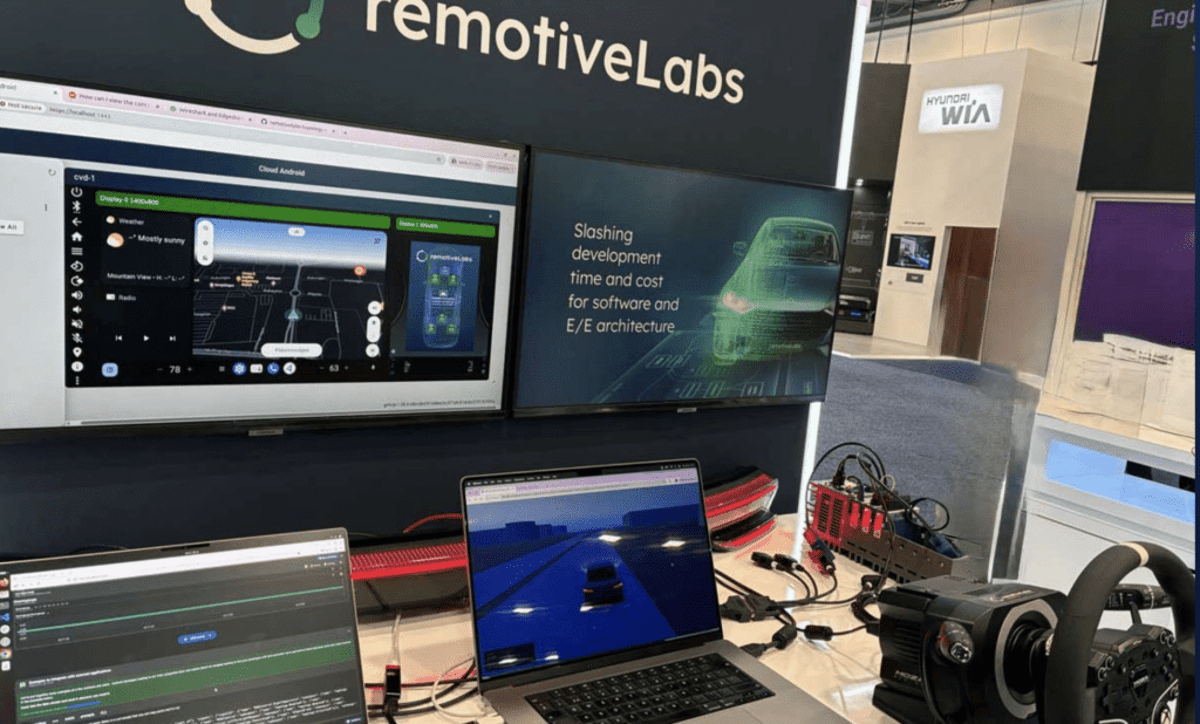
RemotiveLabs Joins HERE and AWS SDV Accelerator Programme
RemotiveLabs has joined the HERE Technologies and AWS SDV Accelerator as an integration partner, focusing on virtual ECU, infotainment, simulator, and location service integration in cloud‑native workflows. Its RemotiveTopology platform orchestrates virtual ECU networks across cockpit, ADAS, body, and central...
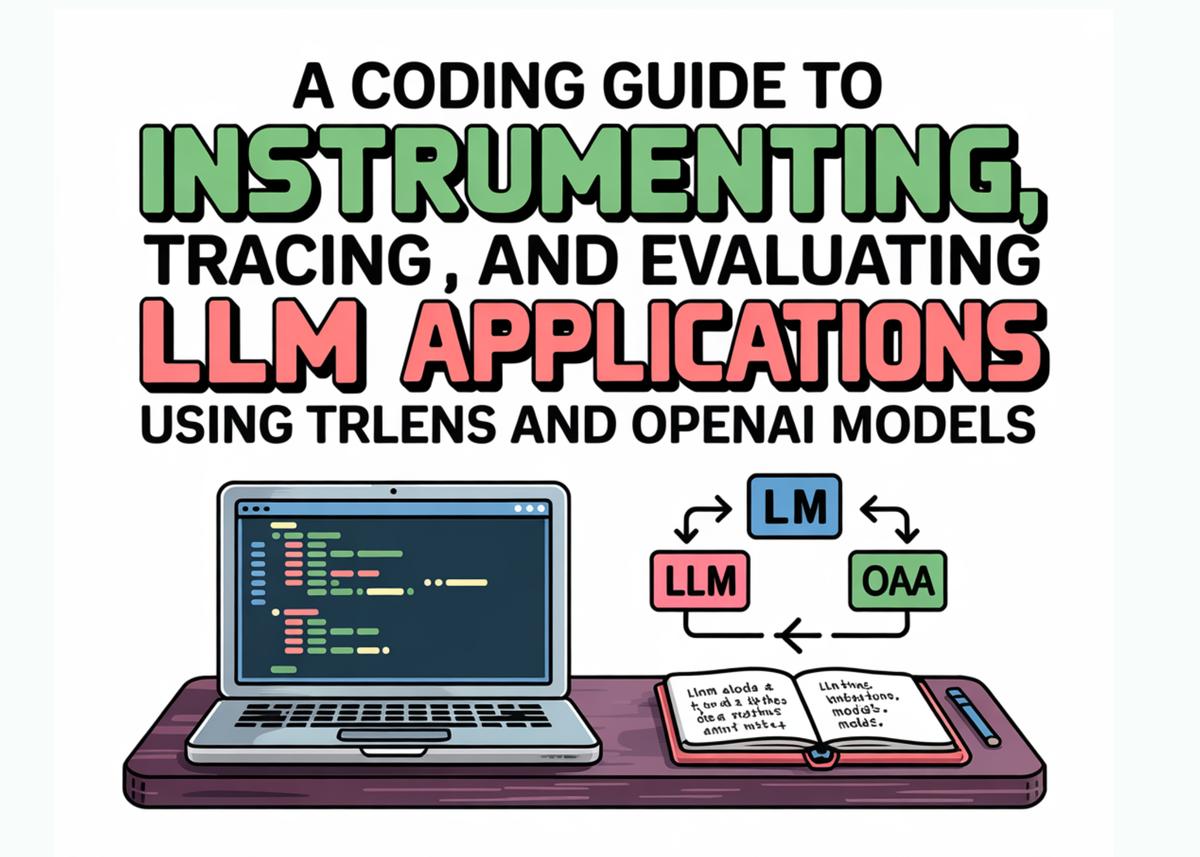
A Coding Guide to Instrumenting, Tracing, and Evaluating LLM Applications Using TruLens and OpenAI Models
The tutorial demonstrates how to build a transparent evaluation pipeline for Retrieval‑Augmented Generation (RAG) applications using TruLens and OpenAI models. It walks through installing dependencies, chunking documents, creating a Chroma vector store with OpenAI embeddings, and instrumenting retrieval, generation, and...
AI & Data Security: Insights From IBM’s Chief Architect
IBM’s Chief Architect Devan Shah outlines how the company’s OnePipeline platform now supports over 450 developers by shifting from Travis CI to Tekton and Argo CD, trading longer build times for automated security scans. He details the internal AI coding assistant...

Metrics that Matter: How to Prove the Business Value of DevEx
Developer experience (DevEx) is emerging as a measurable driver of business performance, not just a cultural nicety. Studies show firms with best‑in‑class tools grow revenue 4‑5 times faster and deliver 60% higher shareholder returns. Core metrics—DORA indicators, flow efficiency, and...
Move Harness Projects Between Orgs Without Starting Over
Harness has introduced Project Movement, a feature that lets users transfer entire projects between organizations with a few clicks. The migration preserves pipelines, execution history, services, environments, and most configuration artifacts, eliminating the need to rebuild setups after org restructures....

Cloudflare’s Markdown for Agents Automatically Make Websites Agent-Ready
Cloudflare introduced “Markdown for Agents,” an edge service that converts HTML pages to Markdown when an AI agent requests them via an Accept: text/markdown header. The conversion can slash token consumption by up to 80%, turning a 16,180‑token HTML page...

Anthropic Unveils New AI Feature to Scan Codebases, Suggest Patches Within Claude Code
Anthropic introduced Claude Code Security, an AI‑powered add‑on to its Claude Code web tool that scans entire codebases and proposes patches for security flaws. The feature is initially available only to paid Claude Enterprise and Team customers, with accelerated access for open‑source maintainers....

Guide to the Top 20 QA Metrics that Matter
The article presents a comprehensive guide to the twenty most critical quality‑assurance (QA) metrics that software teams should monitor. It distinguishes quantitative metrics—such as escaped bugs, test coverage, and cost per bug fix—from qualitative, derived metrics like defect leakage and...

Hubert 'Depesz' Lubaczewski: Per-Worker, and Global, IO Bandwidth in Explain Plans
Jeremy Schneider added per‑worker I/O bandwidth metrics to explain.depesz.com’s EXPLAIN output. The change displays both average per‑worker speed and total exclusive bandwidth, clarifying why summed I/O time can exceed wall‑clock time in parallel scans. In the example, 39 GB read in...