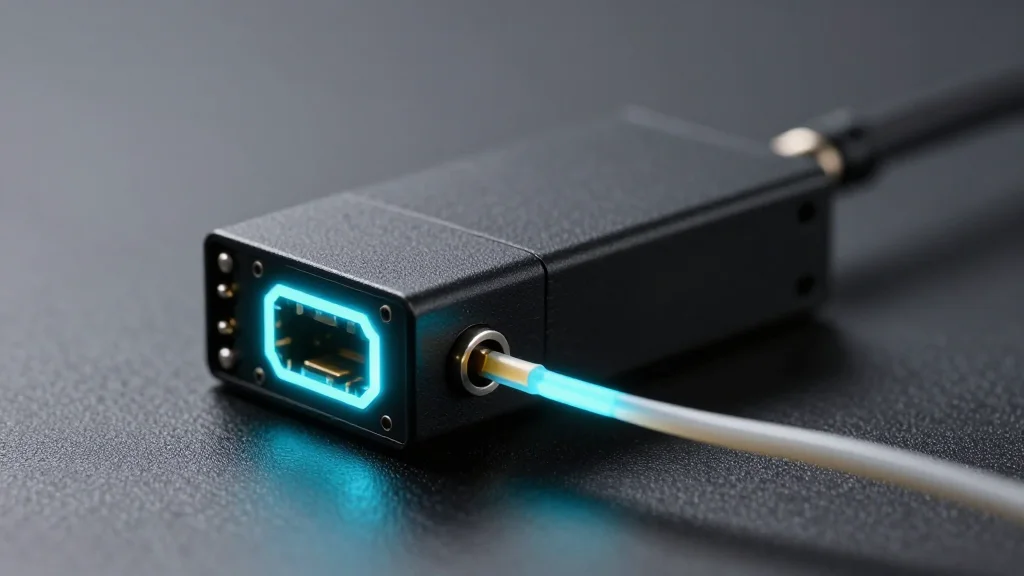
SuperX Shows 1.6 Tbps Optical Modules at Interop Tokyo for DevOps Centers

Companies Mentioned
Why It Matters
The introduction of a 1.6 Tbps optical module directly addresses the bandwidth bottlenecks that DevOps teams encounter when provisioning AI‑intensive workloads at the edge. Faster, deterministic connectivity reduces the time required for CI/CD pipelines to move large model artifacts between training clusters and inference nodes, enabling more frequent releases and tighter feedback loops. SuperX’s modular AI factory and 800 V DC power architecture also lower the operational overhead of building and scaling AI data centers. By delivering a pre‑validated, full‑stack solution, the company lets DevOps engineers focus on application logic rather than hardware integration, potentially accelerating the adoption of AI services in latency‑critical use cases such as autonomous vehicles, smart factories and real‑time analytics.
Key Takeaways
- •SuperX will debut a 1.6 Tbps silicon‑photonic optical module at Interop Tokyo (June 10‑12, 2026)
- •Modular AI factory promises 6‑9 month time‑to‑market and scaling from 2.5 MW to 80 MW
- •800 V DC power architecture aims to improve energy efficiency for high‑density AI racks
- •Joint venture SuperX Optical Communications provides end‑to‑end optical solutions
- •CEO Aiko Furukawa highlighted Japan’s strategic importance and the company’s local supply center in Tsu City
Pulse Analysis
SuperX’s move signals a broader shift toward vertically integrated AI infrastructure that speaks directly to DevOps requirements. Historically, AI data‑center builders have relied on a patchwork of third‑party optics, power converters and compute nodes, forcing engineering teams to spend weeks reconciling compatibility issues. By delivering a single, validated stack—from a 1.6 Tbps optical module to an 800 V DC power backbone—SuperX reduces the integration friction that has traditionally slowed down edge deployments. This mirrors the DevOps principle of "infrastructure as code" applied to physical hardware: a repeatable, automated build process that can be versioned and rolled out at scale.
The timing aligns with a surge in demand for ultra‑low‑latency AI services in Japan’s telecom and manufacturing sectors. As operators race to embed inference capabilities at the network edge, the ability to provision 80 MW campuses in under a year could become a decisive competitive advantage. SuperX’s partnership with NVIDIA’s latest Blackwell Ultra GPUs further cements its relevance, ensuring that the compute layer can fully exploit the bandwidth offered by the new optical module.
Looking ahead, the real test will be whether the promised performance translates into measurable reductions in DevOps cycle times. If pilot deployments with Japanese carriers demonstrate a 30‑40 % cut in provisioning latency, we could see a cascade of similar full‑stack offerings from rivals seeking to capture the same market. For DevOps practitioners, the key takeaway is that hardware‑level automation is becoming as critical as software pipelines, and vendors like SuperX are positioning themselves to be the hardware counterpart of the CI/CD toolchain.
SuperX Shows 1.6 Tbps Optical Modules at Interop Tokyo for DevOps Centers
Comments
Want to join the conversation?
Loading comments...