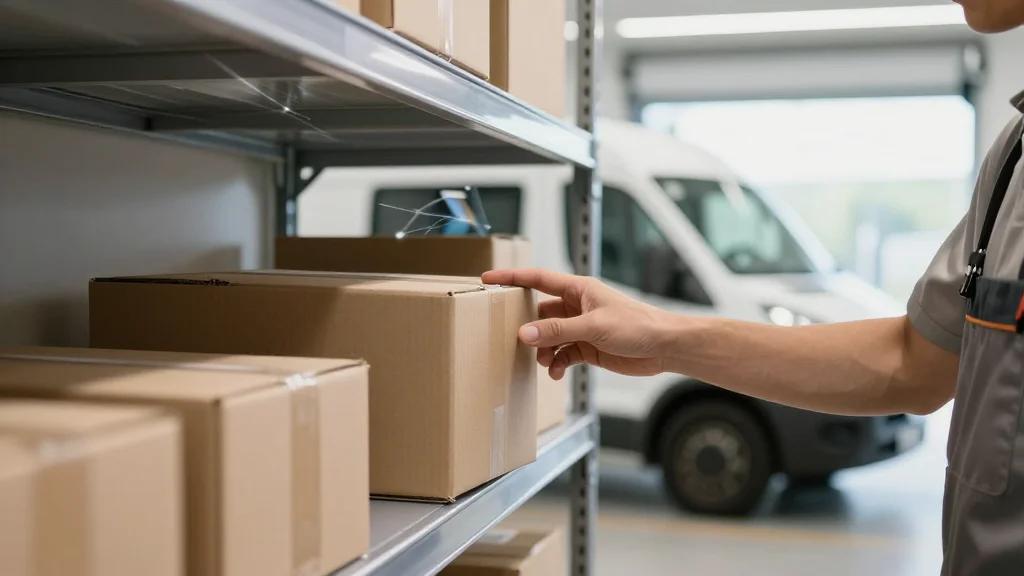
Walmart Tests Third‑Party Marketplace Storage in Supercenter Backrooms

Companies Mentioned
Why It Matters
The pilot signals a strategic shift in how legacy retailers leverage physical assets to compete with digital-native platforms. By co‑locating third‑party inventory with existing store stock, Walmart aims to cut delivery times and costs, a critical advantage in a market where consumers increasingly expect sub‑hour fulfillment. Success could force Amazon and other e‑commerce players to rethink their reliance on centralized fulfillment hubs and accelerate the convergence of online and offline retail models. Moreover, the experiment tests the scalability of AI‑driven warehouse automation within a high‑traffic retail environment. If Walmart can reliably sort and route marketplace pallets directly to store shelves, it may set a new industry standard for hybrid fulfillment, prompting competitors to invest in similar technologies or partnerships with third‑party sellers.
Key Takeaways
- •Walmart pilots third‑party marketplace storage in backrooms of select supercenters.
- •"Starting in a few markets, we’ll soon be offering a select assortment of marketplace items through the pickup and delivery experience customers already know and love," said a Walmart spokesperson.
- •The initiative leverages AI‑powered warehouses and redesigned store layouts to free up space for marketplace sellers.
- •Walmart operates 4,600 U.S. stores, covering 95% of the population and housing roughly 120,000 commonly purchased items.
- •If successful, the model could reduce last‑mile costs and pressure Amazon’s fulfillment network.
Pulse Analysis
Walmart’s backroom pilot is more than a logistical tweak; it’s a calculated maneuver to reclaim ground in the fast‑growing marketplace segment. Historically, Walmart’s strength lay in scale and low‑price brick‑and‑mortar operations, while Amazon built its empire on a sprawling, technology‑driven fulfillment network. By embedding third‑party inventory within its stores, Walmart is effectively turning its physical footprint into a distributed fulfillment mesh, a concept Amazon has only recently begun to explore with its smaller micro‑fulfillment centers.
The pilot also underscores the rising importance of AI in retail logistics. Walmart’s AI‑powered sorting systems promise to streamline the flow of pallets from truck to shelf, reducing handling time and labor costs. If the technology proves reliable at scale, it could lower barriers for smaller marketplace sellers to join Walmart’s platform, expanding product variety and driving higher basket sizes. This could erode Amazon’s marketplace dominance, especially in categories where speed and convenience are decisive.
Looking ahead, the key question is whether Walmart can maintain inventory accuracy and customer experience while juggling its own stock and third‑party items in the same physical space. Any missteps—stockouts, misplaced items, or longer wait times—could damage the brand’s reputation for reliability. Conversely, a smooth rollout would provide a template for other retailers seeking to fuse physical and digital channels, potentially reshaping the competitive dynamics of the entire retail sector.
Walmart Tests Third‑Party Marketplace Storage in Supercenter Backrooms
Comments
Want to join the conversation?
Loading comments...