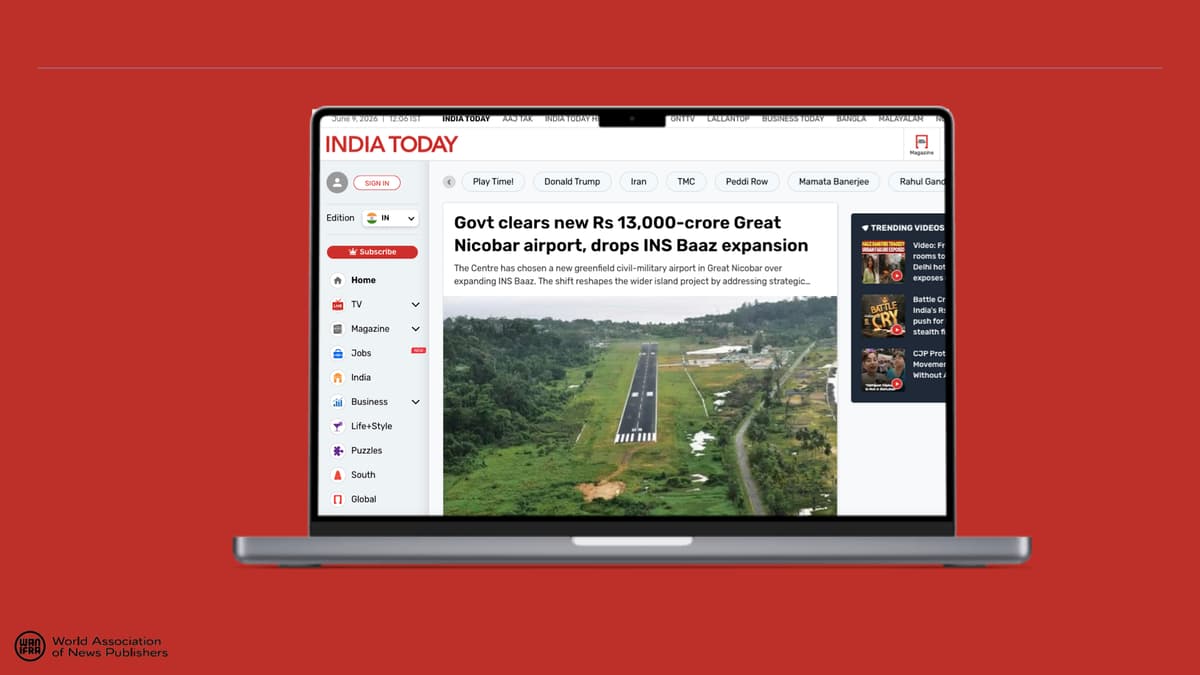
At India Today, an AI Experiment Asks Whether Audience Behaviour Can Be Predicted
Companies Mentioned

Why It Matters
Predictive analytics give editors forward‑looking insights, helping media outlets retain audiences in an algorithm‑dominated landscape and reducing reliance on post‑hoc metrics.
Key Takeaways
- •Audipulse predicts story performance with 64% precision in pilot
- •Adding context like cricket boosted accuracy by 11 points
- •System runs on-premises GPU to avoid external data risks
- •Editors initially skeptical, changed after side‑by‑side testing
- •Future plans include video thumbnail and alert predictions
Pulse Analysis
The newsroom’s shift from reactive analytics to proactive AI forecasting marks a pivotal evolution for legacy publishers. India Today, a major Indian media conglomerate, recognized that traditional dashboards only reveal what worked after the fact, leaving editors to guess tomorrow’s hits. By embedding Audipulse into its editorial workflow, the organization leverages real‑time engagement metrics from Chartbeat and Google Analytics, paired with draft headlines, to surface predictive signals that inform story selection, timing, and format decisions.
Technical sophistication underpins Audipulse’s early success. The model ingests click‑through rates, dwell time, topic tags, and content formats, then continuously retrains by comparing forecasts with actual outcomes. During a 15‑day pilot, the engine reached a 64% precision rate, surpassing the 52% accuracy of human editors. Crucially, the experiment demonstrated that enriching the data set with contextual taxonomies—such as cricket tournaments, election cycles, and Bollywood releases—added 11 percentage points to predictive performance, highlighting the importance of domain‑specific signals beyond raw engagement numbers.
For the broader media industry, Audipulse illustrates both the promise and the challenges of AI‑augmented editorial decision‑making. While the technology can surface trends faster than manual analysis, editors remain wary until side‑by‑side testing validates recommendations. India Today’s on‑premises deployment also addresses data‑privacy concerns tied to sending analytics to external clouds. Looking ahead, the team plans to extend predictions to video thumbnails and push notifications, and to embed an explainability layer that clarifies which factors drive each forecast. As publishers grapple with algorithmic competition for audience attention, tools like Audipulse could become essential for maintaining relevance and revenue.
At India Today, an AI experiment asks whether audience behaviour can be predicted
Comments
Want to join the conversation?
Loading comments...