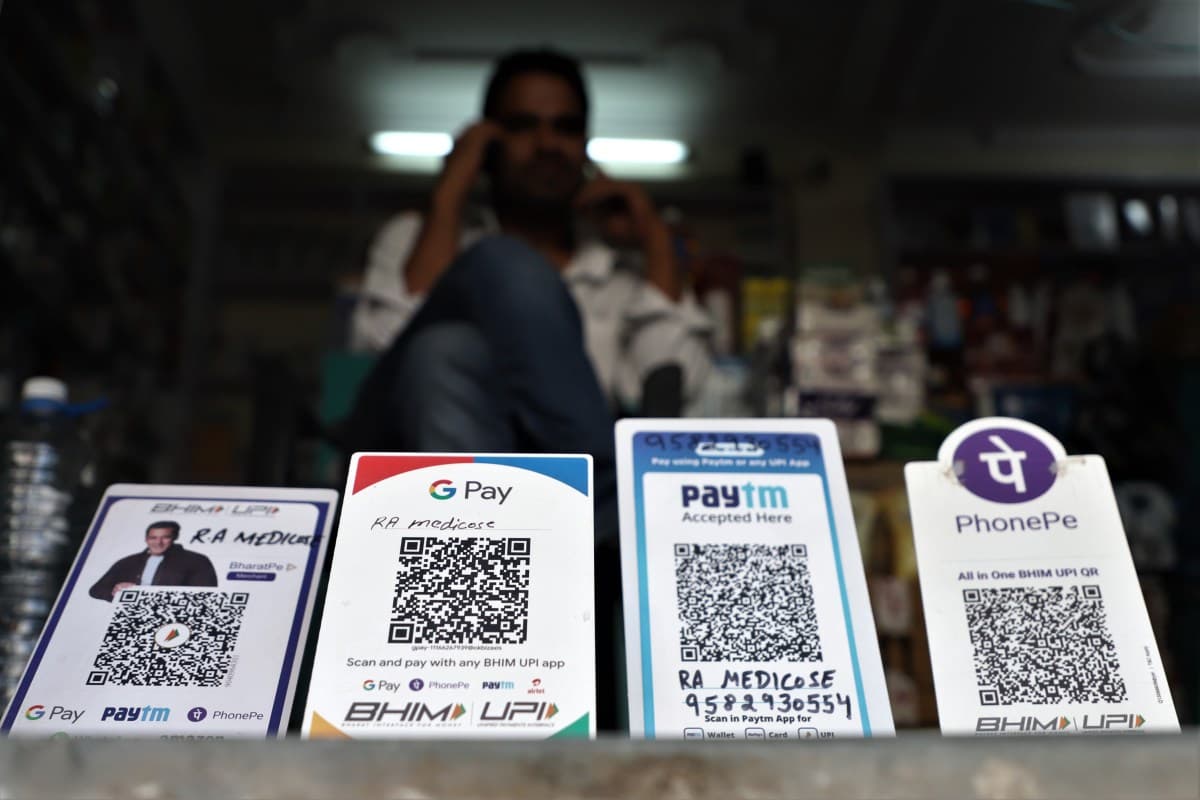
Amazon, Meta Join Fight to End Google Pay, PhonePe Dominance in India
Companies Mentioned

Why It Matters
The outcome could reshape India’s instant‑payment landscape, forcing the two dominant apps to share market access and potentially lowering costs for merchants and consumers. A more level playing field also influences how global tech firms compete for the world’s largest digital‑payments market.
Key Takeaways
- •PhonePe and Google Pay control ~80% of UPI transactions.
- •Combined 22.6 billion UPI transactions processed in March.
- •PhonePe reached 700 million users and 50 million merchants.
- •Amazon, Meta, and others lobby NPCI for fair UPI rules.
- •Proposals target onboarding practices, contact‑data use, and autopay access.
Pulse Analysis
India’s Unified Payments Interface (UPI) has become the backbone of the country’s digital economy, processing billions of transactions each month and attracting a diverse ecosystem of fintech players. While the platform’s open‑architecture fuels innovation, the sheer scale of PhonePe and Google Pay—together accounting for roughly 80% of March’s 22.6 billion transactions—has created a de‑facto duopoly. This concentration raises concerns about pricing power, data control, and the ability of smaller entrants to acquire users, especially in a market where over 700 million consumers already rely on these two apps for everyday payments.
In response, a coalition led by Amazon Pay, Meta’s WhatsApp, CRED, MobiKwik and Flipkart’s Super.money is preparing to lobby the National Payments Corporation of India (NPCI). Their agenda includes stricter rules on how dominant apps onboard users, limits on the use of contact and transaction data, and guaranteed access to key UPI features such as autopay and payment mandates. By seeking regulatory incentives and a more transparent onboarding framework, the group hopes to level the playing field without disrupting the seamless experience that UPI users expect. The NPCI, operating under the Reserve Bank of India, faces a delicate balance between curbing market concentration and preserving the network’s stability.
If the lobbying effort yields concrete policy adjustments, the ripple effects could be significant. A more competitive UPI environment may drive down transaction fees, spur innovation in value‑added services, and expand merchant adoption beyond the current 98% postal‑code coverage dominated by PhonePe. For global tech giants, a fairer market in India—a $1‑trillion digital payments arena—offers a strategic foothold to scale their own payment solutions. Conversely, entrenched players may be forced to diversify offerings and improve user experience, ultimately benefiting consumers and the broader economy. The pending discussions will be a bellwether for how India balances rapid fintech growth with antitrust considerations.
Amazon, Meta join fight to end Google Pay, PhonePe dominance in India
Comments
Want to join the conversation?
Loading comments...