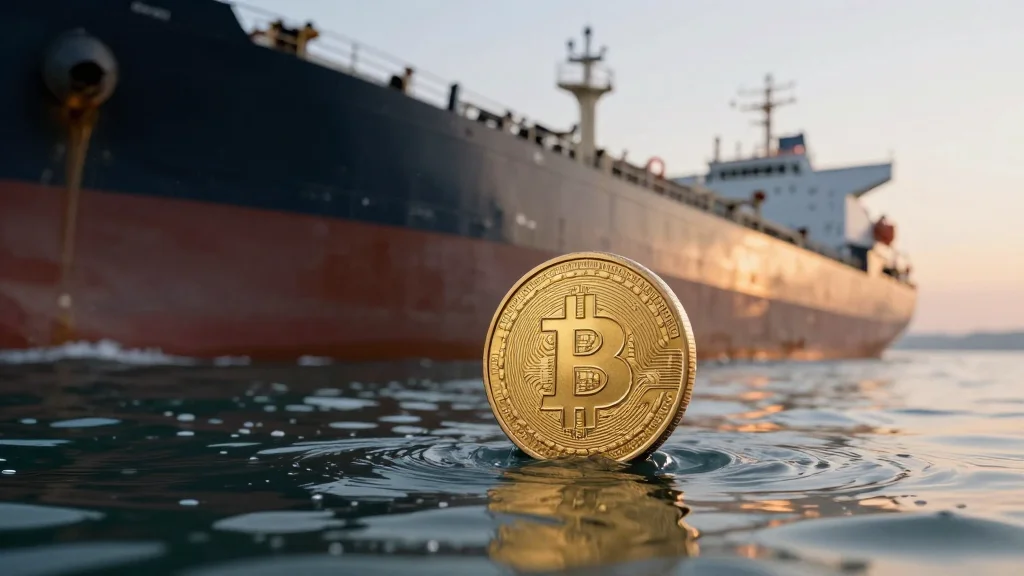
Iran Proposes Bitcoin Toll for Strait of Hormuz Transits, Targeting $1‑Per‑Barrel Fees

Why It Matters
The Strait of Hormuz handles roughly 20% of global oil shipments, so any pricing change reverberates through worldwide energy costs. By attaching a Bitcoin fee to each barrel, Iran is not only seeking a new revenue stream but also testing the resilience of the global financial system against decentralized currencies. If successful, the model could inspire other nations under sanctions to adopt similar mechanisms, potentially accelerating the mainstreaming of crypto for state‑level transactions. For the fintech sector, the proposal creates both a market opportunity and a compliance challenge. Companies that can provide secure, low‑latency crypto settlement services for large‑scale industrial users stand to gain a foothold in a high‑value niche. At the same time, regulators will need to grapple with anti‑money‑laundering (AML) and know‑your‑customer (KYC) frameworks that can keep pace with rapid, cross‑border crypto flows tied to critical infrastructure.
Key Takeaways
- •Iran will charge oil tankers about $1 per barrel in Bitcoin for Strait of Hormuz passage.
- •A 5 million‑barrel supertanker could owe several million dollars worth of Bitcoin per transit.
- •The system bypasses traditional banking, aiming to evade sanctions that block dollar payments.
- •Brent crude hovered near $98 a barrel after the announcement, reflecting market sensitivity.
- •The move could spark a new fintech niche for high‑value crypto settlement services.
Pulse Analysis
Iran’s Bitcoin toll is a bold experiment at the crossroads of geopolitics and financial technology. Historically, sovereign revenue from strategic chokepoints has been collected in hard currency, ensuring predictability and compliance with international banking standards. By shifting to a decentralized asset, Tehran is attempting to rewrite that rulebook, leveraging Bitcoin’s borderless nature to sidestep sanctions that have crippled its access to the global financial system. The success of this approach will depend on two variables: the ability of ship operators to integrate crypto wallets into their treasury workflows, and the stability of Bitcoin’s price during the transaction window.
From a market perspective, the proposal injects uncertainty into oil pricing and shipping insurance premiums. Even a modest fee of $1 per barrel translates into multi‑million‑dollar obligations for large vessels, potentially eroding profit margins if Bitcoin’s price spikes between the fee calculation and settlement. Fintech firms that can offer real‑time price hedging, automated conversion to stablecoins, or escrow services could mitigate that risk, turning a regulatory headache into a revenue stream. However, the regulatory response could be swift; Western authorities may tighten AML rules for maritime crypto payments, forcing firms to adopt more rigorous identity verification and transaction monitoring.
Looking ahead, the experiment could serve as a template for other sanctioned economies seeking alternative financing channels. If Iran demonstrates that crypto tolls can be collected reliably and without triggering punitive sanctions, we may see a cascade of similar initiatives—from port fees in the Black Sea to airspace usage charges in contested regions. The fintech ecosystem will need to evolve rapidly, balancing innovation with the heightened scrutiny that accompanies state‑level crypto adoption.
Iran Proposes Bitcoin Toll for Strait of Hormuz Transits, Targeting $1‑Per‑Barrel Fees
Comments
Want to join the conversation?
Loading comments...