Between-Unit Agreement of GPS-Derived Mechanical Work and Power: Time to Trust the Numbers?
Key Takeaways
- •Between-unit CV for total work: 0.39%, mean power: 0.38%.
- •Peak power CV rises to 3.52%, still trivial versus match variability.
- •Cuts and arcs show higher CV (≈7%) but remain small after standardization.
- •Errors are random; units can be swapped without systematic bias.
Pulse Analysis
GPS 3.0 promises a more nuanced view of external locomotor demand by translating position and velocity data into mechanical work and power. While traditional metrics like distance and speed have long guided training prescriptions, the ability to quantify energy output offers coaches a proxy for internal neuromuscular stress. However, the utility of any metric hinges on its reliability across devices, especially in professional environments where multiple units are deployed simultaneously.
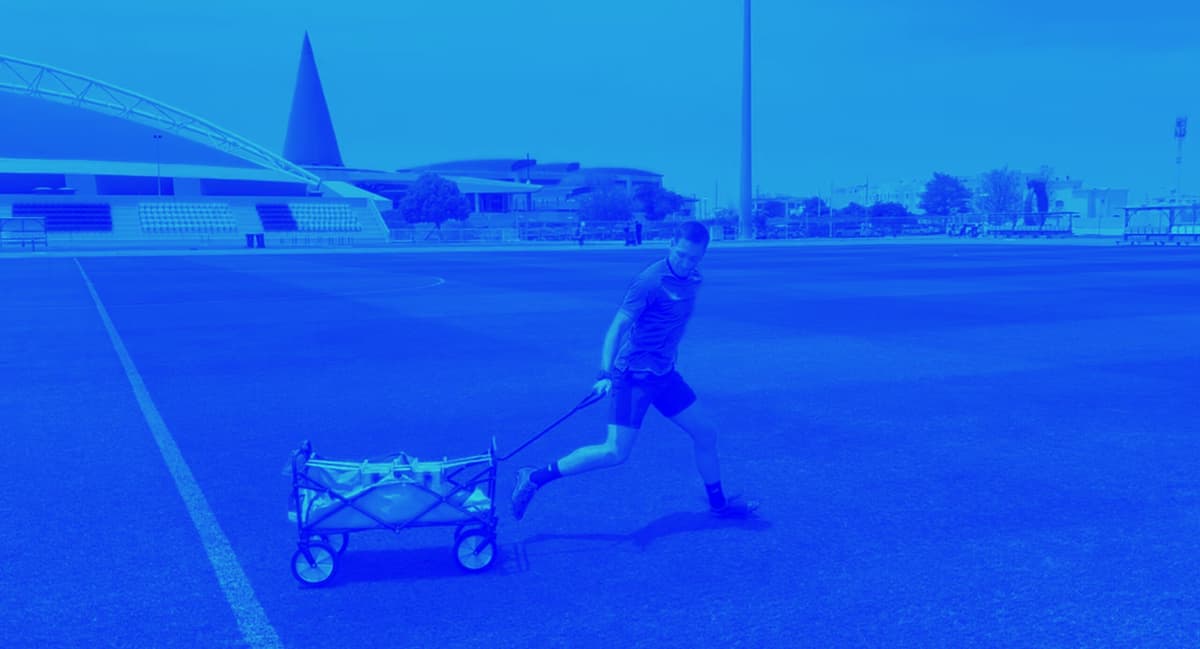
In the recent SPSR study, ten Hudl WIMU PRO EVO units were affixed to a rigid trolley and subjected to twelve football‑specific drills plus a 16‑minute session in Doha. By processing raw files through both the native GPS 2.0 pipeline and ADI’s GPS 3.0 algorithms, researchers isolated pure device‑to‑device error. The findings revealed exceptionally low coefficients of variation—0.39% for total mechanical work and 0.38% for mean power—while peak power showed a modest 3.52% variation. Direction‑specific components such as cuts and arcs exhibited higher variability (around 7%), yet these remained trivial when benchmarked against between‑player variability observed in elite matches.
The study’s caveats are equally instructive. The trolley setup eliminates body‑borne vibration and soft‑tissue motion, meaning the reported reliability reflects idealized conditions rather than on‑field realities. Moreover, the accelerometer does not influence work or power calculations; only GPS‑derived position data are used, leaving PlayerLoad as the sole accelerometer‑based metric. Despite these limitations, the random nature of the error suggests that swapping units will not introduce systematic bias, allowing sports scientists to focus on validating the underlying algorithms rather than worrying about inter‑unit consistency. This clarity paves the way for broader adoption of GPS‑derived mechanical metrics in elite training programs.
Between-unit agreement of GPS-derived mechanical work and power: time to trust the numbers?
Comments
Want to join the conversation?