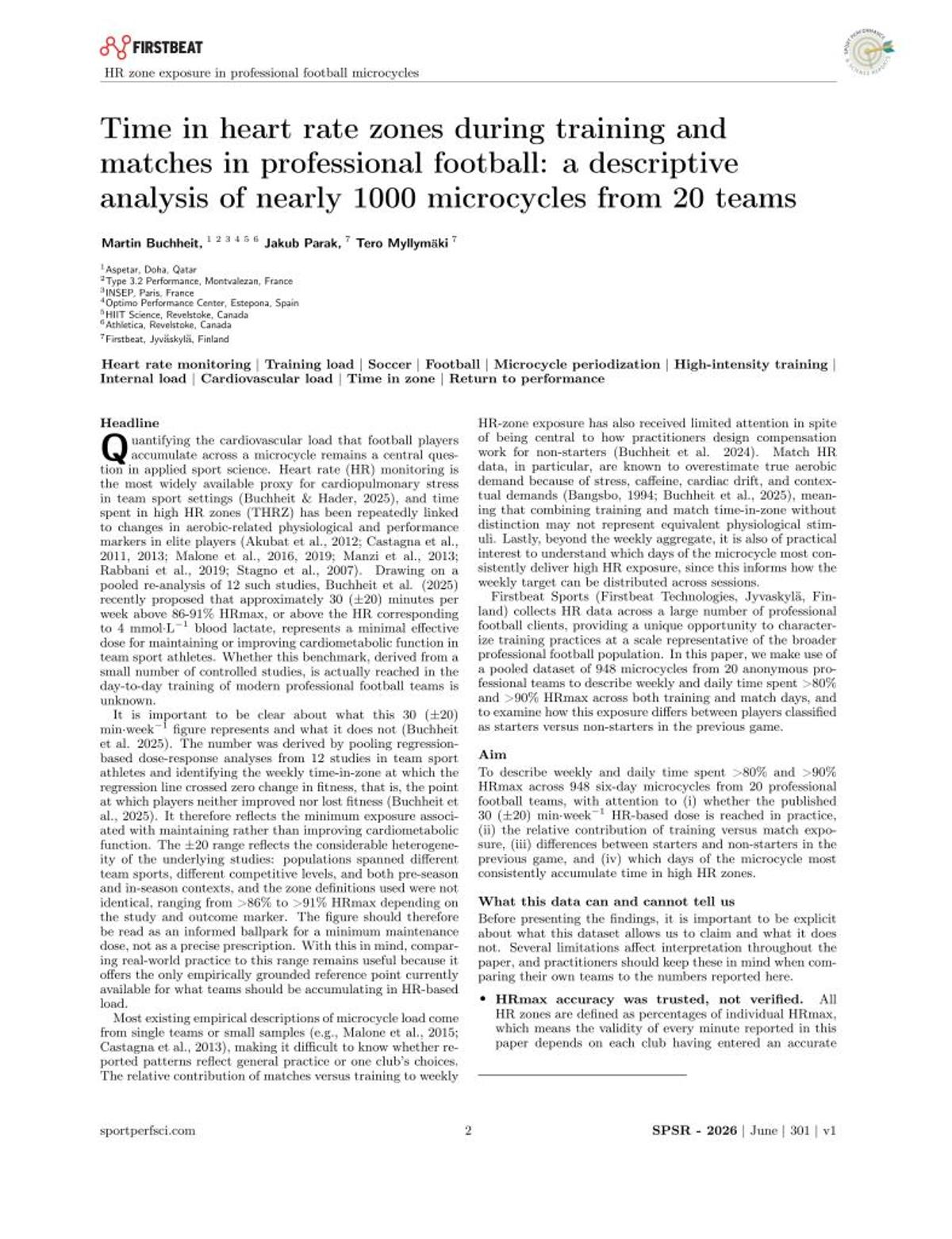
Time in Heart Rate Zones During Training and Matches in Professional Football: A Descriptive Analysis of Nearly 1000 Microcycles From 20 Teams
Key Takeaways
- •Matches spent 30% more time in high‑intensity HR zones than training
- •Training sessions showed 45% of time in low‑intensity HR zone
- •Wide variation observed across positions, especially midfielders vs defenders
- •Data derived from 20 European clubs over 2024‑25 season
- •Findings support individualized load monitoring for injury prevention
Pulse Analysis
Heart‑rate monitoring has become a cornerstone of modern football performance analytics, enabled by wearable GPS and chest‑strap sensors that capture real‑time physiological load. As clubs invest heavily in data platforms, understanding how athletes experience intensity across different contexts is critical. This study’s unprecedented dataset—nearly 1,000 microcycles from 20 top‑flight teams—provides a benchmark for the sport, illustrating the stark contrast between the aerobic demands of training sessions and the high‑intensity bursts typical of competitive matches.
The analysis reveals that matches allocate roughly 30% more time to high‑intensity heart‑rate zones than any training drill, while training regimes spend about 45% of the session in low‑intensity zones. Positional nuances emerge, with midfielders displaying the widest spread in zone distribution, reflecting their dual role in both defensive coverage and attacking transitions. Such granular insights enable coaches to design periodized programs that replicate match‑specific stressors, ensuring players are physiologically prepared for the rigors of competition without excessive fatigue.
For clubs, the business case is clear: precise load monitoring can translate into fewer injuries, longer player availability, and ultimately better on‑field results—a competitive advantage in leagues where marginal gains matter. The findings also signal growth opportunities for sports‑tech vendors offering advanced analytics dashboards and individualized training prescriptions. As the industry moves toward AI‑driven predictive models, datasets like this will fuel more accurate injury‑risk algorithms, reinforcing the strategic value of data‑centric performance departments.
Time in heart rate zones during training and matches in professional football: a descriptive analysis of nearly 1000 microcycles from 20 teams
Comments
Want to join the conversation?