Time in Heart Rate Zones During Training and Matches in Professional Football: A Descriptive Analysis of Nearly 1000 Microcycles From 20 Teams
Key Takeaways
- •Training meets >80% HRmax dose, but not >90% HRmax.
- •Starters obtain high‑intensity stimulus mainly during matches.
- •Non‑starters lack >90% HRmax intensity despite compensation work.
- •GPS distance metrics miss metabolic load from high HR zones.
- •Match minutes cannot replace targeted high‑intensity training.
Pulse Analysis
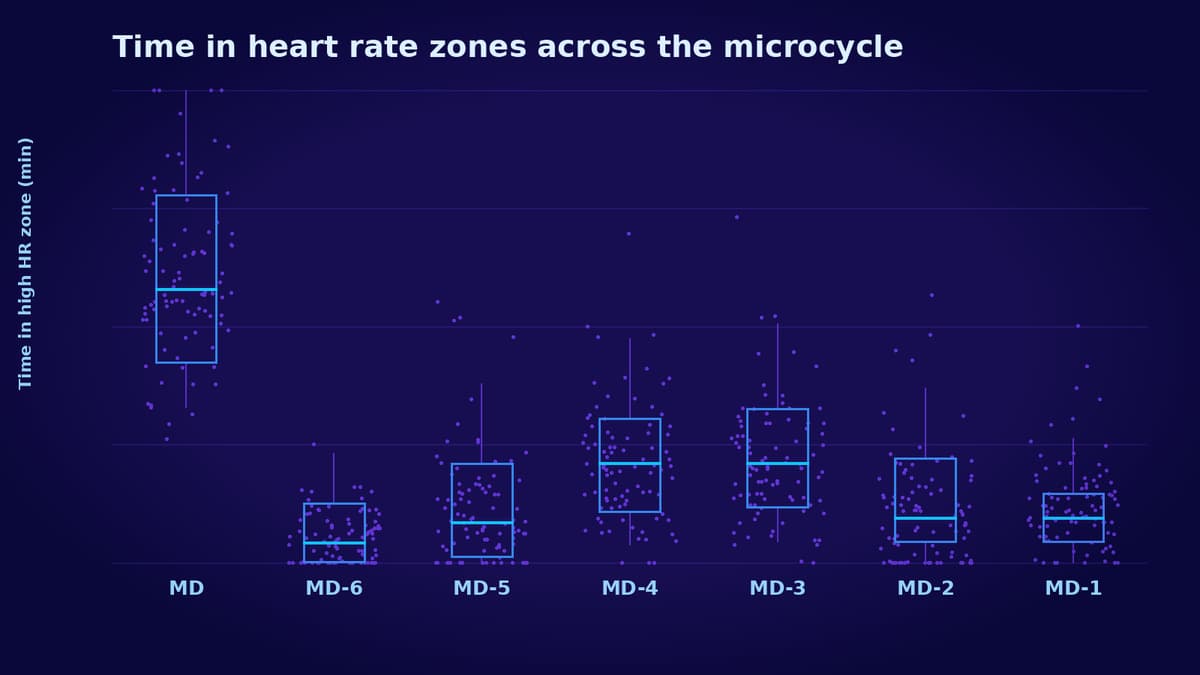
The latest descriptive analysis of nearly 1,000 microcycles provides the most comprehensive look yet at heart‑rate zone exposure in professional football. Building on earlier work that identified a 30‑minute weekly minimum in high‑intensity zones, Buchheit and colleagues leveraged Firstbeat’s massive dataset to answer whether elite clubs actually meet that benchmark. By aggregating data from 20 teams across nine leagues, the study moves beyond single‑team case studies, offering a league‑wide perspective on training load distribution and its alignment with physiological targets.
Results show a clear dichotomy: while training sessions generally achieve the >80% HRmax maintenance dose, they consistently miss the >90% HRmax threshold, especially for non‑starting players. Starters obtain the bulk of their high‑intensity stimulus during competitive matches, whereas non‑starters rely on compensation drills that deliver distance and speed but lack the metabolic stress of true high‑HR work. This mismatch underscores a critical blind spot in many periodisation models that prioritize external metrics like GPS‑derived distance over internal load markers.
For coaches and performance staff, the takeaway is actionable: design training drills that explicitly target the >90% HRmax zone, regardless of a player’s match minutes. Integrating HR‑zone monitoring with GPS data can close the gap between perceived and actual stimulus, fostering better fitness adaptations and reducing injury risk. As clubs continue to invest in wearable technology, aligning internal and external load metrics will become a cornerstone of evidence‑based football conditioning.
Time in heart rate zones during training and matches in professional football: a descriptive analysis of nearly 1000 microcycles from 20 teams
Comments
Want to join the conversation?