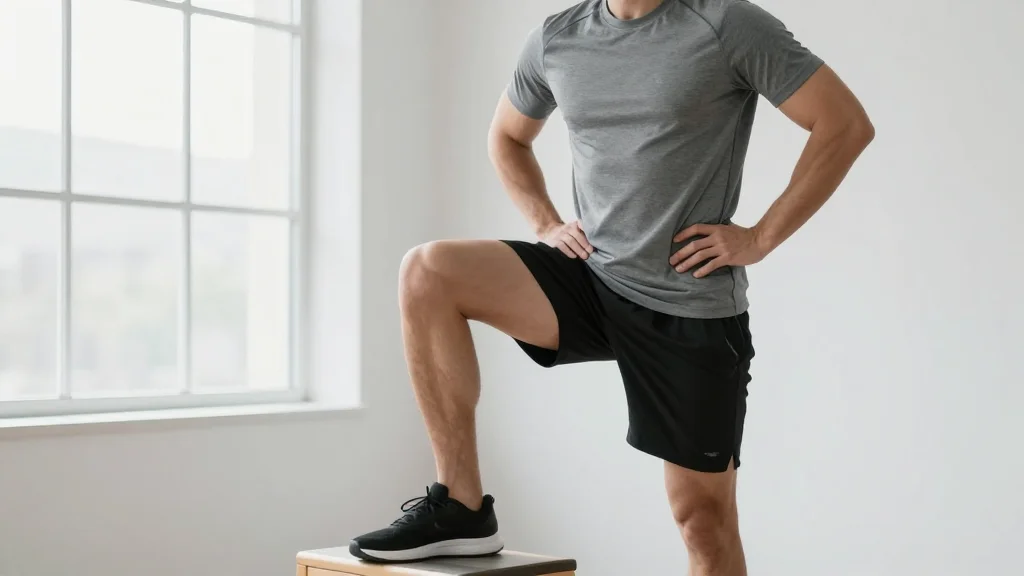
Desk Exercises Boost Hip and Spine Mobility for Office Workers

Why It Matters
Sedentary work environments have been linked to a surge in musculoskeletal disorders, especially in the lower back and hips. By providing a concise, evidence‑based movement protocol, Grossmann’s desk exercises give employees a practical tool to mitigate these risks without requiring gym access or additional equipment. The approach also supports broader public‑health goals of reducing chronic pain and associated healthcare costs. Beyond individual health, widespread adoption could shift corporate culture toward proactive wellness, encouraging employers to view movement breaks as essential productivity enhancers rather than optional perks. This shift may accelerate the integration of ergonomic design, wearable tech, and AI‑driven posture monitoring into everyday office life.
Key Takeaways
- •Ash Grossmann, human movement specialist, proposes three desk exercises for hip and spine mobility.
- •Exercises can be performed in 5‑minute intervals, using 3‑5 pulses per movement.
- •Targeted muscles include hip flexors, posterior chain, and spinal rotators.
- •Routine addresses stiffness caused by prolonged sitting, a problem for millions of office workers.
- •Corporate wellness programs can embed the drills to reduce musculoskeletal injuries and improve productivity.
Pulse Analysis
The emergence of micro‑movement protocols like Grossmann’s reflects a broader industry pivot from traditional gym‑centric fitness to workplace‑integrated health solutions. Historically, corporate wellness initiatives focused on cardio challenges or step‑count competitions; today, the emphasis is shifting toward functional mobility that directly counters the biomechanical deficits of desk work. This evolution is driven by two forces: rising healthcare costs tied to back and hip injuries, and the data‑rich environment of modern offices, where wearables can quantify sitting time and prompt interventions.
Grossmann’s three‑exercise set is strategically simple, ensuring high adherence rates—a critical metric that has plagued more complex wellness programs. By limiting equipment needs to a chair and a stable surface, the routine sidesteps barriers that have limited previous ergonomic interventions. Companies that adopt such low‑friction solutions can collect compliance data, correlate it with reduced sick‑leave, and justify further investment in movement‑focused technologies, such as AI‑guided posture monitors.
Looking ahead, the scalability of desk‑based mobility work positions it as a foundational layer for a new generation of hybrid‑work health ecosystems. As remote work persists, employers will likely bundle these exercises with virtual coaching platforms, creating a seamless feedback loop that personalizes movement recommendations based on individual risk profiles. In that scenario, Grossmann’s protocol could become the baseline standard, much like the 10,000‑step goal once was for general activity, shaping the next decade of fitness in the office.
Desk Exercises Boost Hip and Spine Mobility for Office Workers
Comments
Want to join the conversation?
Loading comments...