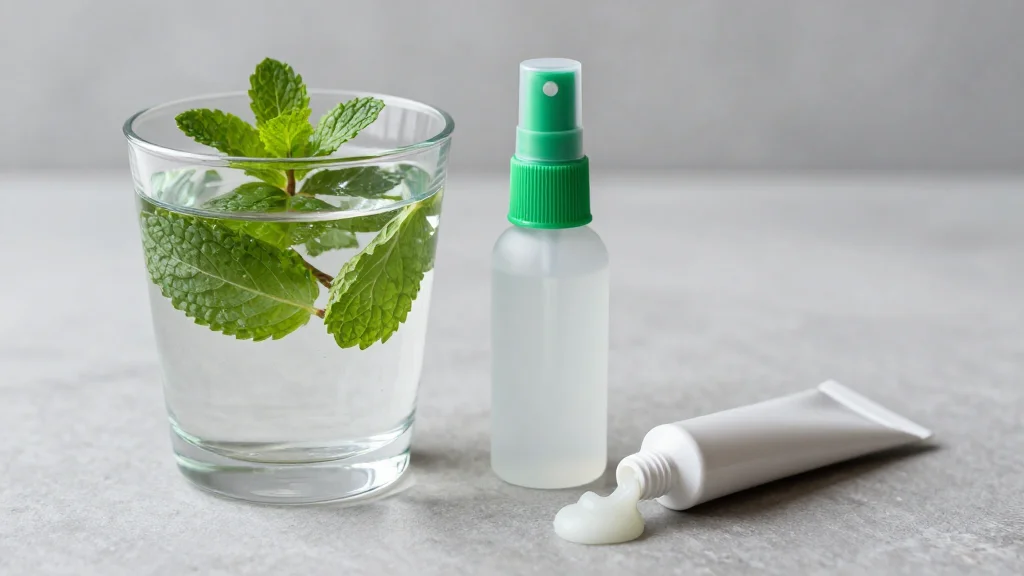
Effects of Different Menthol Administration Routes on Endurance Performance and Physiological Responses in the Heat: A Network Meta-Analysis
Why It Matters
Understanding which menthol administration route best supports specific exercise demands helps athletes and coaches optimize performance while avoiding hidden heat strain, a critical concern as competitions increasingly occur in hot climates.
Key Takeaways
- •Ingestion ranked highest for endurance improvement (SUCRA 76.1%).
- •Mouth rinsing showed strongest potential for power output (SUCRA 66.9%).
- •All routes produced minimal changes in core temperature and heart rate.
- •Topical application ranked lowest for thermoregulation (SUCRA 6.2%).
Pulse Analysis
Menthol has long been used as a sensory cooling agent, tricking the brain into feeling cooler without actually lowering body temperature. In endurance sports, athletes seek strategies that delay fatigue and maintain power output when ambient heat pushes core temperature toward dangerous levels. Traditional cooling methods—ice vests, cold water immersion, and pre‑cooling—require logistics that are often impractical during competition, prompting interest in ingestible or topical compounds that can be administered on the fly.
The new network meta‑analysis aggregates data from fifteen randomized controlled trials to rank menthol’s efficacy by delivery route. Ingestion emerged as the most promising option for long‑duration endurance events, achieving a 76.1% probability of improving performance, likely because systemic absorption sustains the cooling sensation throughout prolonged effort. Conversely, mouth rinsing, with a 66.9% probability of enhancing mean power, appears better suited for short, high‑intensity bursts where rapid sensory feedback can boost output. Physiological metrics such as core temperature and heart rate showed only modest, statistically insignificant shifts across all methods, and topical application performed worst for thermoregulation, possibly due to the skin barrier impeding heat loss.
Practitioners should view menthol as a perceptual aid rather than a physiological safeguard. While ingestion or mouth rinsing may confer marginal performance gains, they can mask true thermal strain, increasing the risk of heat‑related illness if athletes rely solely on subjective comfort. Combining menthol use with objective monitoring—core temperature sensors, heart‑rate telemetry, or wearable heat‑stress indices—ensures safety while exploiting any perceptual advantage. Future research must target larger sample sizes and sport‑specific protocols to confirm these trends and refine dosage guidelines for elite competition.
Effects of different menthol administration routes on endurance performance and physiological responses in the heat: a network meta-analysis
Comments
Want to join the conversation?
Loading comments...